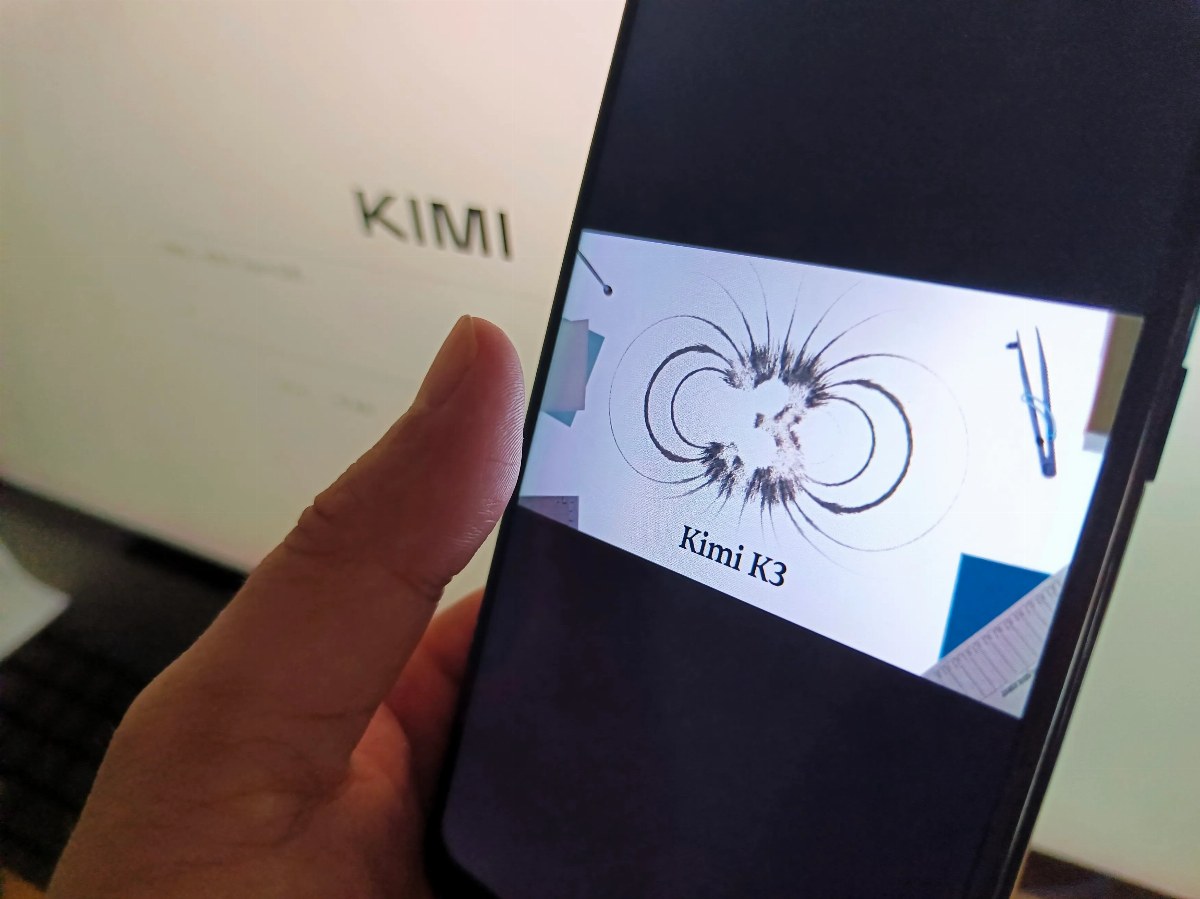
The Chinese AI startup Moonshot has introduced Kimi K3, a groundbreaking AI model featuring 2.8 trillion parameters, asserting its status as the largest open-weight AI system globally. The announcement, made on Friday, highlights the model’s competitive performance compared to Anthropic’s leading Fable model, as reported by Reuters.
Open-weight AI models allow users to download, execute, and customize the systems they use, contrasting with proprietary models that keep their source code closed. The launch of Kimi K3 follows a recent withdrawal of Anthropic’s Fable and Mythos models by the U.S. government due to security concerns, underlining how swiftly China’s open AI ecosystem is narrowing the gap with American systems.
Companies like Moonshot, Z.ai, and MiniMax are rolling out more powerful models at significantly lower costs, challenging the Western narrative that Chinese developers lag behind their American counterparts by several months.
Performance Comparable to Fable 5 and Above ChatGPT Models
Moonshot reports that Kimi K3 is the first open-weight model nearing the 3 trillion parameter mark, designed for advanced reasoning, long-term programming, and knowledge-based tasks. With a context window of 1 million tokens, it can process and retain substantially more information in a single request than previous generations.
According to the company, Kimi K3 has demonstrated competitive performance with Fable 5 while significantly surpassing OpenAI’s Opus 4.8, GPT 5.6 Sol, and GPT 5.5 models in GPU kernel optimization techniques, which maximize AI hardware utilization and minimize latency.
In benchmark tests evaluating web interface creation capabilities, Arena.ai ranked Kimi K3 first, while Vals AI placed it second overall, trailing Fable 5 and ahead of GPT-5.6 Sol. Artificial Analysis noted that Kimi K3 achieved performance levels comparable to OpenAI’s GPT-5.5 and Anthropic’s Claude Opus 4.8, particularly in complex multi-step tasks.
Chinese Companies Accelerate AI Model Releases
The announcement from Moonshot led to a sharp decline in shares of local AI competitors Zhipu and Minimax on the Hong Kong stock exchange, with midday losses of 21.9% and 13.8%, respectively. Chinese AI firms are ramping up their model release cycles amid intensifying global competition.
This shift follows the launch of Z.ai’s GLM-5.2 model, which impressed industry observers with benchmark scores close to those of top-tier American proprietary models, challenging the prevalent belief among Western analysts that Chinese AI models were at least six months behind.
Additionally, MiniMax, listed in Hong Kong, is developing its own model with 2.7 trillion parameters, expected to launch in the third quarter of 2026, and plans to release its state-of-the-art multimodal model, H3, in the near future.
The race toward trillion-parameter systems reflects an increasing demand for autonomous systems capable of handling complex reasoning tasks. Leading AI laboratories are also pursuing the development of autonomously self-improving systems, a process often referred to as “recursive self-improvement.”
Prior to Kimi K3’s launch, Meituan’s LongCat-2.0 and DeepSeek’s V4-Pro led the Chinese AI industry with a combined total of 1.6 trillion parameters, while several other domestic competitors had surpassed the trillion-parameter threshold.
Xi Jinping’s Clear Message
On the same day Moonshot unveiled Kimi K3, Chinese President Xi Jinping positioned Beijing as a proponent of a new global order in artificial intelligence during China’s most significant technology conference. He advocated for open-source technology, challenging U.S. dominance in this rapidly evolving sector.
In his opening address at the World Artificial Intelligence Conference in Shanghai, Xi urged countries to “take advantage of the rare historical opportunity” presented by open-source AI and committed to assisting developing nations in building their AI capabilities, cautioning against the emergence of “new historical injustices” caused by unequal access to this technology.
These statements represent the clearest articulation of China’s ambition to shape global governance in the AI sector, presenting its open-source models as a global public good and positioning Beijing as a counterweight to Washington in the critical race for technological leadership.
Comparing the significance of AI to the invention of the steam engine and electricity, Xi envisioned a future where China shares AI technology and expertise with Global South countries while leading global efforts to establish standards regulating this emerging technology.
The speech framed China’s AI coalition as a rival to the U.S.-led international initiative “Pax Silica,” aimed at securing global supply chains for AI and essential minerals, although Xi avoided explicitly mentioning the United States.
George Chen, president of the digital practices department at consultancy The Asia Group, remarked, “Xi’s message is clear: China will not follow anyone in AI technology or standards. Instead, China will lead globally in both areas.” He added, “Xi’s message is both a declaration and a warning—China will not allow anyone to dictate its actions in AI.”