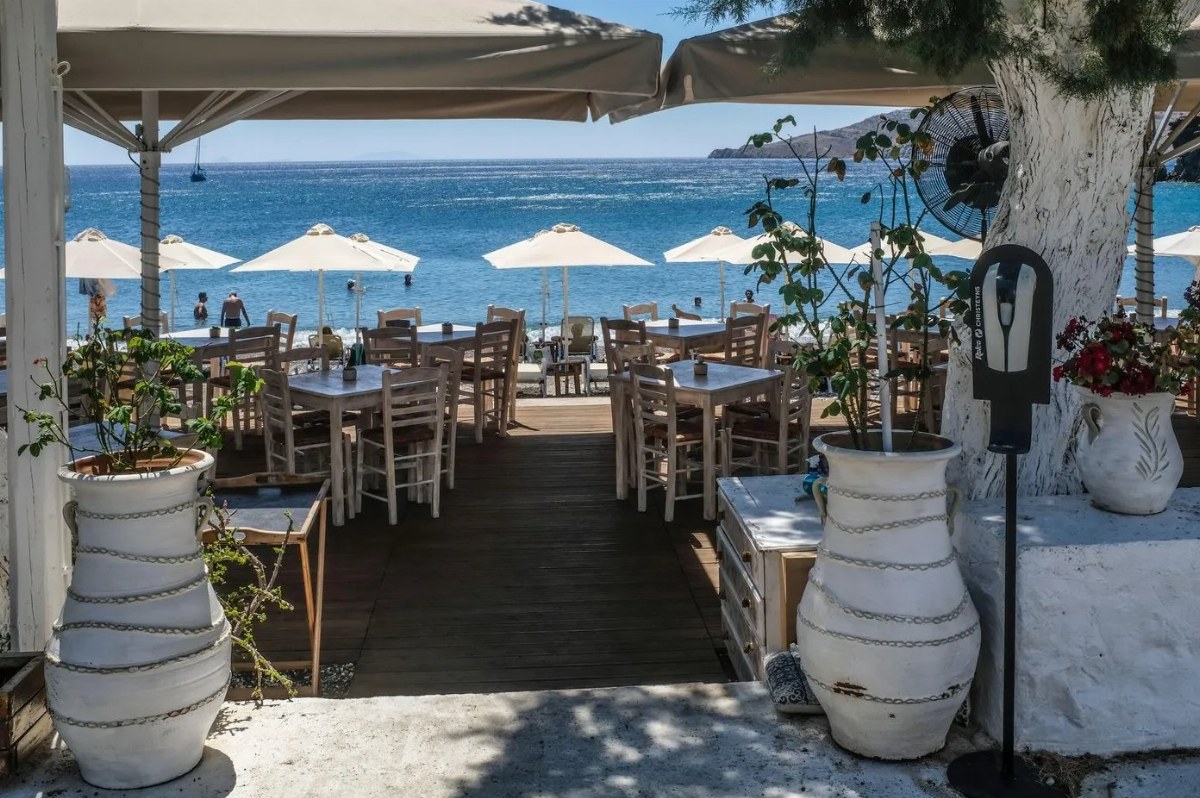
Seven islands in the Aegean Sea, including Astypalaia, have declared a state of emergency this year due to severe drought conditions, according to reports from Reuters. Authorities are seeking to conserve water reserves as climate change leads to hotter summers and increasingly unpredictable rainfall.
With the growing number of tourists placing additional pressure on water supplies during peak demand periods, there are concerns about whether adequate rainfall will occur next year. Astypalaia, reliant on bottled water for drinking, missed out on the rainfall that benefited northern and western Greece, which experienced its wettest winter since 2022. Meanwhile, heavy rains caused floods in popular destinations like Thassos.
Known for its butterfly shape and picturesque houses, Astypalaia faces the second driest season since 2020, compounding the challenges for local authorities. Mayor Nikos Komineas remarked that if all the rain that fell throughout the year were collected, it would only reach a depth of 2.5 centimeters.
The island’s sole water reservoir, created in the mid-1990s, is an artificial lake surrounded by dry hills and sparse low vegetation. The other six islands facing emergency due to drought include Karpathos, Leros, Patmos, Symi, Tinos, and Alonnisos.
Hotels Implement Water-Saving Measures
Some hotel owners on Astypalaia have begun adopting measures to reduce water consumption. Maria Alkalai, who manages a hotel on a hill overlooking the castle and the Aegean Sea, is offering guests a €5 voucher if they opt out of daily cleaning services. “Guests have responded positively to this initiative,” she said, envisioning the construction of a second hotel that would incorporate a rainwater collection system instead of a swimming pool or jacuzzi.
Greek Environment Minister Stavros Papastavrou has approved the allocation of €15 million for desalination plants, modernizing distribution networks, and water reservoirs on nine of Greece’s more than 200 inhabited islands, including €1.5 million for Astypalaia. “For Greece, water is not a theoretical issue – it is a matter of security, economic growth, and protecting local communities,” he stated during a recent European Union environment ministers’ meeting.
The National Center for Scientific Research “Demokritos” in Athens warns that drought conditions may worsen by 2049 as global temperatures rise, exacerbating water scarcity on these particularly vulnerable islands.
Spike in Water Consumption During Peak Summer Months
A map from the European Drought Observatory identified Astypalaia as experiencing early signs of drought back in June. In the coastal village of Analipsi, sheep and goat herders are transporting water to refill reservoirs or using low-quality water extracted from wells.
The desalination plant supplying drinkable water in this region has struggled to meet the demands of a population that swells from 1,400 to 7,000 during peak summer months. To alleviate this, a second temporary facility has been established in Chora, with plans for a permanent plant scheduled to be completed by the end of the year.
Numerous energy-intensive desalination plants are in operation across the Greek islands. Mayor Komineas notes that the temporary facility serves as a backup during drought periods, although he acknowledges the high costs involved. “One of my biggest concerns was what would happen if it didn’t rain again this year,” he concluded.
Farmers Return to Using Wells
Farmer Evdokia Palatianou from Astypalaia expressed frustration over authorities cutting off water supply to her farm in April to conserve resources, leading to her crops drying out. She has had to rely on pumped water from her own well. “If it doesn’t rain, I won’t plant anything again,” the 71-year-old told Reuters reporters who visited the coastal village of Livadi, the island’s most fertile area.
The lake that supplies water to households and irrigation systems in Livadi, as well as the main tourist town of Chora, currently holds approximately 150,000 cubic meters of water, which is only one-sixth of its total storage capacity. Given a daily consumption rate of about 900 cubic meters during the summer, these reserves would last for about five and a half months.
Authorities declared a water emergency in May to expedite the installation of a temporary desalination plant with a production capacity of 600 cubic meters per day for Chora, prohibiting irrigation for farmers in Livadi to protect lake reserves until autumn. Mayor Komineas stated, “We made this decision with a heavy heart, but fortunately, there is this alternative for them,” adding that farmers will be reconnected to the water supply if rains replenish Livadi’s lake reserves.