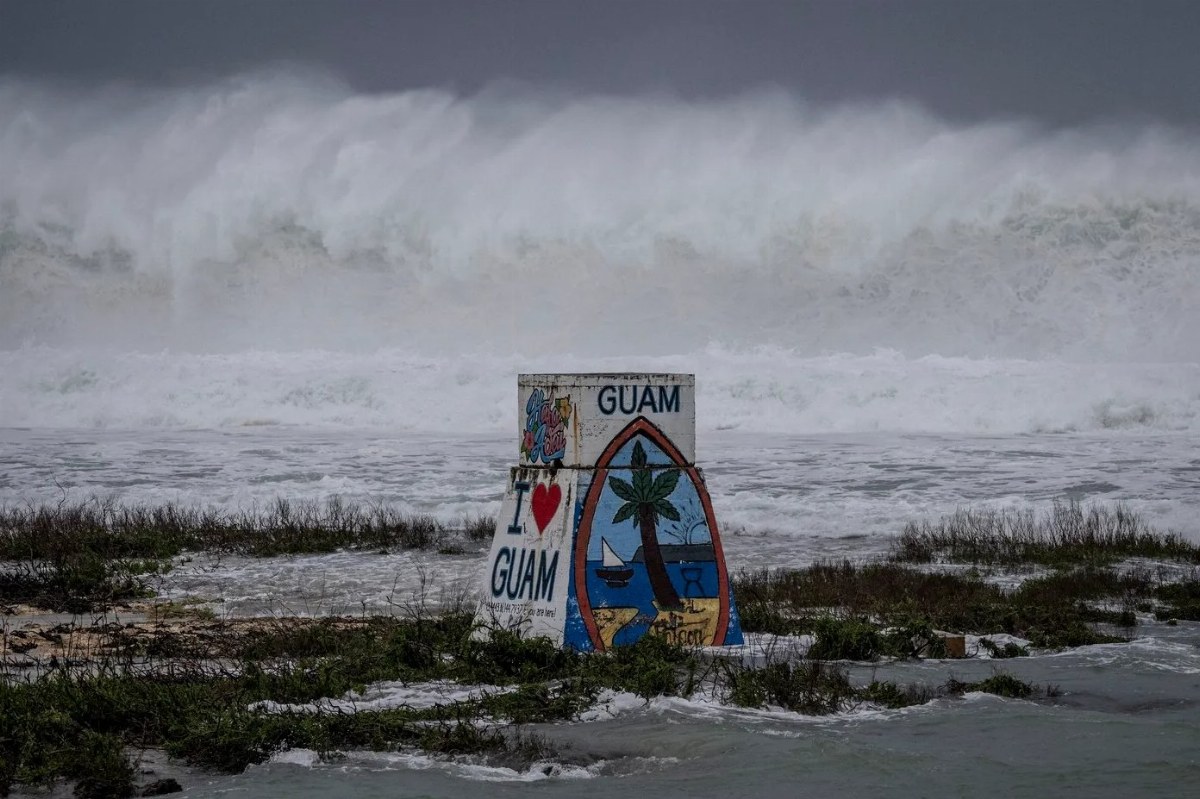
The residents of Guam and the Northern Mariana Islands are preparing for the impending arrival of Super Typhoon Bavi, which is expected to hit these American territories in the Pacific on Monday morning. The storm is forecasted to bring winds of 260 km/h, equivalent to a Category 5 hurricane, with gusts reaching up to 315 km/h.
The National Weather Service has labeled the typhoon as “very dangerous,” warning of strong winds beginning Sunday, along with potential “catastrophic” damage near the storm’s center. Major flooding from heavy rainfall is anticipated, along with coastal inundation, as wave heights could reach 10.7 meters, creating “extremely dangerous” conditions at sea.
Approximately 40,000 people reside in the Northern Mariana Islands, while the neighboring island of Guam, a distinct American territory, has a population of about 170,000.
Areas Already Affected by April Typhoon
These regions have already faced significant impacts from Super Typhoon Sinlaku in April, which left tens of thousands without power, uprooted trees, overturned vehicles, and tore roofs off many buildings.
Derma Soaladaob, a 51-year-old school bus driver for the U.S. military, expressed her concerns to AFP, stating, “I am going to the hotel. I have a concrete house, but with this noise and wind, it’s frightening.”
Emergency teams from the Federal Emergency Management Agency (FEMA) are currently in Guam, where their distribution center has been stocked with 1.1 million liters of water, 1.2 million meals, 6,700 cots, and 90 generators. Five evacuation centers have been opened in schools, with a capacity for 1,900 people, primarily for those in vulnerable housing.
Since Saturday, long lines of vehicles have formed at gas stations in Saipan, where residents have rushed to hardware stores for plywood to barricade their homes and to supermarkets for food and bottled water.
The World Meteorological Organization (WMO) warned on Friday that the climatic phenomenon El Niño, which typically occurs every two to seven years and lasts between nine and 12 months, has already begun in the tropical Pacific. This event raises water temperatures in the central and eastern equatorial Pacific, influencing global wind, pressure, and precipitation patterns.