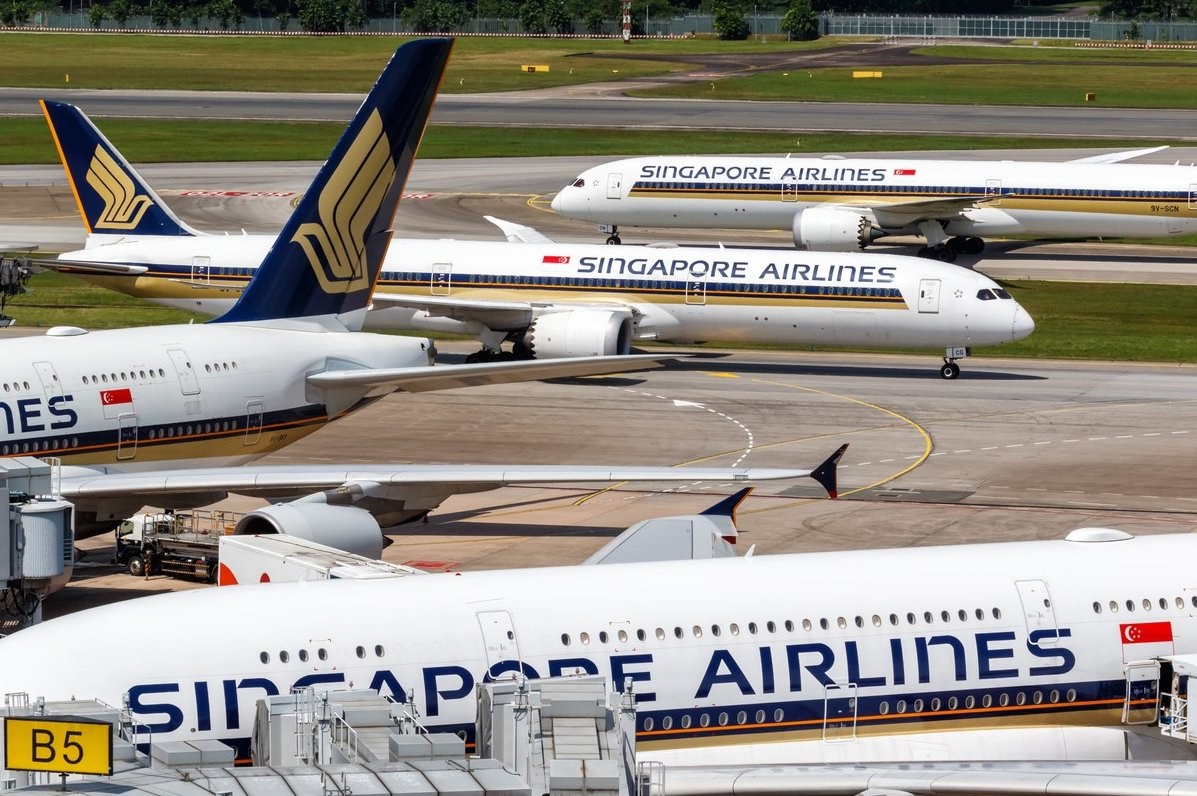
Asian airlines, which benefited from reduced operations of Middle Eastern carriers due to the outbreak of the war with Iran, are beginning to lose their previously gained advantages. According to market data cited by Reuters, Emirates, Qatar Airways, and Etihad Airways are rebuilding their flight networks and attracting passengers back with lower ticket prices.
This shift in circumstances could negatively impact carriers like Singapore Airlines, Cathay Pacific, Korean Air, and ANA Holdings, which saw higher aircraft load factors and could charge more for European routes in the early months of the conflict. Their market share, however, is now gradually decreasing.
Gulf Carriers Return to the Market
Before the war began, Gulf airlines accounted for nearly one-third of the air traffic between Asia and Europe and over half of the passengers traveling from Australia and New Zealand to Europe. When main transit hubs in the region were closed at the start of the conflict, many travelers switched to Asian carriers. By mid-June, flights operated by Emirates, Qatar Airways, and Etihad had been restored to approximately 90% of their normal service levels.
Market Normalization as Gulf Airlines Rebuild Routes
According to the International Air Transport Association (IATA), the decline in passengers using Middle Eastern airlines decreased from nearly 60% in March to 28% in May. During the same period, the growth of direct air traffic between Asia and Europe slowed from almost 30% to 15% year-on-year, indicating a gradual market normalization.
Bank of America analyst Nathan Gee, quoted by Reuters, noted that Asian carriers have likely passed the peak benefits from the conflict. However, he pointed out that since tickets for long-haul flights are usually purchased months in advance, the positive impact on financial results will still be visible in upcoming quarters.
This is evident in the case of Singapore Airlines. In March, the load factor for flights to Europe was 13.8 percentage points higher than the previous year, but by April, that advantage dropped to 4.9 percentage points, and in May, it was only 1.1 percentage points. Similar trends were observed for ANA and Cathay Pacific.
Additionally, in June, Australia lifted its travel warning for airports in the Persian Gulf. According to Flight Centre Travel Group, the following week saw a 36% increase in bookings for flights with Emirates, Qatar Airways, and Etihad Airways, confirming a gradual return of passenger confidence in the carriers from the region.