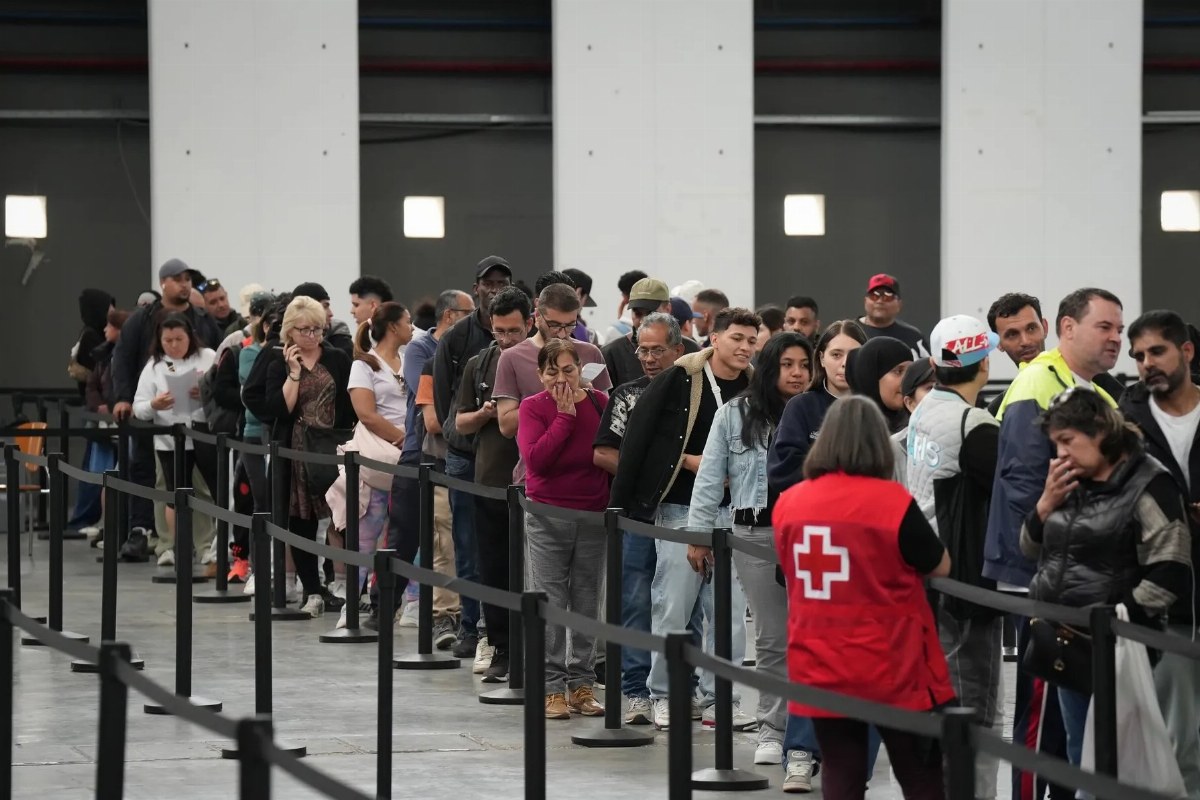
In Spain, over one million undocumented migrants have applied for a special mass regularization process, as various non-governmental organizations (NGOs) encourage final registrations before the deadline, which is set to close on Tuesday, according to reports.
In the last hours leading up to the deadline, NGOs have intensified efforts to contact and assist migrants still gathering necessary documentation to apply for a one-year residency permit.
Currently, around 840,000 individuals are working illegally in Spain, and obtaining legal status can take more than a year.
Human rights organizations such as CEAR and Cepaim have urged migrants to submit their applications even if they are still awaiting necessary documents from their home countries, including Mali, Iran, or Venezuela.
Elena Muñoz, the legal team coordinator at CEAR, stated, “We are conducting a final check of all individuals who have come to our offices and may have been missing some documents at the beginning of the process.” She added, “If a file is not yet complete, we will submit it before June 30, so they do not miss the opportunity to benefit from the regularization process.”
Between April and June, the Spanish government received nearly double the expected 500,000 registrations. By Friday, the number of submitted applications reached 1.27 million, reported Cesar Perez, head of the immigration officers’ union in Spain.
Bureaucratic Challenges
Juan Segura, the general director of Cepaim, advised migrants to submit their applications as they would receive an extension to provide any missing documents.
Experts note that migrants from conflict-affected countries, such as Iran and Mali, have faced obstacles in legalizing their documents at Spanish consulates, a process that is also complex in Algeria and Nigeria. Venezuelans have encountered delays in obtaining apostilles for criminal record certificates, while recent changes in Spain’s policy forced asylum seekers into this procedure starting in early June, leaving them less time to prepare their documentation.
Segura remarked, “This meant that some Venezuelans had less time to gather the necessary documents,” adding that many now face difficulties and it would be advisable to extend the deadline.
The Ministry of Migration has stated that it does not intend to extend the deadline.
CEAR argues that a permanent solution is required so that migrants do not have to spend two years in an irregular situation before obtaining residency permits.
Silvana Cabrera, who leads an NGO in Valencia, expressed concern, stating, “This is a worrying situation; many migrants may not succeed in registering.”
NGOs indicate that at least 20% of the approximately one million applications could be rejected, partly due to missing documents and limited administrative flexibility.
Meloni’s Criticism
The Spanish socialist government’s policy has faced criticism from the opposition and has also drawn ire in Europe. Recently, Prime Minister Giorgia Meloni criticized Pedro Sánchez during heated exchanges over migration among EU leaders, claiming that Spain’s decision will have consequences beyond its borders.
Meloni stated that what Spain does “affects its neighbors.” According to EU diplomats quoted by Euractiv, this discussion occurred amid talks about establishing deportation centers outside Europe.
Sánchez criticized the rigid stance, prompting Meloni to support Danish Prime Minister Mette Frederiksen while simultaneously attacking Spain’s migrant-friendly policy, arguing that it impacts the entire Schengen area.
These statements emerged just days after European lawmakers approved an EU regulation on returns, known as the “missing piece” of the new Migration and Asylum Pact, which came into force on June 12.
The new regulation paves the way for so-called “return centers”—facilities in third countries where rejected asylum seekers could be transferred while awaiting expulsion—a key requirement for governments advocating for stricter migration policies.
This proposal has faced sharp criticism from human rights organizations and leftist lawmakers, who argue that it risks undermining migrants’ rights.