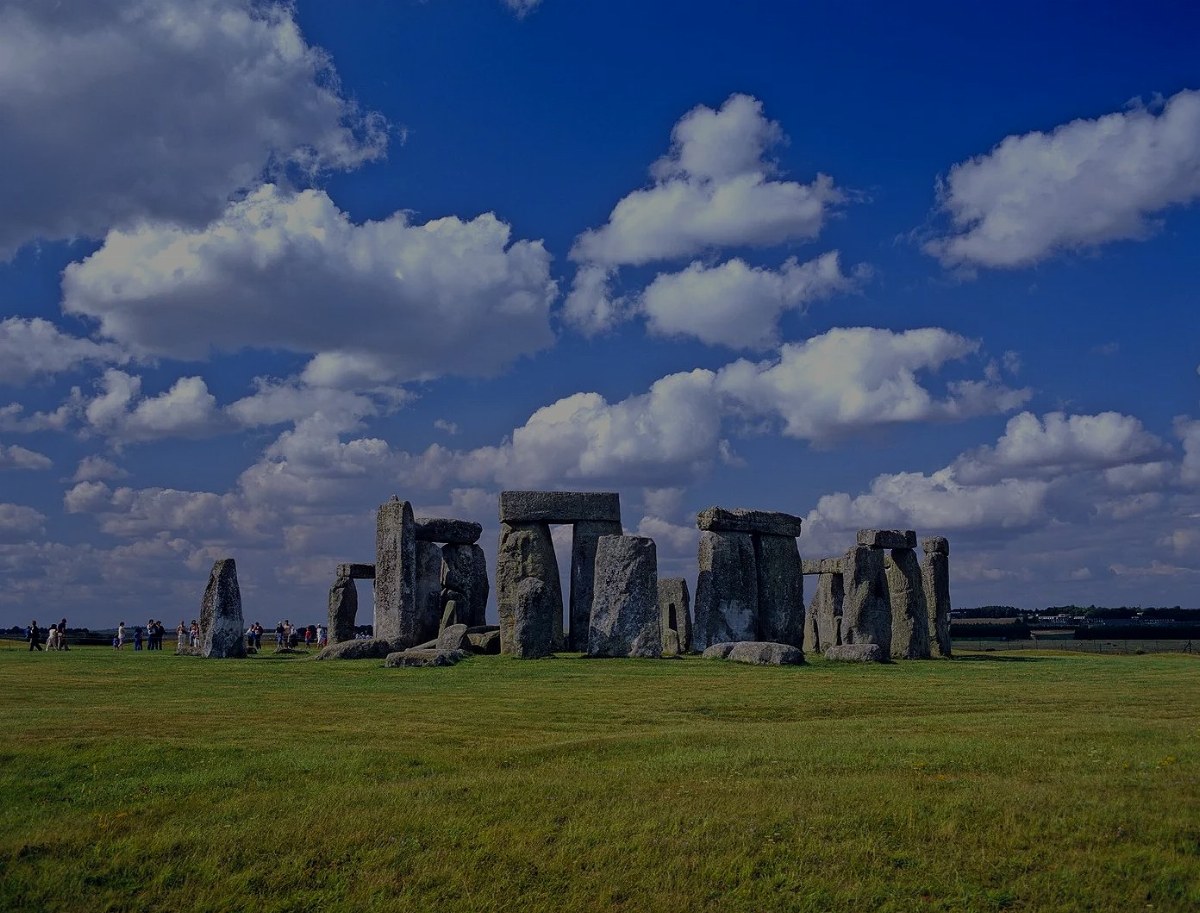
In Bulford, just five kilometers from Stonehenge, archaeologists have unearthed remnants of an ancient gathering site used by early farmers, according to reports. The excavation revealed two earth pits that likely held wooden posts aligned with the Sun during the summer and winter solstices, similar to the famous prehistoric monument.
These posts were spaced approximately 120 meters apart and are estimated to have stood between 2 to 4 meters high. Dating indicates the site is around 5,000 years old, making it 500 years older thanStonehenge.
This discovery coincides with the earliest activities on the nearby plateau, which included initial earthworks made half a millennium before the construction of the megaliths. The remains were initially discovered a decade ago during land clearance for new military housing, but detailed alignment analysis has only recently been conducted, involving the reconstruction of the sky as it appeared 5,000 years ago.
Reconstructing the Sky of 5,000 Years Ago
Dr. Fabio Silva, an archaeoastronomer at Bournemouth University and Skyscape Academy, described the gradual changes in the positions of the Sun, Moon, planets, and stars over centuries. “We essentially need to reconstruct what the sky looked like exactly 5,000 years ago, including where the Sun rose and at what time,” said Silva. “Considering the width of the posts, the alignment is spot on, precisely aligned with the sunrise of the summer solstice and the sunset of the winter solstice.”
Phil Harding from Wessex Archaeology, who led the excavations, remarked that he realized the pits indicated the general direction of the summer solstice sunrise as soon as he discovered them. “This finding in Bulford is among the most significant in my career. It provides insights into the entire community, revealing how they thought, behaved, and revered the sky,” he added.
Connection to Stonehenge
Dr. Jennifer Wexler, a history curator at English Heritage, explained that the builders of Stonehenge and those at Bulford were primitive farmers, tightly connected to seasonal cycles and the Sun’s journey. She suggests that the site indicates those who constructed the early phases of Stonehenge may have gathered there seasonally for construction work.
While the summer solstice is a major draw at Stonehenge today, Wexler suggests that 5,000 years ago, the winter solstice held greater significance for ancient communities. “Winter may have been particularly important, as it literally marks a time when light diminishes, and perhaps there was a need to evoke that return or mark it, as the arrival of spring follows with the hope of prosperous crops and livestock,” she said.
Key Findings of the Excavation
The pits that housed these posts were not the only findings during the excavations. Surrounding them were numerous other pits containing artifacts from Bulford’s prehistoric inhabitants. Using radiocarbon dating, the team confirmed the structure’s age of 5,000 years. Artifacts included a deer antler believed to have been used for digging, other carved animal bones, and fragments of intricately decorated pottery.
Stone tools made from flint were also discovered, including a rare Neolithic knife polished into a disc shape, found standing upright as if carefully placed. “I think it was our standout discovery. What makes it so special is the craftsmanship. It is the work of a true artisan. Perhaps its disc shape references the Sun, who knows?” Phil Harding remarked.