without an American Hustle, but with horse people and TV people, as well as fans wearing Messi shirts

Between the USA – Paraguay and Iran – New Zealand, Los Angeles took the time to celebrate the LGBTQ+ community, through the oldest Pride parade in the world, which took place on Sunday in the Hollywood district.
On the boulevards of Hollywood, under a heat of almost 30°C, between two games of CM 2026, another kind of mass spectacle took place: LA Pride 2026.
With an age of 56 years, the LGBTQ+ parade in Los Angeles no longer creates fractures in society, as it happens in Bucharest. The risk of incidents is so low that security is ensured by a handful of police officers on bicycles.
From the Aztecs to number 10
Visually, the parade is a total assault on the retina. Diversity no longer has dogmatic boundaries, becoming pure spectacle.
On one side, dancers in ritualistic Aztec costumes with giant feather headdresses—a historical nod to a deeply Hispanic Los Angeles.
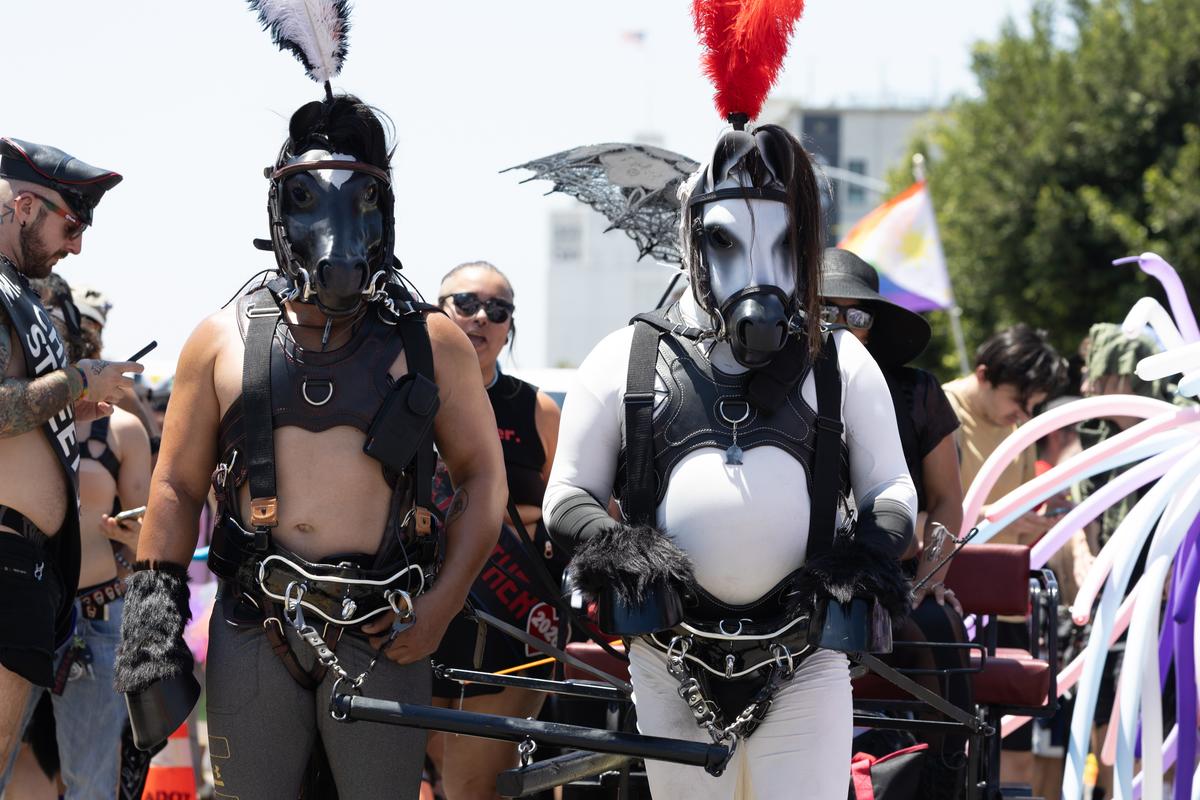
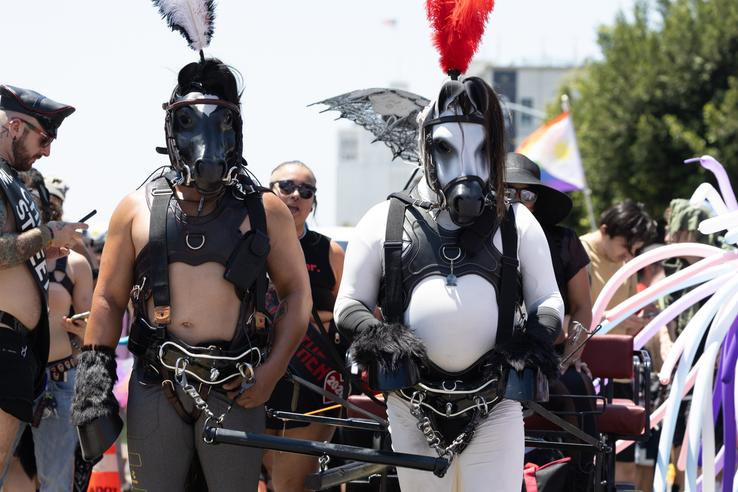
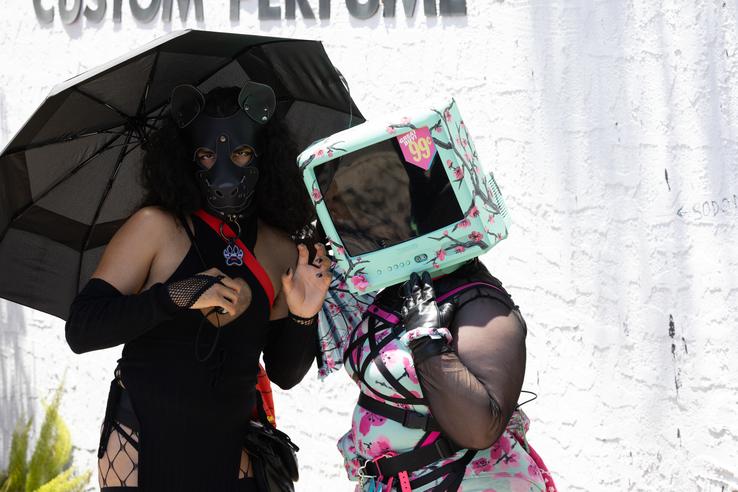
On the other hand, we have an outpouring of modern underground manifestations: costumes of horses pulling a carriage, puppy play latex masks in garish neon hues, and conceptual installations, such as that of a participant with her full head embedded in a retro tube television decorated with cherry blossoms.
And, because we are talking about a city that breathes football these weeks, the intersection with the World Cup was inevitable.
Through the crowd, among the flags, costumes and placards of mothers from the Asian community supporting their children, walks an individual wearing Argentina's kit: Messi, number 10.

Here's the raw picture of street realism in 2026: the sacred of microbites walking unhindered through the profane of the Hollywood parade.
Nobody protests, nobody gets scandalized. For Los Angeles, this is the state of affairs.
Rainbow capitalism
In the same compact mass of people, radically opposite messages coexist.
We have the opulence of the sponsors, some financial giants like Starbucks, Google or Disney, but also the tough placards of the associations of health workers, who demand to tax the big fortunes in the referendum of November 3, 2026 and decree that “the rich are destroying the world”.
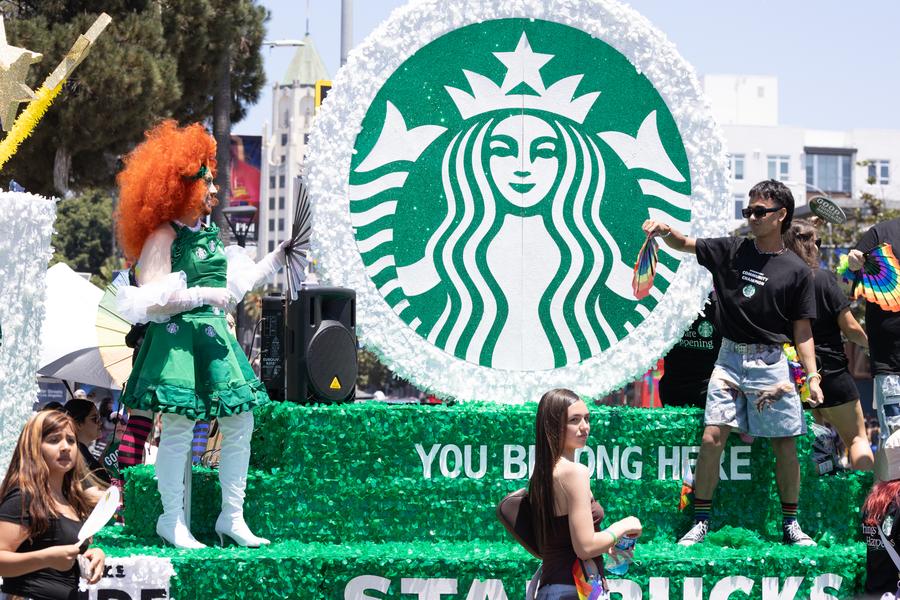
This is America: a fascinatingly tolerant space with its own paradoxes, where you can protest billionaires from the window of a bus provided by a multinational.
“This is Hollywood! We're gonna have a parade”
To understand how this event came to be considered a mundane public manifestation in California, we need to look back to time zero: June 28, 1970.
Then the legal definition of this phenomenon was given. A sober, eminently political “march” was being organized in New York.
In Los Angeles, activist Troy Perry made history with the line: “We're going to have a parade. This is Hollywood!”
1970: When the state tried financial blackmail
The system's reaction since then has been marked by fierce administrative resistance. Police Chief Edward Davis, along with the Police Commission, instituted a massive financial freeze to stop them.
They asked for a $1 million insurance policy, a $500,000 cash bond and $1,500 in advance payment for the agents' overtime.
But the organizers went to the California Superior Court, and the judges struck down the police abuse just 48 hours before the start.
The state was obliged not only to allow the parade, but also to protect it. That was the first legal and authorized parade in the community's world history.
Today's Bucharest and the Los Angeles of the 70s
If we compare what is happening in Los Angeles with the reality of Bucharest Pride, the contrast seems like a simple shift in time. Bucharest today is, structurally and socially, exactly in the phase in which Los Angeles was in the 70s.
In Bucharest, on Calea Victoriei, we are still witnessing a ritual of unresolved tensions, a fact betrayed by the devices of the Gendarmerie and the same administrative anxiety that Hollywood experienced half a century ago.
The same pains of doing
Moreover, the simultaneous or alternative organization of the “March for Normality” in Romania is the faithful equivalent of the 50,000 spectators, partly hostile, who marched from the sidelines or contested the event in Hollywood in 1970.
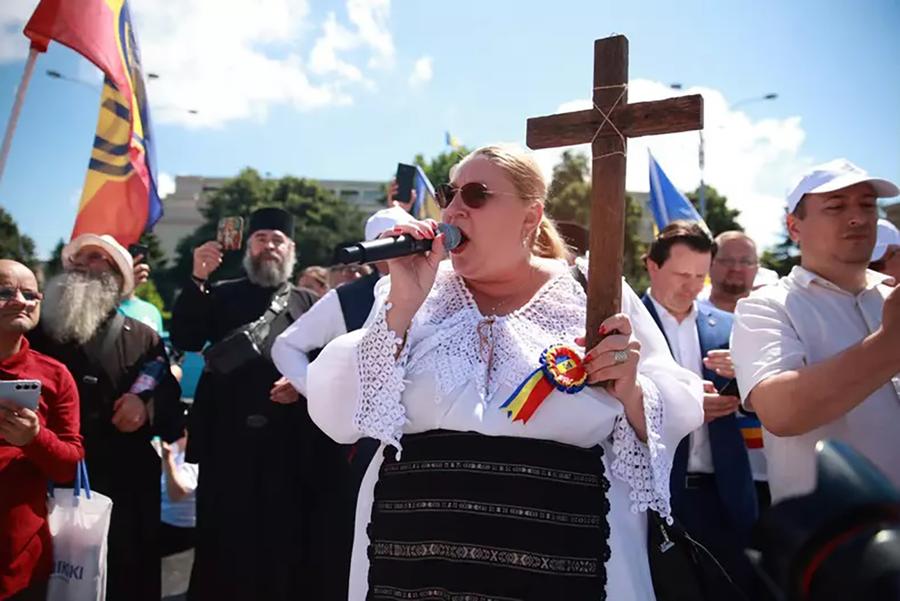
Diana Sosoacă, at the March for normality
What in Bucharest is a heated dispute about morality, public space and tradition represents, in fact, the pains of making a social phenomenon that the Californian metropolis legally cut off 56 years ago.
Los Angeles didn't become permissive overnight; it went through exactly the same phase of contestation, tension and debate that Romanian society is in today.