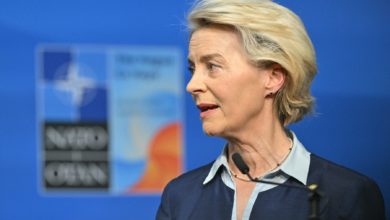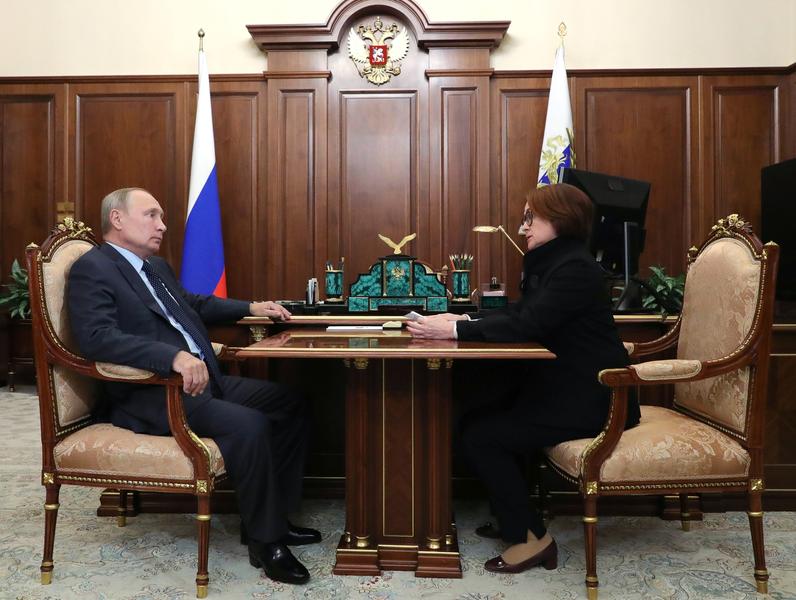
Her appointments were canceled and she was not seen in public for over a week. The mystery surrounding the whereabouts of Elvira Nabiullina (60), governor of the Central Bank of Russia, deepens.
Her absence from several important events was very noticeable: on June 4, for example, her name was suddenly removed from the list of speakers at the St. Petersburg International Economic Forum (SPIEF), the Greek press writes.
Nabiullina also missed attending an exhibition in Moscow and a conference of the National Securities Market Association on June 9.
Jjournalist Dan Popa sends the “EconoMix” newsletter every Thursday morning. If you are interested in personal finances and want to receive economic recommendations, you can subscribe here:
What fueled the speculation was Nabiullina's absence from a meeting of top economists with President Putin on June 10. The meeting focused on inflation and interest rates – that is, the central bank's main concerns.
Putin's spokesman, Dmitry Peskov, said Nabiullina was simply ill. “People get sick sometimes – there's nothing unusual about that,” Peskov said, wishing him only “health and strength.”
However, opposition media outlets are talking about house arrest.
Dmitri Skorobutov, a former editor-in-chief of Russian state television who lives in exile in Switzerland, claims in a YouTube video that the central bank chief is effectively under house arrest.
Speculation intensified after a heated confrontation with Vladimir Putin
As Skorobutov claims, speculation intensified after a heated confrontation with Vladimir Putin in late May or early June.
During this meeting, Nabiullina reportedly delivered an ultimatum to the Russian president: she will resign if Putin declares full mobilization for the needs of the war in Ukraine.
The Telegram channel “Mozhem Obyasbit” suggests that Nabiullina's absence could be a form of protest against the Kremlin's war policy.
Although a former close confidant of the Russian president, Nabiullina is reportedly considering resigning and leaving the country. Her term ends in 2027.
“Mozhem Obyasbit” cites sources within the Central Bank who claim that Nabiullina made it clear to Putin that she will continue in her position only under certain conditions: in the event of full mobilization and the closing of the borders, she will no longer be willing to perform her duties.
“Diplomatic” disease
According to opposition sources, Nabiullina was suffering from a “diplomatic” illness. She had informed President Putin of her plans, then “fell diplomatically ill” and is now awaiting his response.
“If full mobilization is declared, Nabiullina's resignation and possible departure from Russia could be interpreted as a 'disloyalty',” claims the Mozhem Obyasbit channel.
This is not the first time that there has been speculation in Russia about the health of senior officials when they are under political pressure. In the past there were rumors that Nabiullina was hospitalized.
Elvira Nabiullina is due to appear again at an economic conference of the Central Bank of Russia in early July at the latest. It remains to be seen whether the “diplomatic” illness of the governor of the Central Bank of Russia will be treated.
Fissures in the economy
Nearly four and a half years after the start of the war in Ukraine, the cracks in the Russian economy are becoming apparent.
And this is not just because the Ukrainians have recently launched repeated long-range and medium-range drone airstrikes against the center of Russian oil installations.
In a report published last Thursday by the Kiel Institute for the World Economy in collaboration with the Stockholm Institute for Transition Economics, the authors of both research institutions confirm numerous weaknesses of the Russian economy.
One of the report's many conclusions is that Russia's economy shows “clear signs of exhaustion” after more than four years of war, as shown in the analysis titled “Endgame: Russia's War Economy Reaches Its Limits.”
According to the report, the current phase of the war has given increasingly clear indications that Russia's economy has reached its “end stage”.
Although the Russian economy initially proved quite resilient in the early years of the war in Ukraine, the state's fiscal reserves are now “virtually exhausted”, says Moritz Schulerik, president of the Kiel Institute.
Oil and gas revenues are the driving force behind Putin's war in Ukraine – but they have fallen sharply in 2026. In the first quarter, they fell by 45% compared to the same period last year, the analysis of the two economic research institutes concludes.
“Liquid assets of the Russian sovereign wealth fund have fallen from 6.5 percent of GDP at the start of the war to just 1.8 percent in April 2026,” the report said, arguing that this had “significantly weakened” Russia's economic fundamentals and that Russian economic growth had largely stagnated. At the same time, “higher oil prices resulting from the Gulf War are likely to have only temporary positive fiscal effects,” says Sularik.
Defense expenditure
According to the Trading Economics website, Russia's military spending rose to more than $190 billion last year. In 2024, however, they were estimated to be around $149 billion.
While Russia's military spending is on the rise, Russia's state budget deficit rose sharply in the first quarter of this year.
According to a report by the Kiel and Stockholm Institutes, this means that the budget deficit limit that had been budgeted for the entire calendar year 2026 has already been reached.