Iran is playing on Trump's nerves. US president says he reserves 'extreme alternative' if Tehran refuses to sign deal

Another day of high-level diplomatic tensions puts the international community in front of an uncertain scenario regarding the war in the Middle East. US President Donald Trump excitedly announced that a historic deal with Iran is to be signed on Sunday, June 14, a critical step that would lead to the immediate reopening of the Strait of Hormuz. However, the reality in Tehran outlines a completely different dynamic, with Iranian officials firmly rejecting the timetable imposed by the White House leader.
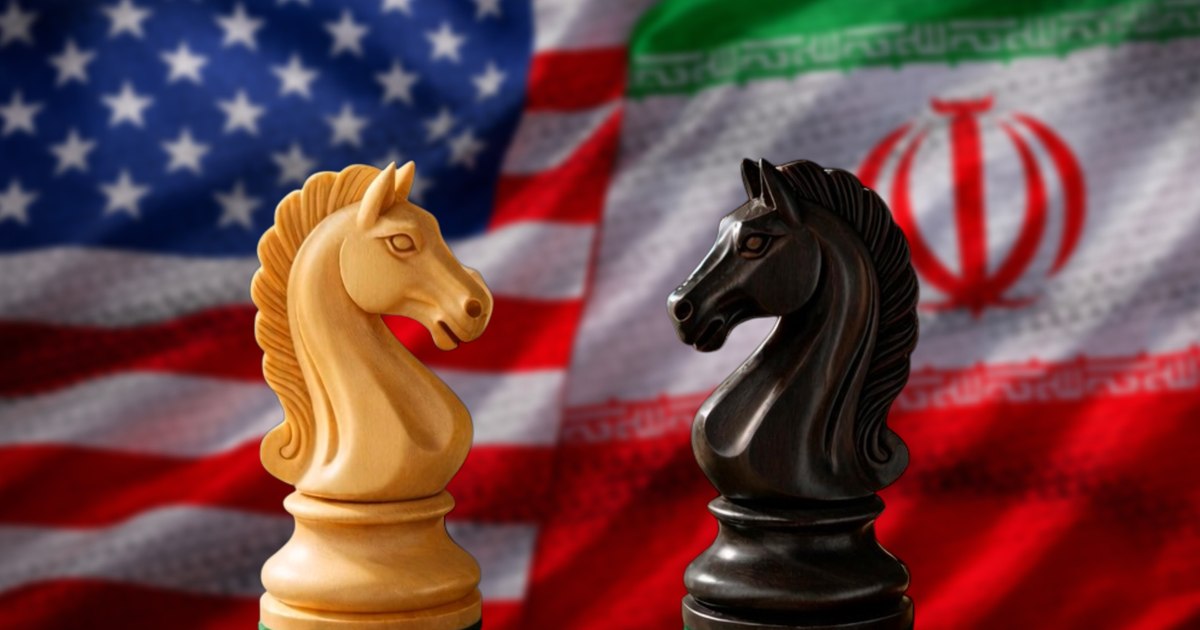
USA and Iran with the peace agreement on the table/PHOTO: shutterstock
Optimism in the White House, caution in Tehran
In a characteristic post on the Truth Social platform, Donald Trump said the new document would be “a wall against nuclear weapons,” unlike the 2015 JCPOA agreement promoted by the Obama administration, which he called “a smooth path to the nuclear bomb.” Trump assured the audience that this time, “no penny will change the situation” and that specialized US units will be sent to neutralize Iran's nuclear infrastructure hidden in the mountains.
On the other hand, the Islamic Revolutionary Guard Corps (IRGC) and Tehran Foreign Ministry spokesman Esmail Baghaei criticized Trump's “unusual insistence”. The Iranian side officially rejected the possibility of a signing on Sunday, citing Washington's “hesitations” and the fact that the structural parameters of its nuclear program are far from being established.
Electronic signature and Tehran's warning
International mediators, led by Pakistani Prime Minister Shehbaz Sharif, have confirmed that intensive preparations are being made for an “e-signature” within 24 hours to end a devastating three-month conflict. Sharif said he was convinced that this pact would lay the foundations for lasting peace.
However, Iranian diplomacy quickly poured cold water on American enthusiasm. Esmaeil Baghaei, a spokesman for the Foreign Ministry in Tehran, advised extreme caution: “We will have to wait and see the exact date. It will certainly not happen tomorrow, although we do not rule out the signing of the memorandum in the coming days.”
Sources close to the negotiations indicate that the mediators – who include Pakistani Prime Minister Shehbaz Sharif – proposed that the memorandum of understanding be signed electronically. This emergency formula was chosen for reasons of security and logistics, given that Trump is due to leave for the G7 summit in France on Monday, and the simultaneous travel of Vice President JD Vance to Europe would have been impossible to coordinate.
Mediators fear that the longer the document remains unsigned, the greater the risk that one side will change its mind or that a military incident will blow up all diplomatic progress.
Parallel Narratives: Who is really the winner?
As he has accustomed us during his mandates, Donald Trump uses a strategy of extreme steps. Just a day before the announcement, he threatened to destroy the Iranian oil terminal on Kharg Island. Today, it offers the prospect of peace. It is the 40th time that the American leader has announced an imminent agreement, only to later return to military rhetoric.
After months of delays, Iran announces when Ali Khamenei will be buried
Clearly, both camps are trying to sell this draft agreement to domestic audiences as a capitulation to the adversary:
Tehran version
Foreign Minister Abbas Araghchi triumphantly declared that “Iran is the winner of the war with the US.” Iran's semi-official media claim the deal calls for the release of $24 billion, the lifting of the US naval blockade and Iran's right to charge transit fees through Hormuz.
Washington's version
US officials blatantly contradict these claims. They claim that Iran's nuclear program will be completely dismantled, nuclear materials will be destroyed, and frozen funds will not be released until Tehran completely stops funding militant groups in the region.
Just hours after the leaders' upbeat statements, US forces were again forced to shoot down Iranian drones targeting merchant ships in the Strait of Hormuz – a vital route through which a fifth of the world's oil needs pass.
Although under a partial ceasefire after the US-Israeli air campaign in February, Iran has managed to restore about 75% of its stockpile of long-range missiles and has integrated state-of-the-art Russian munitions.
The US Central Command (CENTCOM) reported that US forces shot down several Iranian drones targeting merchant ships in the Strait of Hormuz on Saturday morning, actions Trump described as “totally unacceptable”.
US Treasury Secretary Scott Bessent is threatening to liquidate $24 billion in frozen Iranian funds to cover regional damage, while the US Navy continues to escort daily shipments of 7 million barrels of oil through the blocked strait.
Deep discontent in Tel Aviv
This diplomatic rush by Washington sent shock waves in Tel Aviv. Israeli Prime Minister Benjamin Netanyahu reportedly clashed violently behind the scenes with Donald Trump after the White House asked Israel to scale back its military operations in Lebanon against Hezbollah in order not to compromise negotiations with Iran.
Israel's response was visible on Saturday, when the Israeli air force launched new massive raids in southern Lebanon and issued evacuation orders for the city of Nabatieh, signaling it will pursue its own security goals regardless of the electoral or diplomatic calendar imposed by Washington.
The major discrepancies between Washington's triumphalist narrative and Tehran's defensive reality demonstrate that, despite approaching a consensus, the path to a verifiable peace remains undermined by divergent geopolitical interests.