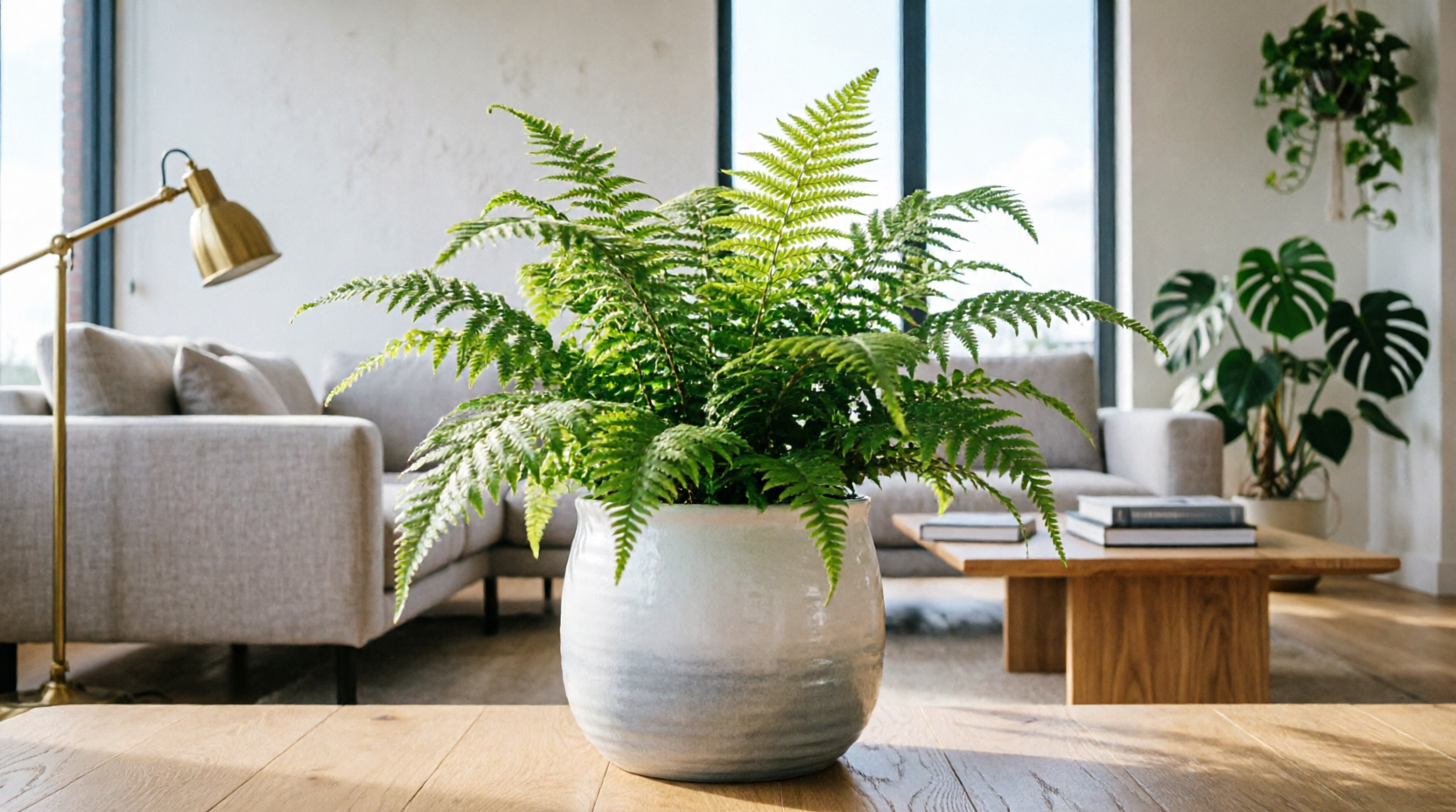
Fern is a beautiful decorative foliage plant with unusual openwork fronds. It requires a special soil mixture. If the soil is chosen incorrectly, the fern will quickly turn yellow and dry out – the author of the Zen channel “Exotica – Encyclopedia of House Plants” warned about this.
Fern suffers from unsuitable soil – signs
If the fronds have turned yellow, dried out and practically do not grow, and the soil does not dry out and smells bad, then the soil is not suitable for your fern. Be sure to check the condition of the roots and whether the substrate is of high quality.
By the way, you need to lay a drainage layer of expanded clay on the bottom of the pot. It will prevent moisture stagnation and root rot.
Composition of soil for ferns
Good soil for ferns should be moisture-absorbing, light, loose, slightly acidic – and rich in organic matter. If the soil is too dense, the roots will begin to suffocate and the plant will weaken.
The classic recipe for soil for ferns is:
- high-moor peat – 2 parts;
- leaf soil – 1 part;
- crushed pine bark – 1 part;
- perlite – half of the part;
- charcoal.
Perlite and bark act as loosening agents, thanks to which the soil does not become compacted. Disintegrants form air pockets near the roots and also prevent soil acidification.
One of the most common mistakes is to flood the fern with water. Yes, these plants love stable humidity, but constantly wet soil is destructive for them.