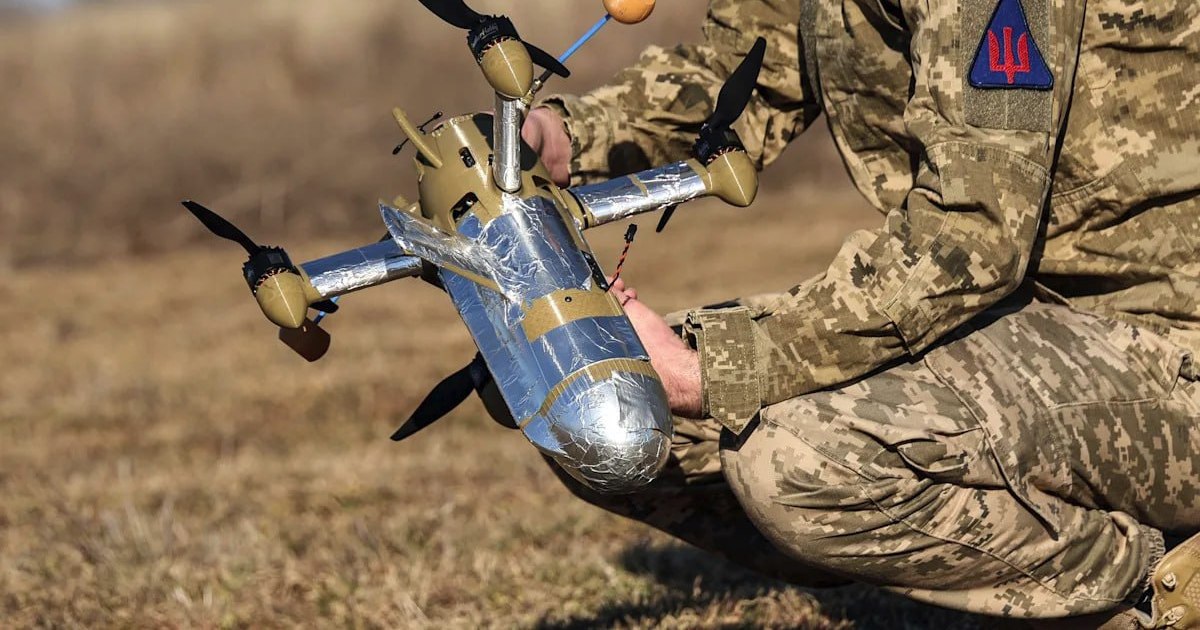
As Russia launches an increasing number of kamikaze drones on Ukrainian cities, Ukraine's air defenses are quickly adapting. In addition to classic defense systems, interceptor drones and the crews that operate them play an increasingly important role. To deal with the threat, the military and volunteer organizations are rapidly training new operators, turning ex-gamers, IT specialists or wounded soldiers into “Shahed” hunters.
Interceptor drone operator/PHOTO:X
A crew operating interceptor drones usually consists of three to four people: pilots, navigators, technicians and sometimes drivers. Today, the lives of people in many Ukrainian cities depend on the skill of these groups.
The number of Russian “Shahed” drones is increasing from month to month, and Ukraine needs more and more operators capable of intercepting them. To cover this need, the army, volunteers and drone manufacturers have created training centers where former gamers, IT specialists or soldiers from other units are transformed into drone “hunters”, writes pravda.ua.
Where do future operators come from?
Candidates come from two sources: from among the active military or through recruitment from the civilian environment.
Pilots with experience on FPV drones or “wing” type reconnaissance drones are especially selected from the military. Sometimes wounded soldiers who can no longer fight on the front line are also sent. For them, specializing as a drone operator or technician represents a new military profession and a chance to remain active in the defense system.
“Sometimes people come who, due to injuries, can no longer become pilots. They may have amputated fingers or tremors after severe concussions. For them we have technician training: they work on the range, assemble catapults, antennas, launch platforms and learn to configure the equipment”explains Volodimir, coordinator of a training program within the Training Center of the Serghei Pritula Foundation. Volodymyr himself became an instructor after being wounded at the front.
Civilians are often selected for their familiarity with technology and how quickly they adapt to new systems. Many have experience in gaming or IT.
In the Darknode battalion of the 412th Unmanned Systems Brigade “Nemesis”, one of the most effective in intercepting “Shahed” drones, training an inexperienced pilot can take up to a month. Some recruits are initially sent to operate reconnaissance drones to learn terrain orientation, launch and landing skills essential for close air defense missions.
Ukraine's defense industry boom caught Putin by surprise. Kiev's weapons strike in the heart of Russia
What is learned in a training center
An example is the Training Center of the Serghei Pritula Foundation, where operators are trained for two types of drones: Sting multicopters, used against the “Shahed”, and “Taras-P” aircraft-type drones, used against reconnaissance drones and “Molnia” devices.
The Sting course lasts five days and is aimed at military personnel who already have experience with FPV drones. The first two days are dedicated to theory, simulators and familiarization with drone maintenance, and the next three are reserved for practical flights.
Simulators such as Liftoff and “Obrii” are used for training, and computers are connected in a common network so that crews can practice missions together.
The program for “Taras-P” lasts two weeks and is also addressed to those without flying experience. Launching and maintaining these drones is more complex, and preparing for a flight can exceed 15 minutes.
“The Taras-P is basically a single-use aircraft. A machine can go through dozens of preparations before the crew has mastered all the procedures, which means high wear and tear and many repairs”, says Andrii, responsible for the operational and training activity of the centre.
Entry test and 50 kilometer flights
Before receiving an actual interceptor, trainees must demonstrate that they can control a regular 10-inch FPV by flying through gates and performing figure-eight maneuvers.
“We have to make sure the man is ready. During training, expensive equipment can be lost if the pilot doesn't master the basics”explains Volodymyr.
After the test, the trainees move on to exercises with the Sting: rapid mission preparation, target search and simulated interception. Ukrainian VB 140 Flamingo drones are used as targets.
“Taras-P” crews must make at least two flights at the maximum distance, almost 50 km. Then there are tactical scenarios: the operators receive coordinates, take off and search for the target themselves, which they have to track and “hit” at the right time.
“They will feel this war at home.” Zelensky announces the intensification of attacks on Russia. Moscow resorts to nuclear rhetoric
Training in near combat conditions
All flights from the range are coordinated with the General Staff and the Air Force. If an alert occurs, missions are suspended immediately to avoid losing the devices to electronic warfare or other units operating in the same area.
Instructors would prefer to spend more time with each crew, but military units can only provide five or fourteen days of off-duty training.
From Trainee to “Shahed” Hunter
After graduation, new operators are integrated into experienced teams and participate in combat tours alongside veterans. At first they just observe, then they gradually take over operative tasks. When they gain enough confidence to make real-time decisions, they get their own control station and enter combat duty.
In Ukraine, the tranquility of cities increasingly depends on these operators. The well-trained crews manage to shoot down the “Shahed” drones before the residents hear the characteristic sound of “mopeds” announcing an airstrike.