Eugen Tomac does not manage to put together a Government accepted by the parties. “The parties told us what they don't accept, but they didn't tell us what they would accept”

The government proposed by Eugen Tomac seems to have less and less chance of obtaining the necessary support, according to the statements of the main political leaders. For now, the political formations have drawn clear red lines, but avoid saying which form of government they would support next. At the same time, the list of difficulties is expanding, more and more of the people circulated for ministerial positions announcing that they refuse to be nominated.
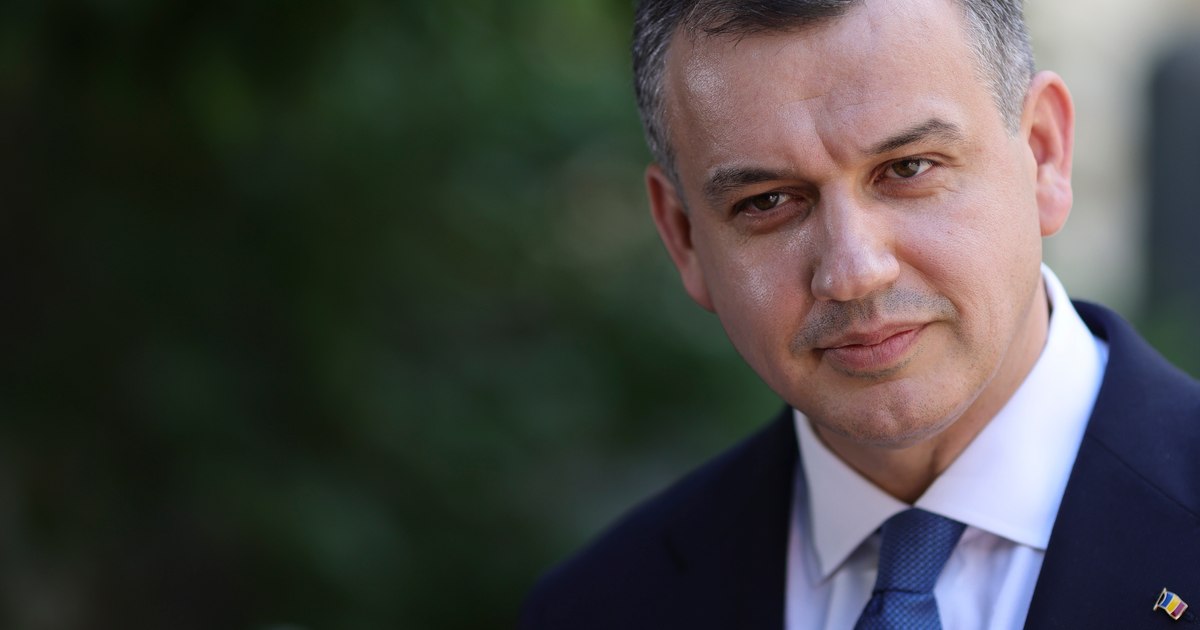
Eugen Tomac, designated prime minister Photo: Inquam Photos/Octav Ganea
One of the names circulated for the position of Minister of Health was Dr. Cătălina Poiana, president of the College of Doctors, but she announced on Sunday that she refuses the nomination. Later, Radu Burnete, proposed for the position of deputy prime minister, as well as Adrian Papahagi, circulated for the Culture portfolio, rejected the possibility of being part of the future Executive.
“Adevărul” spoke with political analyst Marius Ghincea about the challenges of forming a new Government and the stakes behind the political negotiations. He believes that the refusal of the parties to assume and support this political project is the main cause of the withdrawals from the initially circulated government formula.
“Considering that, at this moment, the general impression both in society and on the political scene is that the Executive proposed by Mr. Tomac has no chance of obtaining the investiture vote and the confidence of the Parliament, it is natural that the people considered for ministerial positions are not willing to appear on a list without real prospects of success. Nobody wants to be associated with a political project perceived as doomed to failure”says the analyst.
Given that, in addition to Radu Burnete, Adrian Papahagi and the proposed candidate for the Ministry of Health, information has emerged according to which some of the people associated with Eugen Tomac's team could remain in the future government formula, but under the leadership of another appointed prime minister, the question remains whether it still matters who holds the position of prime minister or whether the option of a technocratic government is rejected from the start by the political class.
“I think that, on the one hand, the person nominated by the president for the position of prime minister is rejected, because he does not enjoy the trust of the political parties and, consequently, he cannot obtain a sufficient number of votes in the Parliament.
Second, the parties have made it quite clear that they prefer a political government. If we look at Mr. Kelemen's statements yesterday, the message was unequivocal: he will not support the nomination of Mr. Tomac and the cabinet proposed by him. Practically, this positioning considerably reduced the chances of the candidate designated for the position of prime minister and shows that the parties want a political executive, even if it could be led by a technocratic or independent prime minister.
Therefore, it is more likely that a possible new proposal will target a technocrat or politically unaffiliated prime minister, but with a team of ministers supported by the ruling parties. If we look at the PNL, USR and UDMR positions, this seems to be the preferred option.
As for the PSD, the party seems open to a formula with technocrat ministers. However, Mr. Tomac has already been accused of considering people close to the Social Democrats for portfolios such as Labor or Development. From this perspective, PSD's position is not surprising“, says Marius Ghincea.
PSD President Sorin Grindeanu, Photo Mediafax
PSD gives mixed signals regarding the assumption of a government
The PSD conveys that it is ready to take part in the government, without making this conditional on occupying the position of prime minister. However, there are also voices in the party that support the option of a social-democratic prime minister. Senator Daniel Zamfir stated that one of the proposals discussed was the appointment of Sorin Grindeanu for this position:
“However, Mr. Grindeanu did not take such a step. It is one thing for a party member to say that he should be prime minister and quite another for Mr. Grindeanu to appear in front of the press and say that he is willing to take over this position. In addition, it also matters if such a nomination is feasible from a political point of view.
Even if PSD took the initiative to form the Government, it would still need a parliamentary majority. Without the support of UDMR, USR and PNL, we cannot talk about a stable majority. The refusal of the UDMR to support Mr. Tomac's proposal shows, in fact, that this is the central point of the political crisis, because without the UDMR an alternative majority cannot be built, such as PSD, UDMR and the group of national minorities.
PSD harshly attacks Ilie Bolojan after he announced that the liberals are not voting for the Tomac Government: “They are blocking all of Romania because it has lost power”
Therefore, developments in the PNL will matter a lot, including whether or not the internal opponents will succeed in removing Mr. Bolojan from his position of influence. Equally important will be the position that the UDMR will adopt”.
An important voice in these deadlocked negotiations is that of the UDMR leader, Kelemen Hunor. He participated in the discussions with PSD and, unlike PNL and USR, he did not rule out from the start the possibility of his party entering the government.
“He conveyed quite clearly that he would like to return to government in a formula with PNL and USR. I think that the National Liberal Party could also be willing, in the end, to re-enter a coalition with PSD, if the social democrats decided on a change at the leadership level, including the withdrawal of Mr. Grindeanu and other influential leaders, such as Mrs. Olguţa Vasilescu and her husband.
If the group that opposes Mr. Bolojan in the PNL will not succeed in removing him from the foreground, it is possible that the pressure to unblock the negotiations will move to the PSD camp, and Mr. Grindeanu will have to take a step back, so that the party can choose a new leadership”says Marius Ghincea.
Is it possible to have a caretaker government during the summer? The analyst appreciates that, in the current context, in which the Government proposed by Eugen Tomac has little chance of obtaining the investiture vote, the interim Executive led by Ilie Bolojan could remain in office until a parliamentary majority is formed around a new appointed prime minister and a government formula.
“This crisis will not end very quickly, because the red lines drawn by each camp are very firm. It will take some time until the political and social pressure will accumulate enough, and at this moment it is not clear who will give in first. Basically, it is a confrontation of resistance, in which it matters who can support his position more. So far, Mr. Bolojan has shown that he can resist, but it remains to be seen how long he will be able to keep the support of the party.
In the same way, in the PSD it is possible that the leaders will remain, for a while, around Mr. Grindeanu. However, at some point, local leaders and mayors may consider that the return to governance and access to administrative resources are priorities, and if the price of the political compromise will be the withdrawal of Mr. Grindeanu, it is possible that the party will accept this option“, says the expert.
The fact that an interim Government has limited powers, and the parliamentary activity is on vacation, will increase the public pressure for the formation of a new Executive. All the more so as there are important deadlines related to the fulfillment of the milestones in the PNRR, situations may arise that require quick interventions during the summer, and Romania needs a solid representation on the external level, including in the OECD accession process.
“All of this will increase the social and political pressure to find compromises and solutions. At the moment, I don't think anyone knows what the nature of the compromises the pro-European and pro-Western parties will have to make, but most likely by September they will have to reach an agreement. From this perspective, a longer period of deadlock would not be an entirely exceptional situation.
It is true that Romania has never gone through such long interim periods, but there are other European states that have had longer episodes of political instability. Let's remember that Bulgaria went through seven or eight rounds of elections over the course of four to five years, succeeding interim governments, and finally managed to enter the euro zone.
The first “resignation” from Eugen Tomac's team before the investiture vote. Adrian Papahagi retires: “It surpasses me”
However, Romania is not in an identical situation. The need to fulfill the requirements of the European Commission for accessing European funds, as well as the expectations of international creditors, especially of the agencies that evaluate the country rating, require the adoption of decisions in a shorter period. However, we see that the parties have set red lines which, at the moment, seem difficult to cross“, says the analyst.
Replies to the president's address are increasingly frequent and harsh, especially from Ilie Bolojan, who reproaches him for the lack of reaction before the submission of the motion.
“We see that the president is rather deprived of the levers of influence that many attributed to him, and this keeps the political scene in a state of uncertainty. On the one hand, Mr. Bolojan is right when he says that the president should have analyzed the situation more carefully before tacitly supporting this movement of the Social Democratic Party. On the other hand, Mr. Bolojan also contributes to the deepening of the political crisis by his inflexible position and by refusing to accept any compromise.
However, in politics, compromise is the mechanism by which such blockages are overcome, and at some point, concessions will be needed from all the actors involved. So far, both the National Liberal Party and the Social Democratic Party have explained what they are not willing to accept. They drew their red lines, but they did not clearly say which options they could support.
This is, in fact, one of the essential aspects of the current political deadlock“, concludes the analyst.