Dmytro Oliinyk on the economy of Ukraine. War, investments and the road to the EU

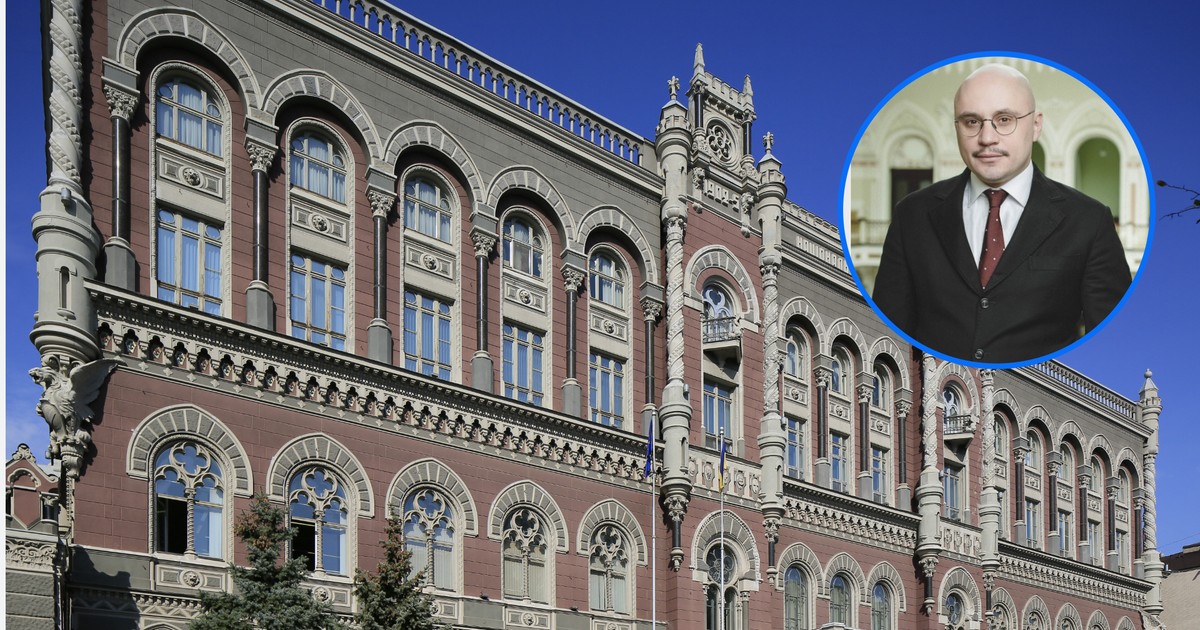
Bartek Godusławski, Business Insider Polska: Despite the war, the Ukrainian economy still functions. From your point of view, what is the biggest challenge for the Ukrainian economy today?
Dmytro Oliinyk, vice-president of the National Bank of Ukraine: We are probably dealing with several factors at the same time. The first is the continuation of the war, which discourages investment – not only foreign, but also domestic. People are less willing to take long-term risks.
In addition, there are constant attacks on energy infrastructure. Since the beginning of the war, we have lost more than half of our energy generating capacity. With any new project, you always need to think about where the energy will come from and what your contingency plan will be.
The third challenge is demography.
Read also in BUSINESS INSIDER
We have lost approximately 6 million people who now live in other countries. Honestly, most of them are of working age and could contribute to GDP growth, innovation and business development. They currently work for other countries, not for Ukraine. They do not pay taxes here, and Ukraine does not benefit from their economic activity. They opened restaurants, energy projects and payment companies abroad; their children go to school there and grow up in a different society. We see a real risk that they may never return. So it is a combination of several factors: the continuation of the war, problems with energy supplies and the risk of losing part of the population.
The rest of the text below the video
International aid with conditions
How much does Ukraine's economic stability currently depend on international financial support?
We operate in a situation in which approximately 50 percent financing of our budget comes from abroad, mainly from the European Union (EU). This is because all taxes and duties collected in Ukraine are directed to the war effort – to pay military salaries and finance defense technologies. Everything else – social spending, wages and investments – is financed directly by our international partners. At this point, we are critically dependent on this support. In Ukraine, some people call them “payment for security services”, although I am not a big fan of this term. In fact, we are already part of a common European effort, even if it has not yet been formally institutionalized. Of course, part of this support will be repaid, but without it we would have failed a few years ago.
GDP growth forecasts for Ukraine remain positive in the coming years. What is behind such predictions?
This year, we slightly lowered our forecasts and this was done not only by the National Bank of Ukraine, but also by the Ministry of Economy. We have observed a negative impact from the conflict involving Iran because the Ukrainian economy is highly dependent on oil, gas and energy prices. Price increases affect many industries; for example, agriculture incurs additional costs. Combined with the continued attacks on energy infrastructure, we will be happy if we can achieve any minimal GDP growth this year. We remain very conservative in our expectations at this time.
How would you describe the condition of the Ukrainian banking sector today?
Both on paper and in reality, his results are very good. The country has received significant financial support, much of which remains in the banking system as restrictions on the outflow of capital and currency abroad remain in place. The system is very profitable – the average net interest margin exceeds 7%. Half of the funds in the system – both customer money and bank funds – are invested in virtually risk-free government bonds or certificates of deposit, generating a stable profit.
Banks are trying to develop lending and introduce new products, because Ukraine remains a country with a very low loan-to-GDP ratio – below 10%. Banks do not have large high-risk portfolios. The share of non-performing loans is probably the lowest in 15 years. The system is well capitalized and almost every bank is profitable. From this perspective, it looks like a good investment opportunity.
Privatization of banks from Ukraine
Ukraine still has significant state participation in the banking sector. What is the long-term vision for bank privatization?
State banks are among the most profitable institutions in the system. Every year our international partners recommend their privatization. Today, these banks finance critical infrastructure and lend to sectors that international and local commercial banks might otherwise avoid. They are also one of the largest employers and often offer higher than average salaries, attracting the best specialists on the market. This shows that state institutions can be profitable and attractive to investors.
We never planned such a large state presence in the banking sector, but it happened as a result of three nationalizations. The failing Ukrgasbank was rescued during the global financial crisis. Later, the struggling PrivatBank, taken over from the oligarchs, was nationalized. In turn, Sense Bank was nationalized from the sanctioned Russian billionaire and oligarch Mikhail Fridman. We have a plan to sell Ukrgasbank and Sense Bank this year or next year. Privatization has been identified as a priority by President Volodymyr Zelensky, and the goal is to sell these banks at market prices as quickly as possible.
PrivatBank on the WSE?
Investors from which countries are interested?
This year, above all, financial groups from EU Member States are showing interest and are actively expanding their presence on European markets. I saw the interest of one Hungarian investor in one of the banks, although I do not know how serious it is. Regarding the privatization of state banks, the president of one of the large foreign banks told me that they were hiring an investment advisor to prepare an offer. I do not expect significant domestic interest, because taking over these banks would require capital of EUR 200-300 million. We are looking for a professional strategic investor – a large banking or investment group. These banks are in very good shape in terms of customer experience and project financing, so I believe the valuation multiple should be higher than book value, perhaps around one and a half times that value.
We would also like to try, perhaps next year, to conduct an IPO (debut on the stock exchange – ed.) of some banks. We are even considering using the infrastructure of the Ukrainian or Polish market to sell shares of some of the most profitable institutions, such as PrivatBank.
What are the most important expectations of the International Monetary Fund (IMF) towards Ukraine today?
We treat the IMF as a strategic advisor. We are trying to implement all his recommendations, but currently we have differences regarding tax policy. The IMF would like to tax all goods received from abroad. Currently, shipments worth up to EUR 150 per day are exempt from taxation, and the proposal assumes that taxation will start from the first euro. The IMF also wants to lower the thresholds enabling individual entrepreneurs to use the simplified tax system in order to limit the scale of the gray zone. However, the introduction of these solutions will affect millions of our citizens and is not easy to implement.
Ukraine in the European Union
What will be the priorities of the National Bank of Ukraine (NBU) after the end of the war?
It is difficult to focus on such ambitions because the end of the war is postponed from month to month. However, we have a big plan to prepare Ukraine for membership in the European Union. We estimate that it will take approximately one to one and a half years to complete all requirements. According to the European Integration Plan, the NBU must develop 24 laws and participate in the preparation of another 34 draft laws and implementing acts in order to pass the assessment of the European Union. Our priority will be to attract investors and increase the level of banking in the economy. This would give a boost to GDP, wages and even security, as multinational companies have influential voices in their parliaments. We also have many innovations, including banking products, that we want to promote around the world and help Ukrainian companies enter foreign markets.
Are you interested in joining the euro zone?
We are seeing a gradual shift away from the US dollar, which has traditionally dominated exports, imports and savings, towards the euro. The two currencies are not yet on par, but we have plans to strengthen the role of the euro and move to a more balanced reserve structure. We would like the euro and the dollar to have a more equal share of our reserve assets.
If euro-denominated transactions eventually exceed dollar-denominated transactions, our ambition is to move closer to the euro. But we also need to learn from Poland's experience – to understand how having its own currency supports independence and sovereignty and allows the country to respond quickly to external shocks. Many EU member states still maintain their own currencies, so we need to understand both the costs and benefits of this.
Vice-President of the National Bank of Ukraine, Dmytro Oliinyk, was a guest of the European Financial Congress in Sopot at the invitation of the Office of the Polish Financial Supervision Authority.
Author: Bartek Godusławski, journalist of Business Insider Polska