Article by Luminița Paul – Published on Wednesday, June 10, 2026, 1:18 p.m. / Updated on Wednesday, June 10, 2026, 1:19 p.m.
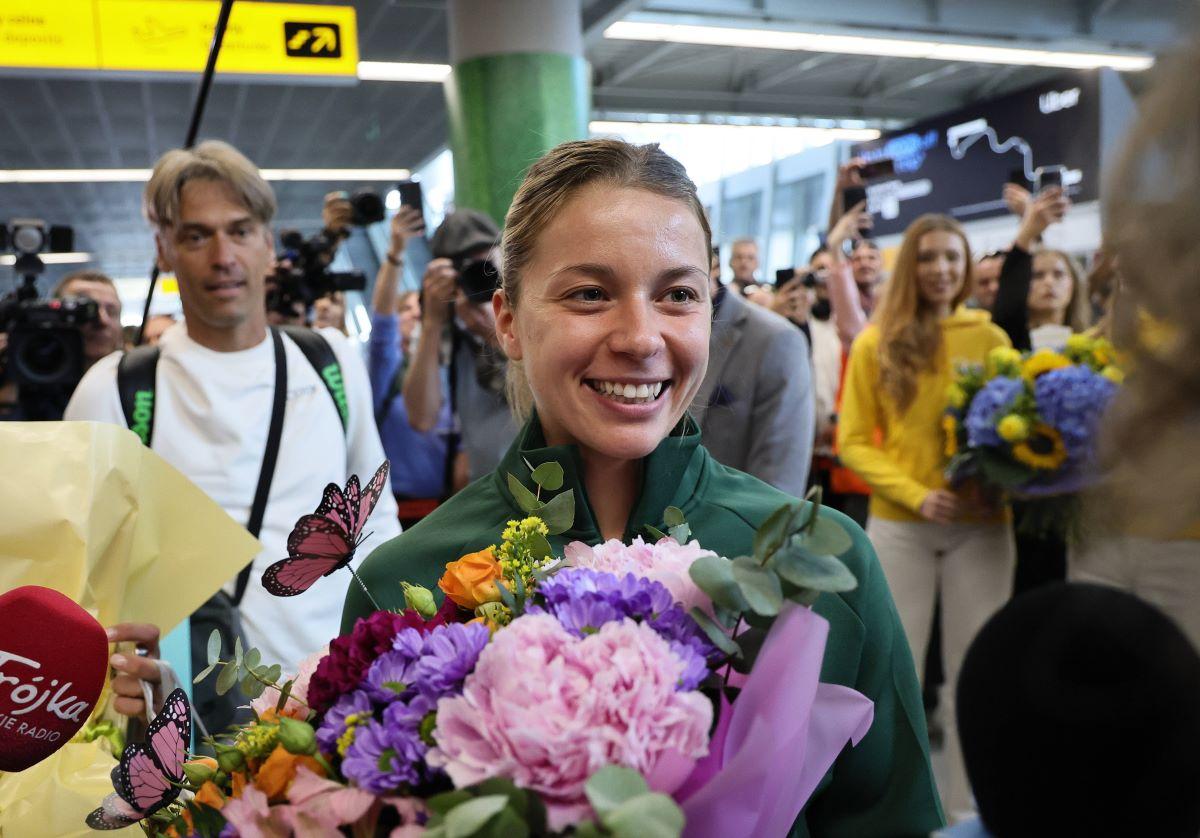
Polish player Maja Chwalinska (24 years old, 21st WTA), finalist at Roland Garrosreturned to her country, where she was greeted with great warmth. In one of the many interviews she gave after her arrival, she also spoke about the hate messages she received on social media starting at a young age.
Maja Chwalinskathe finalist at Roland Garros 2026, ranked 21st in the world after her exceptional performance in Paris, is now living in a real whirlwind in her country.
She was defeated, 6-3, 6-2 by Mirra Andreeva, but at home she was greeted with a lot of sympathy. The final was broadcast to packed cinema halls and huge outdoor screens, and requests for interviews are numerous. One of them took place within the program Dzien Dobry (Good morning) of the television station TVNand one of the topics touched on is very sensitive.
Now, Maja is surrounded by sympathy and praised almost unanimously, but how has she managed so far another kind of messages, those promoting hatred on social networks?
Maja Chwalinska: “There will be a lot more because there will also be many defeats”
“I think every athlete deals with hate and faces other people's opinions, so it's very important to listen to those closest to you. There will be many negative voices, and this can erode your confidence”, Chwalinska began.
He then elaborated, saying that he was hit not only by hate, but also by concrete threats. “Every tennis player gets death threats, even death threats, it's just that there isn't much public talk about it” said Maja.
“It started when I was 17. Now I realize that there will be many more because there will also be many defeats,” she pointed out. “I hope that now I am mature enough to face them and not listen to those whose advice I would never follow,” concluded Maja.
Polish fans watching the Roland Garros 2026 final on screens set up in front of the Palace of Culture and Science in Warsaw Photo: Imago Images
Maja Chwalinska, one-year scholarship from the Ministry of Sports
Upon returning to the country, the Roland Garros finalist also had an important meeting at the Ministry of Sports and Tourism. One where she learned she would receive a special reward for her recent success: a scholarship to be awarded for the next 12 months. This will be by 9,600 zlotys per month – about 2,300 euros.
“You deserve it. You have written a wonderful history for Poland and for world tennis,” said the Sports Minister, Jakub Rutnicki. “Determination, consistency and hard work can take you to the top, as Maja Chwalinska's story has shown us. Her success serves as an inspiration to young athletes across the country,” an official ministry statement said.
In addition to money, she also received other gifts during the visit from the ministry, among them wholemeals. This is because two things, besides tennis, are important to Maja: tea and crosswords.
After the slag comes the polish grass
For Polish, now comes the transition to another surface, grass, much different from clay. He played very little at the professional level on the green carpet, only in 7 competitions. The most recent was last year, when he lost in the first round of qualifying at Wimbledon.
He also achieved his best result at Wimbledon, the second round, in 2022, after having passed the three qualifying rounds with victories at Aliona Bolsova, Alexandra Cadanțu-Ignatik and Coco Vandewegheformer world number 9. On the main board it went from Katerina Siniakova from the Czech Republic in the first round, then lost to Alison Riske (USA) 6-3, 1-6, 0-6.