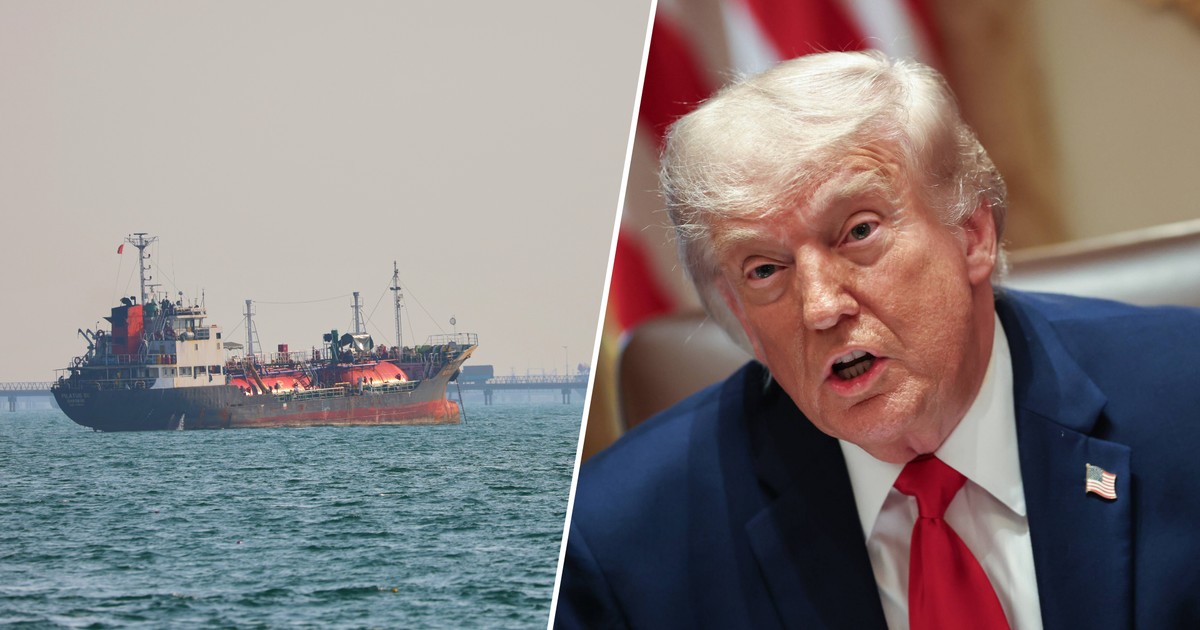
Donald Trump announced Wednesday that he had ordered U.S. forces last month to “conduct a secret mission” to support tankers and commercial ships transiting Hormuz, which he said resulted in more than 100 million barrels of oil passing through the strait. Meanwhile, Bloomberg reports that ships are turning off their transponders to pass through the key waterway.
“Last month, I directed our great U.S. armed forces to conduct a covert mission in support of tankers and other commercial vessels in the Strait of Hormuz,” Trump wrote on Truth Social. “Today I am pleased to announce that thanks to this effort, over 100 million barrels of crude oil entered the free market through the Strait of Hormuz“- he added.
Trump cited what he claimed was the successful passage of over 200 merchant ships, arguing that the United States, not Iran, controlled the strait. “More than 200 merchant ships safely passed through the strait. This extremely successful effort is due to the fact that the UNITED STATES OF AMERICA CONTROLS the Strait of Hormuz – NOT Iran. Their army has been defeated and their economy lost. It's the end of Iran!” – he wrote.
Tankers turn off their transponders
Over the weekend, 16 oil tankers gathered off the coast of Oman to reload millions of barrels of oil stuck in the Persian Gulf. A month earlier, this area was completely empty.
A growing number of oil tankers are turning off their transponders to increase the flow of oil through the Strait of Hormuz. While conventional ship tracking data shows no major changes in supplies, data from executives, Asian oil buyers and satellite imagery paint a different picture: Hormuz is now much less blocked and transit is becoming more stable, Bloomberg writes.
Recent volumes confirm that the oil market is managing to reach enough buyers and prevent a sharp price increase.
Middle Eastern producers use ships they control to transport barrels out of Hormuz. After leaving port, they transfer the oil to tankers that carry the cargo to customers in Asia and other parts of the world, the agency says.
According to Rapidan Energy Group, about 2 million barrels of crude oil and related products are currently flowing out of the Persian Gulf per day – levels well below normal but much higher than at the beginning of the conflict. These flows, combined with falling oil imports from China, rising exports from the United States and workarounds such as pipelines running hundreds of miles through the Middle East, have contributed to oil prices falling by almost 30%. compared to their peak at the height of the war.
The weekend transfers off the coast of Oman were identified thanks to satellite images from the European Union's Copernicus browser. TankerTrackers.com Inc., a company that tracks ships using satellite imagery, said it had identified 12 Middle Eastern barrel ships that had passed beyond Hormuz on June 6 alone.
“This is oil from Iran's Arab neighbors,” TankerTrackers.com reported. “Another reason why oil isn't $200 a barrel now.”
A day earlier, US Energy Secretary Chris Wright told a conference that tanker traffic was “growing very significantly.”
Source: Bloomberg, CNN