“Are you sure the US would defend you in the event of an attack?”. A survey reveals that Europe's confidence in the American security guarantee has collapsed dramatically

Only 11% of Europeans surveyed consider the US an ally, compared to 16% six months ago and 22% in November 2024, according to a new study published by the European Council on Foreign Relations, a think-tank based in Brussels. Most respondents believe that the US would not support them in the event of an attack.
Europeans' confidence in US security guarantees has fallen to an all-time low.
Europeans no longer consider the United States an ally, with many skeptical that Washington would come to their aid in the event of a military threat. Also, more and more Europeans now see the US as an adversary or rival, which represents a fundamental shift in opinion.
These are the main conclusions of an extensive opinion poll commissioned by the European Council on Foreign Relations (ECFR), a European think-tank, and carried out in May in 15 European countries: Austria, Bulgaria, Denmark, Estonia, France, Germany, Hungary, Italy, the Netherlands, Poland, Portugal, Spain, Sweden, Switzerland and Great Britain.
The poll, released on Wednesday ahead of G7 and NATO summits in France and Turkey in the coming weeks, revealed “a deep distrust of Europeans towards the US”, the authors said.
Only 11% of respondents consider the US an ally
The ECFR survey confirms the collapse of Europeans' confidence in the US.
Only 11% of respondents consider the US an ally, compared to 16% six months ago and 22% in November 2024.
At the same time, 25% of those interviewed perceive America as either a rival or an adversary.
In most countries, the decline has been steady, with the exception of Poland and Hungary, where this is a more recent phenomenon.
In all the states surveyed, supporters of only two right-wing populist political parties – Law and Justice (PiS) in Poland and Reform UK – continue to see America primarily as an ally.
How confident are you that the United States would defend you?
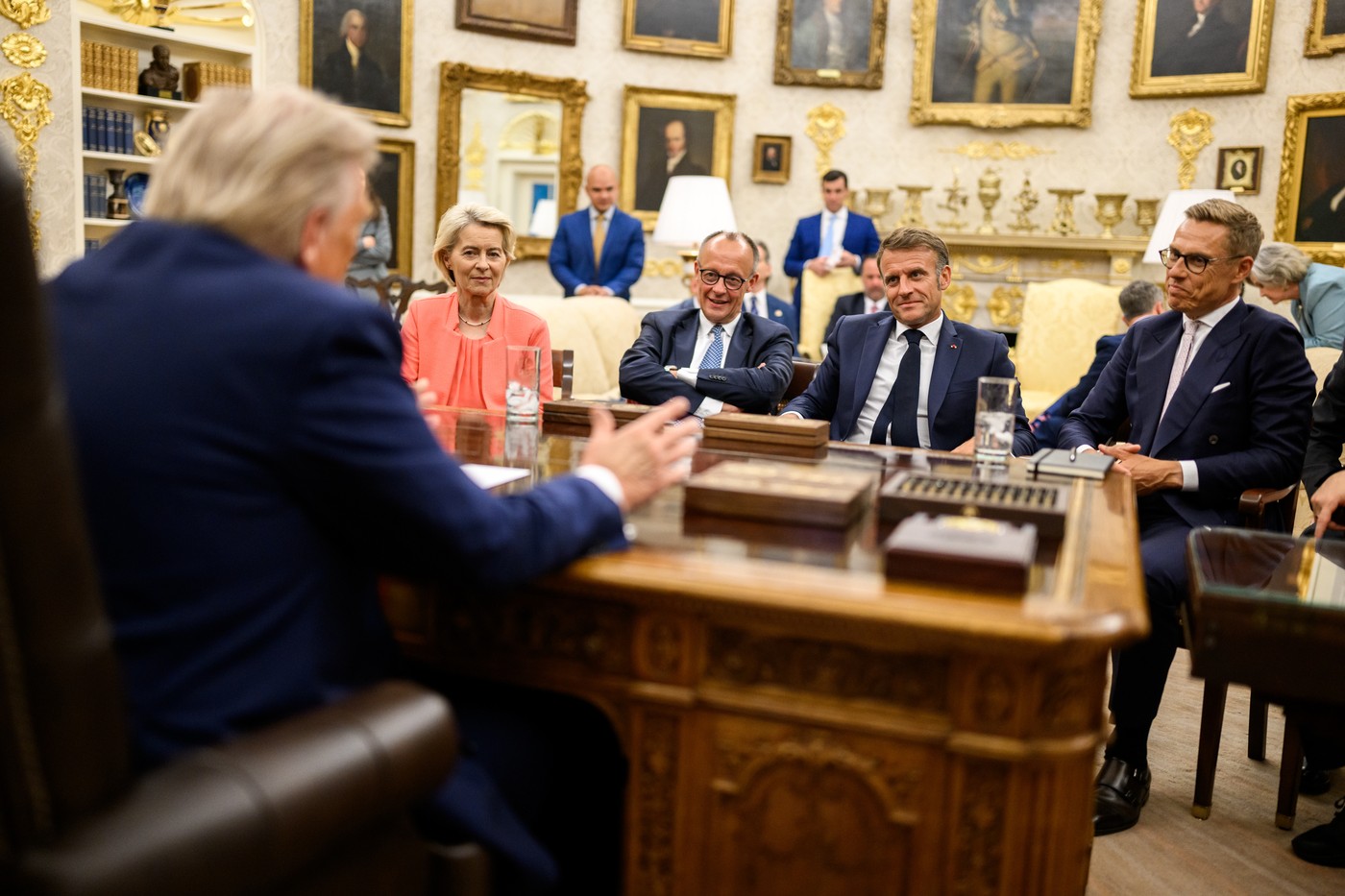
The poll comes after Donald Trump's threats to annex Greenland, his suggestions to withdraw from NATO and announcements to withdraw some troops from Europe.
Therefore, the study's authors note, it is not at all surprising that the majority of respondents in every European country surveyed believe that the US would not support them in the event of an attack.
Asked how confident they would be that the United States would defend them if their country were attacked, the results are clear.
Only 12% of Spaniards, 15% of Austrians, 20% of Danes and 25% of Hungarians are very or relatively confident in US aid.
Poles (37%) and the British (35%) are the most confident in US aid.
Again, PiS and Reform are the parties that stand out in that their supporters still trust the US, followed by supporters of Giorgia Meloni's Brothers of Italy (FdI) party, who are evenly divided on the issue.
Most Europeans believe that European partners would help them
Meanwhile, the study found, the majority of respondents in almost every country surveyed, except Bulgaria, said they were confident that “at least some European countries” would come to their aid if their country was attacked.
The proportion of those who are very or relatively confident that at least some European countries will help them in the event of a military attack is very high in Denmark (88%), the Netherlands (82%) or Sweden (81%), but it also exceeds 50% in countries such as Hungary (53%), Italy (57%) or Austria (60%).
Surprisingly, the study's authors note, this optimism about neighbors extends far beyond the Europhile “usual suspects.”
Even supporters of France's National Assembly (RN), Giorgia Meloni's Brothers of Italy party, the Freedom Party of the Netherlands and the Sweden Democrats are pinning their hopes on fellow Europeans.
For reducing dependence on the US, but not for another NATO
In almost all the countries included in the survey, the majority of respondents said that their country should reduce its strategic dependence on American military equipment, with supporters of the slogan “buy European products” being the most numerous in Denmark (75%), the Netherlands (72%), Sweden (70%), Portugal (69%), France (66%), Switzerland (64%) and Spain (62%).
However, the idea of cutting domestic public spending to finance higher national defense budgets enjoyed significantly less support, with opposition strongest in Italy (63%), Austria (59%), Germany (56%), Spain (54%) and Denmark (52%).
There is also low support (29%) for replacing NATO with a new EU-only defense body, with the dominant view in almost all countries except Bulgaria being that relations between the US and Europe are “likely to improve” with Trump gone – a view shared by 60% or more of the population in France, Spain, Denmark, the Netherlands and Sweden.
Support for Ukraine has limits
The study also partially addresses the issue of relations with Ukraine and Russia.
Despite economic pressures, Europeans want the ban on Russian oil and gas to remain in place. 44% think the idea of resuming oil and gas imports from Russia would be “fairly bad” or “very bad”.
Then, support for Ukraine continues, but has limits. Europeans still consider Kiev an ally, but are uncomfortable with more ambitious forms of support, such as sending troops on the ground to keep the peace after the war ends.
In almost all countries, the majority of the population considers Ukraine either an ally or a necessary partner with whom Europeans should cooperate strategically.
In this regard, the perception of Ukraine is better than that of the US almost everywhere (with the exception of Poland and Hungary, which both have strained bilateral relations with Kiev)
There is also some skepticism about a future eastward enlargement of the EU.
Ukraine's ambition to join the EU continues to divide European public opinion, with respondents from countries such as Hungary, Bulgaria, Austria, Germany and even Estonia – one of Kiev's staunchest supporters – more inclined to oppose Ukraine's accession “in the current context” than to support it.