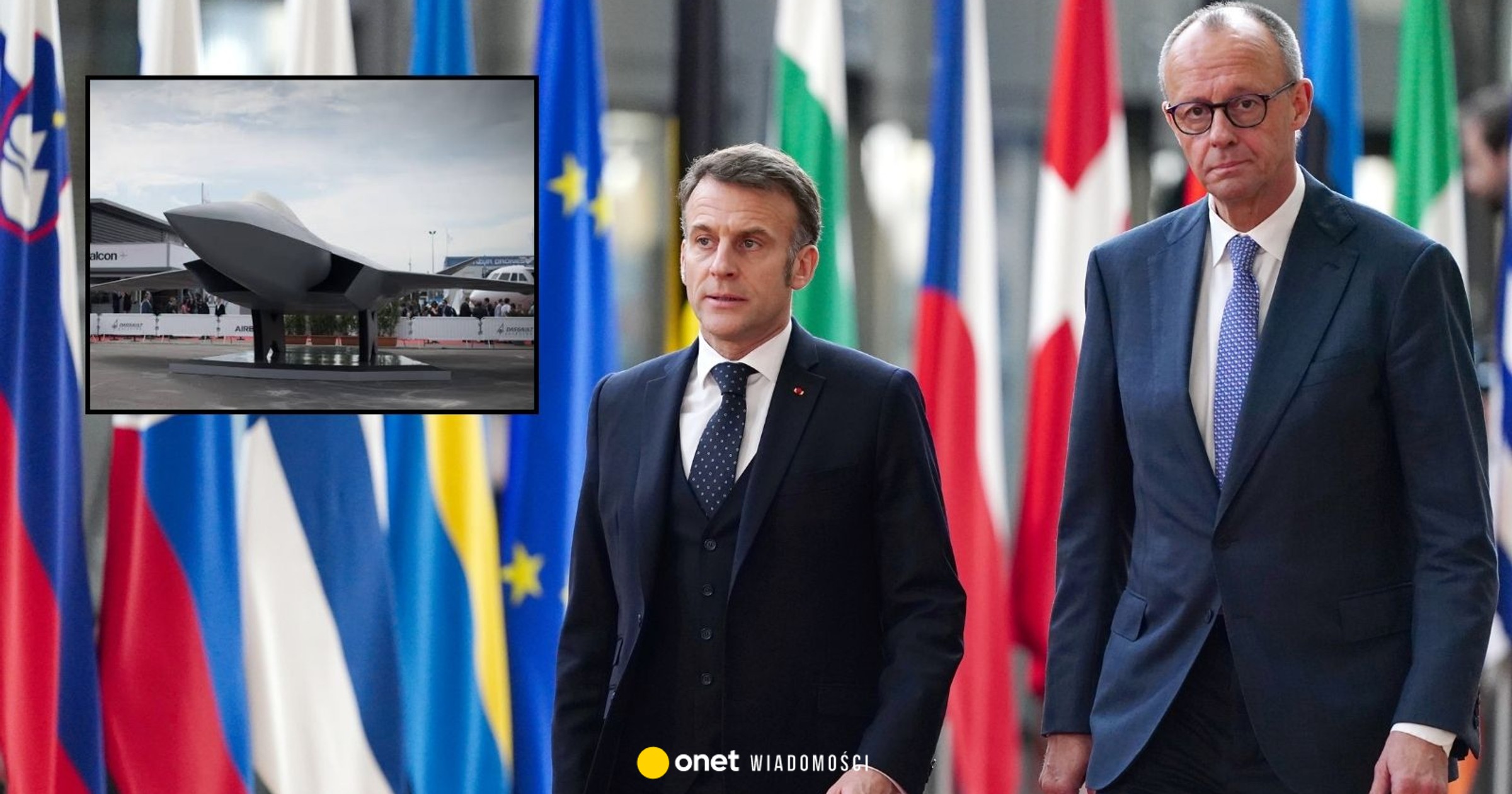
The warnings repeated for many months have come true – a prestigious project developed as part of German-French arms cooperation ends in failure. According to reports from government circles, French President Emmanuel Macron and German Chancellor Friedrich Merz have agreed not to continue the joint construction of a sixth-generation manned fighter.
The project was initiated in 2017 by Emmanuel Macron and the then German Chancellor Angela Merkel, and later Spain also joined it. The fighter was intended to replace the Rafale and Eurofighter aircraft in the 2040s. However, this will not happen.
According to information from Berlin, work will continue on the development of the core of the FCAS system, primarily the so-called Combat Cloud. It is a software system used to network manned and unmanned aircraft, various types of weapons, platforms and sensors.
Divergent positions
The dispute over the project had been going on for months, mainly between Dassault Aviation and Airbus. At first glance, the point was that the French arms company Dassault saw itself as the leader of the combat aircraft project and wanted to renegotiate the agreed scope of the project. Already last summer, Reuters, citing information from Dassault, reported that Paris was demanding about 80 percent. participation in work on the basic aircraft. The German Airbus Defense and Space did not want to agree to this and insisted on fulfilling the contracts already concluded. Several deadlines for making a fundamental decision have passed – and nothing has been agreed.
Guillaume Faury, CEO of Airbus' parent company, already signaled the upcoming changes during the company's defense summit in Manching at the end of May. — The project was started before the war in Ukraine. We started it in times of peace, based on assumptions that are much more questioned today, he said.
In the meantime, the conflict has become a reality and the priorities of the principals have changed. — Now that we are in a specific war scenario, domestic conditions become more important, so it is harder to make compromises, he added. In hindsight, these statements sound like an announcement of the end of cooperation.
The article continues below the video
Already in February, Merz himself openly stated that there was more than just industrial policy behind this dispute. – We have a real problem with the requirements profile. Specifically: In the next generation of combat aircraft, the French need a machine capable of carrying nuclear weapons and able to operate from an aircraft carrier. We in the German Bundeswehr do not need this at the moment, he said.
This is the crux of the conflict. France wants a multi-role aircraft modeled on the American F35 that would also meet requirements related to its nuclear deterrence and future aircraft carrier operations. Germany wants to build a stealth fighter (with reduced detection) ensuring air superiority that would not fit on the deck of a French aircraft carrier. This discrepancy in expectations made it difficult to imagine building a common plane that would meet the expectations of both parties, regardless of who would ultimately lead the work on the project.
The digital system continues to be developed
FCAS – Future Combat Air System – is more than just an aircraft. Airbus executives have made this point continually in recent weeks.
The term “system” in the name refers to a networked combat system that includes the Combat Cloud as a digital nervous system, unmanned combat drones as escort aircraft, and engine development for a future jet.
Airbus officially describes FCAS as a “system of systems” in which manned and unmanned platforms are connected to sensors and effectors via the data cloud. The German government itself admits that work on the “real FCAS core” should continue. Airbus Defense CEO Michael Schoellhorn stated at the end of May that the program would continue regardless of France's decision and that it would include the combat cloud and unmanned systems.
How the fate of these remaining elements will play out will likely be a topic of discussion at this year's ILA aviation fair in Berlin. They will start on June 10. Just ahead, Schoellhorn said that making a decision before or during the ILA would be “very helpful.” Completely abandoning the benefits of joint development would make little economic sense – even if the manned jet ultimately had to be developed separately in accordance with French and German requirements.
I’m Ashley Davis as an editor, I’m committed to upholding the highest standards of integrity and accuracy in every piece we publish. My work is driven by curiosity, a passion for truth, and a belief that journalism plays a crucial role in shaping public discourse. I strive to tell stories that not only inform but also inspire action and conversation.