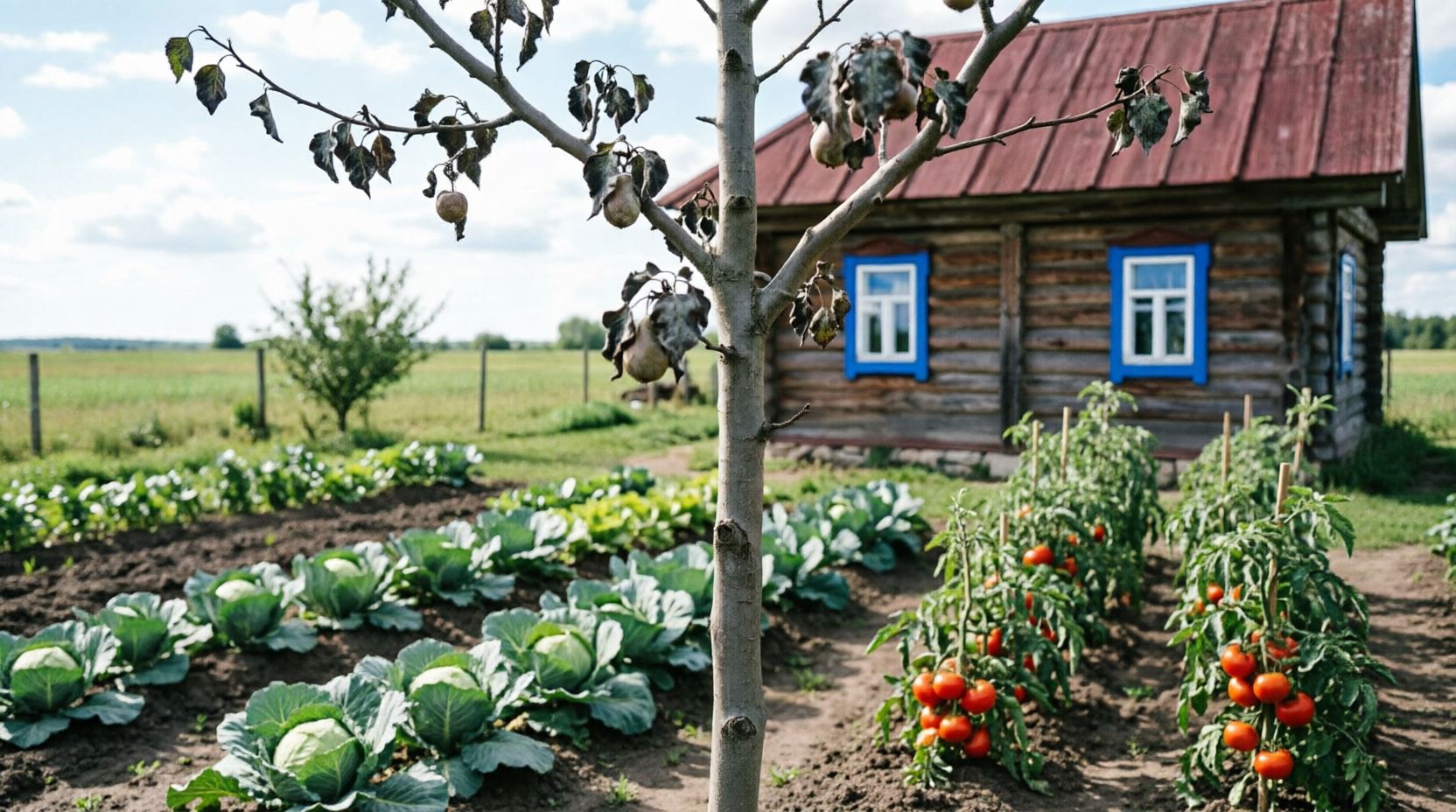
In June, the pear rapidly forms ovaries. If the leaves begin to turn black, darken and curl, most likely it is a scab – a fungal infection, reminded gardener Veronika Polivkina. The fungus especially loves June humidity and heat.
Signs of scab
The pear leaves seem to burn and burn. They curl and dry at the edges, and darkened areas appear on the surface of the plates, which quickly begin to grow.
If you notice these signs, you need to act immediately. Otherwise, the scab will affect the flowers, ovaries, shoots and ultimately the pears themselves. The fruits will first be covered with brown spots, and then with continuous necrotic areas.
In the future, the scab will spread throughout the tree and it will die.
How to protect a pear
To stop tree damage, remove all infected leaves. You can’t leave them under a pear tree, nor put them in compost – throw them away or burn them.
Then prepare an ash solution. Mix 1 cup of wood ash in 10 liters of water and leave to steep for 6 hours. Water every week at the root. This infusion will saturate the tree with potassium, strengthen the leaves and reduce stress.
At the same time, adjust the watering regime, since sudden changes in moisture are detrimental to the pear. Watering should be plentiful and infrequent. Be sure to mulch the tree to retain moisture in the soil.