Six lessons Europe must learn from the situation in Ukraine [OPINIA]

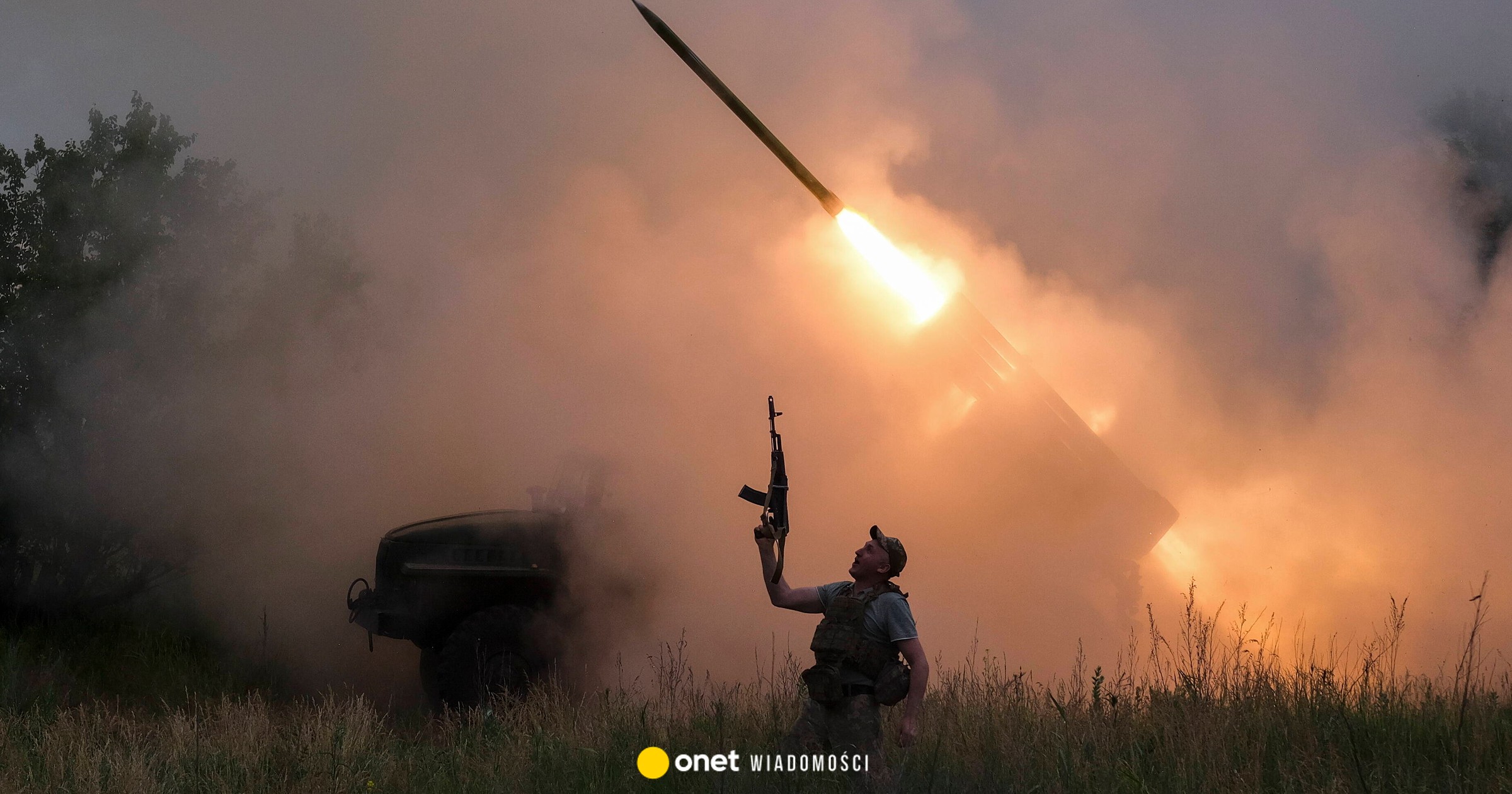
Major General Illia Pavlenko is a former deputy head of the Main Intelligence Directorate of the Ministry of Defense of Ukraine (HUR).
Today, Ukraine is defending not only its own territory. It also checks the future model of the European security system. The most important lesson from this war is that the security of the future will belong to those who see faster, think deeper, act more precisely and adapt more boldly.
Europe needs to learn six lessons. The first assumes that future defense should be built around the intelligence and strike system. The second is that Russia is learning quickly. And if Europe is lazy, it will lose. Because declarations of change alone do not achieve anything. What counts is the effect.
When talking about the new security architecture of Europe, we should start not with institutional formulas, but with the realities of the battlefield. Russian aggression has shown that security today is not only about the number of tanks, planes or missiles.
It is primarily the ability to detect a threat earlier, understand it faster, counteract it precisely and prevent the enemy from adapting faster than we do.
Therefore, intelligence in modern conflicts is no longer only a function supporting decision-making. It has become a central element of defense capabilities. Without intelligence, precision weapons systems do not work. Without intelligence, there is no effective anti-aircraft defense.
Without intelligence, it is impossible to destroy the enemy's logistics, command posts, production chains, financial mechanisms or networks of influence. Without intelligence, defense becomes merely reaction. And in modern warfare, those who merely react are always late—and ultimately lose.
Six Ukrainian lessons for Europe
The first lesson that Ukraine is imparting to Europe is: future defense must be built around the intelligence-strike system. This means that sensors, analysis, command structures, strike capabilities, cybersecurity, electronic warfare and strategic communications must function not as separate agencies or isolated systems, but as one organism. The advantage is gained not by the one who has more equipment, but by the one who converts target detection into decision and action the fastest.
The second lesson is this modern war has become a war of adaptation.
Russia is learning. It changes strike tactics, drone and missile routes, component supply patterns, information influence methods, recruitment approaches, the use of intermediate structures and mechanisms for bypassing sanctions. Our response cannot therefore be static. It is impossible to create a “correct” defense model once and for all and consider it sufficient. Europe's new security architecture must be a system of continuous renewal: data, analysis, decision, action, evaluation of effects and new decision.
The third lesson is that innovations cannot be theoretical or laboratory-based. They must be practical and combat-oriented. Ukraine has learned to quickly test solutions, discard ineffective ones and scale those that work. This applies to unmanned systems, maritime drones, cyber operations, electronic warfare, big data analysis, satellite data, open sources, artificial intelligence and the integration of civilian technologies with the needs of the military. However, what is crucial is not the level of technology itself, but the speed of its transition from idea to application.
The current situation with the so-called medium-depth strikes – i.e. attacks on the enemy's military infrastructure located dozens or even over 100 km away from the front line – is very telling here. This is not simply a story about effective drones. This shows how the technological process turns into effectiveness: intelligence identifies weak points, production quickly provides appropriate tools, the military implements them on a large scale, and the adversary is forced to expand air defense, electronic warfare, logistics and resources. This is what modern defense innovation looks like – a short cycle from data, through decision, to result.
Without intelligence, defense becomes merely reaction. And in modern warfare, those who merely react are always late—and ultimately lose.
European countries should honestly answer one question: can their defense systems change as quickly as the enemy? If purchasing procedures take years and the opponent's adaptation cycle takes weeks, it is no longer a bureaucratic problem. This is a serious security flaw. And the opponent will certainly use it.
The fourth lesson is that Russia is not only waging war against Ukraine, but also against Europe's ability to make decisions. Its goal is not just territory. Its aim is to cause fear, weariness, doubt, polarization, distrust in democratic institutions and the belief that it is easier to “understand” the aggressor than to stop him. Therefore, Europe's modern arsenal should include not only missiles and drones, but also social resilience, information space protection, counterintelligence cooperation, sanctions enforcement, critical infrastructure protection and the ability to quickly expose Russian influence operations.
A separate dimension of this war is Russia's recruitment of citizens from Africa, Latin America and other regions of the Global South. For Moscow, it is a way to compensate for losses, reduce the political cost of mobilization within the country, and at the same time conduct a militarized information campaign. Promises of work, money, education, legalization or social advancement draw people into war, often without realizing its true consequences.
This is not a local Ukrainian problem. This too a challenge for the European Union as the same networks can operate among vulnerable migrant communities, use social media platforms, fictitious employment schemes and people movement corridors. Therefore, counteracting Russian recruitment should become an element of the common policy of Ukraine and the EU towards the Global South: explaining the truth about the war, debunking Russian myths, blocking recruitment networks and protecting people from being used as “cannon fodder”.
Russia's future deterrence must be active, not declarative.
The fifth lesson is: Today, Ukraine is not only a beneficiary of aid, but also a producer of expert knowledge in the field of security. Our experience is not theoretical. We paid for it with our lives, it was verified by daily attacks and shaped in direct combat with the enemy. Therefore, Ukraine's integration with the European and Euro-Atlantic security system should be seen not as a political gesture for the future, but as a practical necessity today. Europe needs Ukrainian experience, just as Ukraine needs European resources, technology and strategic depth.
Sixth lesson: Russia's future deterrence must be active, not declarative. It is not enough to say that aggression cannot be repeated. Conditions need to be created in which repeating it becomes clearly unprofitable for the Kremlin.
This means: a strong Ukrainian army; integrated intelligence cooperation with partners; joint production of weapons; protecting supply chains; control over key technologies; long-term sanctions policy; and the ability to strike at the adversary's war machine not only on the battlefield, but also in logistics, finance, technology base and international support networks.
Yes, Europe needs a new arsenal. But this arsenal is not just about weapons. It is also intelligence, technology, industry, resilience, political will, the involvement of societies outside Europe and the ability to act together. Ukraine is already part of this arsenal. The only question is how quickly we can transform this experience together into a common security system that not only reacts to aggression, but anticipates it.
For Ukrainian military intelligence, the key conclusion is simple: in the new security architecture, intelligence cannot be an “add-on” to defense policy, but its nervous system. Intelligence combines political decisions with a real picture of threats. Intelligence allows you to see not only what the enemy has already done, but also what he is planning. It is intelligence that turns technology into capability and capability into results.