For three years, Europe has been experiencing a series of events that mercilessly show that for decades it has lived in the belief of a world without enemies. Russia invades Ukraine and escalates its hybrid war against Europe. China supports the Kremlin's aggression and ruthlessly uses its raw material dominance against the West. And the United States, which for years had played the role of Europe's protector and security guard, unexpectedly began to impose tough conditions on the West in exchange for its help.
We have entered a new era and Europe needs to catch up as quickly as possible.
The Institute for War Studies is currently talking about “phase 0” of the Russian attack on NATO: disinformation, acts of sabotage and drone flights these are the first steps in preparing the ground for the attack.
However, Russia's “Phase 0” did not start yesterday.
In a strategic document of the Russian government from 2000, there was a provision that read:
There is a trend towards a unipolar world structure with the political and economic advantage of the United States.
It went on to say that Russia must “pursue a multipolar system of international relations that reflects the diversity of the modern world and the diversity of interests.”
The idea of ”multipolarity” is present not only in Moscow, but also in Beijing, Brazil and India. This thought is based on the assumption that The West, as the only pole of power, is too dominant. —Politicians around the world must accept that we live in a shared world, that's why
The US and Europe can no longer hold all the power in their hands – it's time to share it with other players
— said Kishore Mahbubani, an influential Asian political scientist and former president of the UN Security Council, in 2014.
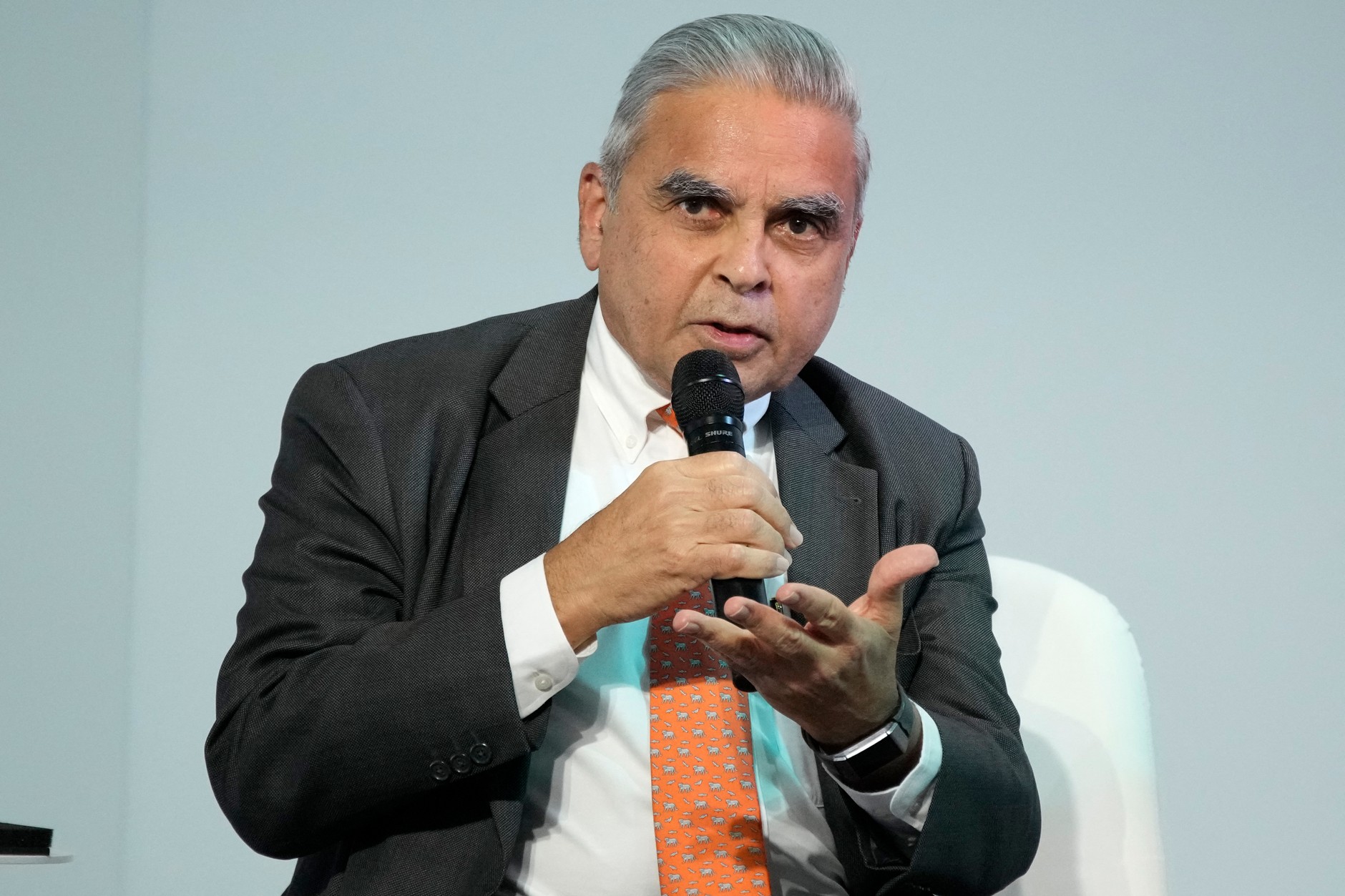
Singaporean diplomat and geopolitical consultant Kishore Mahbubani speaks at the Paris Peace Forum. France, November 11, 2022Christophe Ena / POOL / AFP / AFP
The West agreed. There was a belief, sustained by a lingering sense of victory in the Cold War, that all countries would benefit from free trade and globalization. That the market economy, democracy and liberalism will break through everywhere. It was one of the most serious misunderstandings of the 21st century.
The West in the grip of its own illusions
Western countries have become dependent on Russia as a supplier of cheap energy and on China as a supplier of cheap products. This economic arrangement was so convenient that Europe has become blind to the growing self-confidence of other powers.
In this way, the West slept through the crucial year of 2012. In Russia, Vladimir Putin returned to the presidency and tightened his domestic policy – two years later he attacked eastern Ukraine and annexed Crimea. In China, in the same year, Xi Jinping took power and set a course towards nationalism.
This was a decisive step towards a conscious multipolar world policy. Emerging countries such as Brazil, India, the Gulf states and South Africa have clearly recognized this – and have developed a policy of vacillating between cooperating with the West and moving closer to Russia and China.
The West woke up only in 2022.when Russia attacked Ukraine on a full scale. However, the wake-up call was not brisk. “We will collapse the Russian economy,” said then-French Finance Minister Bruno Le Maire a week after the invasion. — The balance of economic and financial forces clearly favors the EU, which is just beginning to realize its economic power.
The plan was for sanctions to hit Russia so hard that Putin would run out of money for the war. This belief, shared by Brussels, Berlin, London and Washington, soon turned out to be a pipe dream.
Nationalism prevails
A united global front against Russia remained an illusion, and the Russian economy did not collapse. Numerous countries, from China to India to Turkey and the Gulf states, have helped Moscow circumvent sanctions by buying Russian oil and gas or distributing it around the world through a “shadow fleet.”
For Russia, this is a sign that its long-term strategy is working. Foreign Minister Sergei Lavrov said in 2023: — The road to a multipolar world order is long. And we are right in the middle of this process.
Russia and China already turned towards nationalism in 2012. Four years later, the United States took a similar path with the election of Donald Trump. History has come full circle – just like before with Russia and China, it was only after almost ten years that Europe realized how significant this turn was.
The world that was once considered a huge market now looks like this:
Russia threatens Europe with war – and receives support from China,
“natural” allies practically do not exist,
countries like Brazil and India pragmatically stick to countries that serve their interests,
The United States under Donald Trump is not a “moral partner”, but more of a business partner.
The article continues below the video
A new world order without the West
In 2025, Russia and China have significantly strengthened their position in the pursuit of a multipolar world. Europe, on the other hand, must accept that it is no longer the main playerbut only one of several poles of the global system – and that it is high time to make up for years of neglect.
In 2022, Europe began to understand that it must ensure its own security – national and European military plans already exist. However, in the face of the threat of a possible attack by Russia, which intelligence services consider possible before 2030, the task of implementing these plans on time does not seem to be an easy task.
“Europe's dilemma is that ambitious arms goals must be achieved with limited financial policy freedom and a fragmented defense industry,” wrote Bruegel, an independent European economic think tank.
The European arms industry is already heavily “overloaded by limited production capacity and military support for Ukraine.” To counter Russia's war economy, Europe must organize its armaments in such a way that large quantities of equipment can be produced quickly and cheaply.
In a world of great national interests, with little financial resources and complex structures Europe stands alone. This is the reality. But after a quarter-century that was too often characterized by convenient ignorance of the changing world order, she was finally being noticed.
This awareness must translate into consistent actions. If Europe wants to survive in the new era of power, it must understand that delaying necessary security policy action becomes an existential threat. And when he does this, a real breakthrough will occur.
I’m Ashley Davis as an editor, I’m committed to upholding the highest standards of integrity and accuracy in every piece we publish. My work is driven by curiosity, a passion for truth, and a belief that journalism plays a crucial role in shaping public discourse. I strive to tell stories that not only inform but also inspire action and conversation.