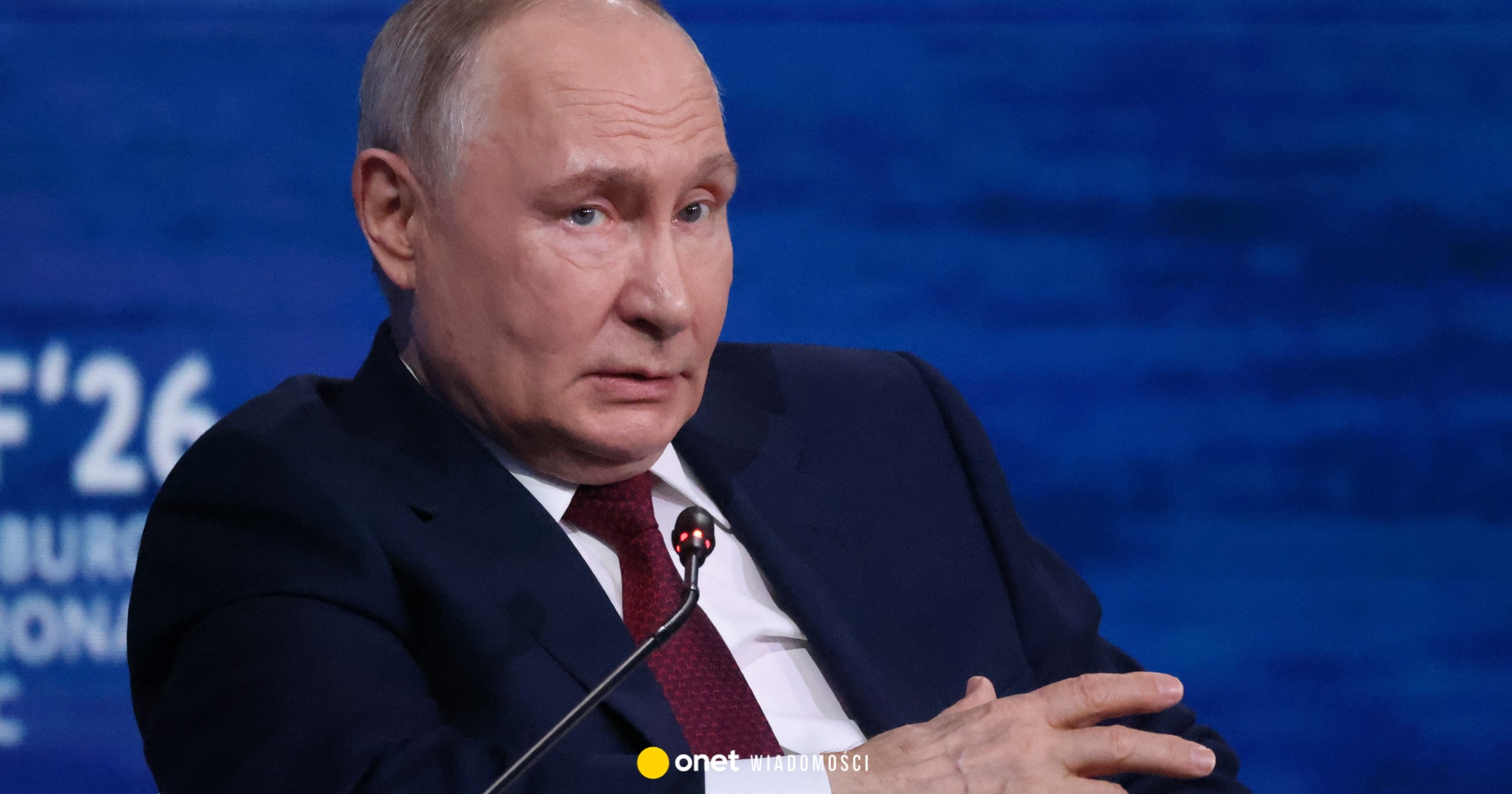
The St. Petersburg International Economic Forum (SPIEF) is a multi-day, glittering meeting of officials, business executives, media personalities and other influential people from Russia and abroad.
Since the invasion of Ukraine, Russia has used this prestigious forum to strengthen ties with non-Western allies and to showcase economic stability. However, this year's event took place at a time of growing concerns about the regime's financial stability.
“We should not expect that everything will return to normal or that Western sanctions will be lifted” – this is how Maksim Oreshkin, a Kremlin official, responded to the question whether Russia should come to terms with the idea that its economy will be more or less isolated forever from the West.
In 2026, the Russian economy will move from the slowdown stage to the stagnation stage. Key financial indicators began to signal trouble last year, with some analysts and Russian officials even predicting a recession. Even the highest-ranking Kremlin politicians no longer hide their problems.
Last month, Russian Deputy Prime Minister Alexander Novak announced that the government had lowered its gross domestic product (GDP) growth forecast by almost a full percentage point, from 1.3 percent. up to 0.4 percent
The main question that arose during SPIEF was: can Moscow's economy continue to finance the war effort? For those looking for answers, the St. Petersburg International Economic Forum was a disappointment. The war with Ukraine was conspicuously omitted from panel discussions that focused on more prosaic challenges such as improving the investment climate and AI.
The article continues below the video
But between the drone attack on St. Petersburg, spectacular displays at the exhibition center and attention-grabbing visits from American celebrities, comments from top Russian business leaders and officials suggested growing concern about the state of the economy.
This is a radical change from the mood in the first years of the invasion of Ukraine. Back then, massive defense spending fueled the economy's rapid growth, even as sanctions put pressure on civilian industries. Russia's economy grew by 4.1 percent, respectively. and 4.9 percent in 2023 and 2024. Russian officials describe this time as a period of “overheating” and the past year as a “controlled cooling.”
Oreshkin said Russia must address the current situation through a more aggressive economic policy aimed at stimulating mutual investment and trade with non-Western countries. However, skepticism towards such proposals is growing.
“The situation is bad”
Just days before the start of SPIEF, in a rare public criticism from a sitting official, one Communist Party lawmaker essentially stated that the best way to correct the course of the economy would be to end the war.
“What kind of development, investment and capital expenditure can we talk about?” — said Renat Suleymenov, representative of the State Duma from Siberia, in an interview. “Neither tanks nor missiles have consumer value: the economy produces them, but they cannot be used by society.”
According to economist Dmitry Nekrasov, the longer the war lasts, the greater the likelihood that the costs will be borne by the working class – precisely those people who have no voice in SPIEF.
— The Russian economy can withstand a burden of this order [co obecnie] almost indefinitely, Nekrasov said. Nothing he saw at this year's SPIEF changed his opinion on the subject.
“It's not so much about how to survive or whether the economy can maintain the current level of military spending,” he said in an interview with The Moscow Times. “It is more about how further increases in spending will be financed if they prove necessary.”
SPIEF aims primarily to create the image of Russia as an attractive place to invest, a reliable business partner and a top-class modern economic power.
In this regard, Nekrasov warned against excessively looking for deeper meaning in officials' statements that are intended to preserve appearances.
“At such events, it is necessary to cover trendy topics,” he said. “It is clear that there is simply no room for any extreme pessimism.”
Indeed, there were only a few moments of true honesty.
One of them took place during Sberbank's Friday morning “business breakfast,” an invite-only event that features a semi-open discussion between officials and executives about the state of the economy. The theme this year was driving growth in the business environment, and some attendees didn't mince their words.
— The situation is bad, summed up Roman Trotsenko, billionaire and founder of the Russian corporation Aeon. “And it's bad because the old model that worked for many years stopped working.”
I’m Ashley Davis as an editor, I’m committed to upholding the highest standards of integrity and accuracy in every piece we publish. My work is driven by curiosity, a passion for truth, and a belief that journalism plays a crucial role in shaping public discourse. I strive to tell stories that not only inform but also inspire action and conversation.