After the huge fines given to the banks by the Competition Council, the head of the largest bank in Romania counterattacks with harsh accusations: “We don't back down when we know, with certainty, that we are right”

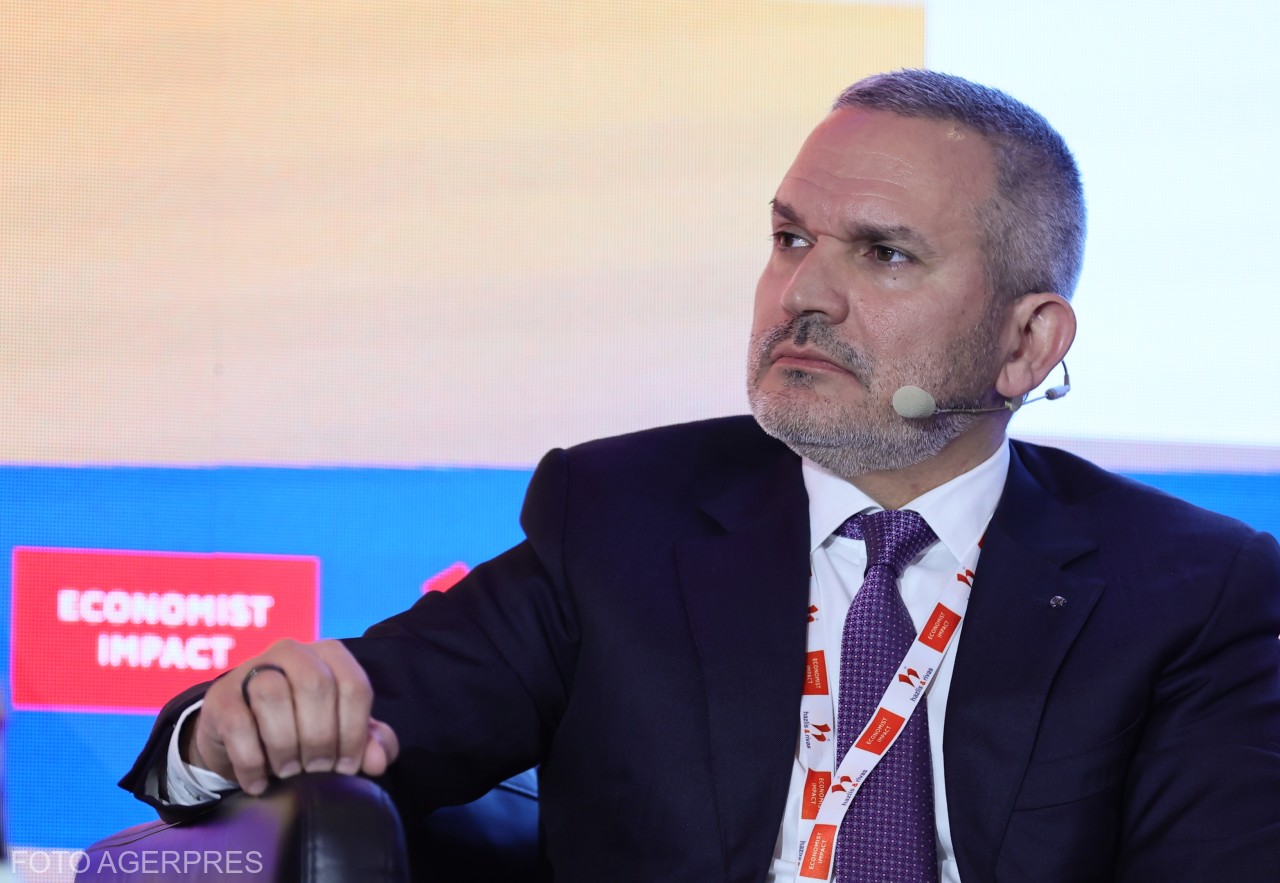
The general manager of Banca Transilvania, Omer Tetik, accuses the Competition Council of not understanding how the financial system works and of encouraging populism, after this institution fined 10 banks over 700 million euros for manipulating the ROBOR rate. Of this, BT should pay a total of around 185 million euros.
“We will fight to prove our innocence and show that BT acted fairly and legally. The Competition Council's decision in relation to the 'ROBOR investigation' demonstrates a profound lack of understanding of the workings of the financial system and the regulations on the calculation of ROBOR.” Moreover, the Competition Council's decision encourages populism and undermines the chances of an economic relaunch, in a complicated period for the country and the economy, a period in which the banking system is the main pillar of economic stability”, says Omer Tetik, in a post on Linkedin, quoted by the Profit.ro website.
- Banca Transilvania was fined 875.7 million lei. To this amount is added a fine of 85 million lei of the bank taken over, OTP Bank. A total of 960.7 million lei, i.e. almost 185 million euros.
“We will challenge the decision, addressing the competent courts and authorities, from the country and abroad. We will defend our reputation and dismantle the accusations. The decision published today is only a first step and there are many other ways in which we can bring the truth to light. We move forward, with courage. We support the economy and the Romanians and we do not back down when we know, with certainty, that we are right,” the post of the head of Banci Transilvania also states.
10 banks fined
In a statement issued on Sunday, the institution announces the fine of 10 banks with a total amount of 3.73 billion lei (710 million euros) for coordinating their behavior in the ROBOR setting procedure, thus violating the Competition Law and the Treaty on the Functioning of the European Union.
- ROBOR is the reference rate of the interbank money market that influences the calculation of interest for loans granted to legal entities (including state entities, such as local public authorities), but also the calculation of interest for natural persons who have loans granted before 2019 and have not applied to switch to IRCC.
The Competition Council's investigation targeted 11 banks, but fines were applied to 10 because, in the meantime, OTP Bank was taken over by Banca Transilvania, so the latter pays two fines.
Their amount is as follows:
● Banca Comercială Română SA: 577.36 million lei;
● BRD-Groupe Société Générale SA: 412.47 million lei;
● Banca Transilvania SA: 875.74 million lei;
● Banca Transilvania SA (for the deed carried out by OTP Bank România SA): 85.03 million lei;
● ING Bank NV Amsterdam Bucharest Branch: 405.91 million lei;
● Raiffeisen Bank Romania SA: 442.49 million lei;
● Exim Banca Românească SA: 96.49 million lei;
● CEC Bank SA: 332.98 million lei;
● UniCredit Bank SA: 431.03 million lei;
● Banca Comercială Intesa Sanpaolo Romania SA: 28.1 million lei;
● Libra Internet Bank SA: 45.86 million lei.
Exchange of confidential information
The investigation established that the sanctioned banks exchanged confidential and strategic information regarding the level of ROBOR during the fixing procedure, although the confidentiality of firm quotations during the fixing period is stipulated both by competition rules and by national and European regulations.
“Specifically, during the fixing procedure, when the firm quotations should be independent, the banks coordinated their behavior according to the competitors' quotations. The independence of the quotations during the fixing period is important, even more so in the case of maturities for which the volume of actual transactions is reduced (3, 6, 12 months), the average of these transactions cannot be used as a relevant indicator”, says a press release from the Competition Council.
Thus, a higher level of the ROBOR index was established, which benefited creditors but directly affected consumers and other debtors whose contracts are related to ROBOR.
“We have a set of evidence that must be analyzed in conjunction. The transparency of transactions is beneficial in some situations. The problem arises, however, in the case of firm quotations sent during the fixing period, which must remain confidential, an essential aspect in the case of maturities where the volume of actual transactions is reduced. Considering the large volume of loans, variations in the size of a fraction of a percentage can generate substantial amounts,” said the president of the Competition Council, Bogdan Chirițoiu.
An investigation that lasted almost four years
The Council launched the investigation at the end of 2022 and also went through the mandatory approval stage provided for in the cooperation mechanism with the European Commission, given the finding of the violation of the TFEU.
“In order not to disrupt the operation of the market, the banks have a period of 60 days from the receipt of the justification of the sanctioning decision to present plans of measures by which they will eliminate the anti-competitive practices. These plans will be approved by the Competition Council, thus providing the banks with legal certainty”, the Council states.