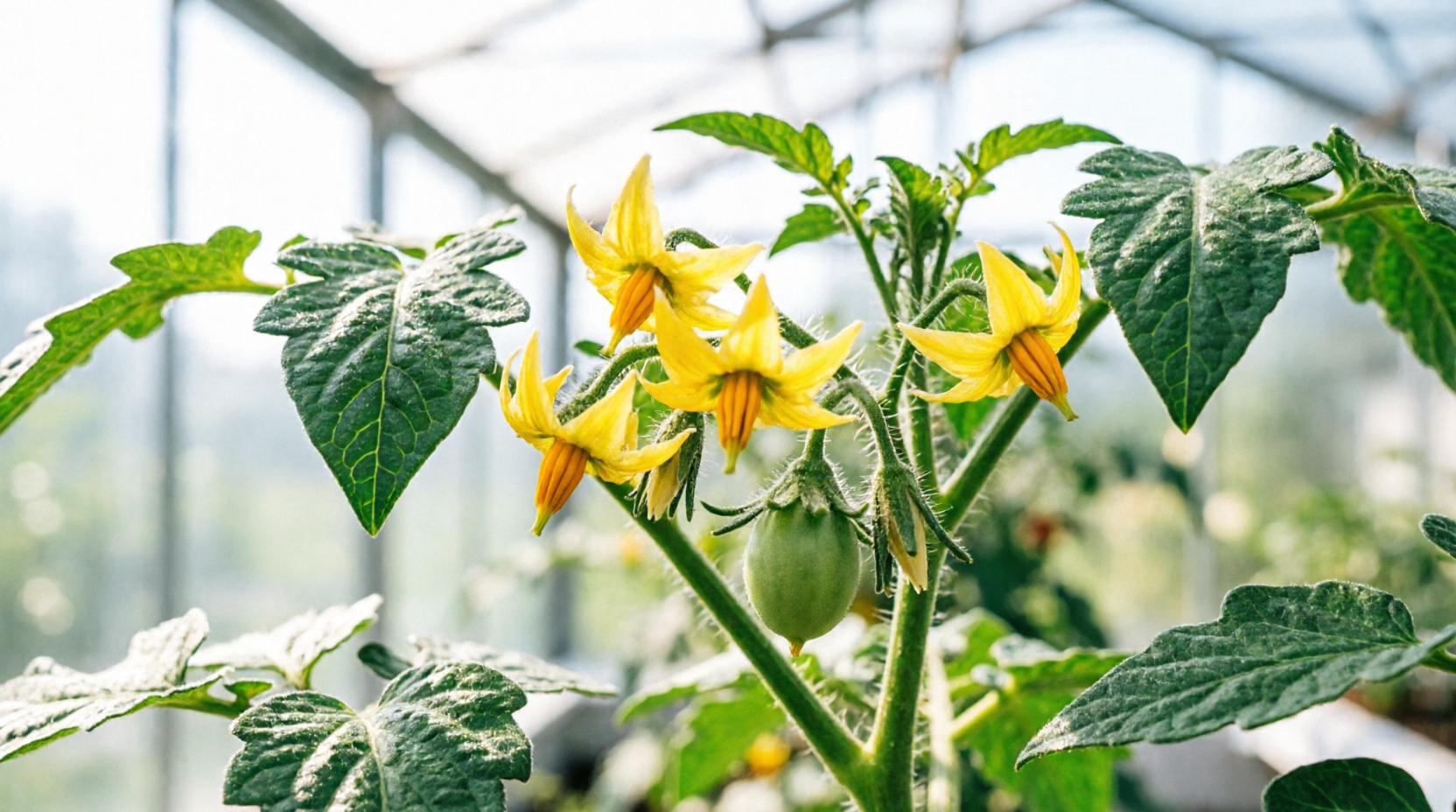
Bushes shed their ovaries due to stress and the associated lack of nutrients, according to an expert from the Zen channel “Garden Cribs.”
Boron is especially important for tomatoes during flowering. The difficulty is that it does not accumulate and is not redistributed from old leaves to young shoots. And if tomatoes grow in a greenhouse without wind, insects, hot air and high humidity, then unbalanced feeding will only worsen the situation.
Mistake #1: Incorrect dosage and composition
If you mix boric acid, potassium permanganate, nitrogen, iodine and milk in one container, then the components in such a combination turn from useful into harmful and unsafe.
The same goes for dosage. For example, if you mix 60 drops of iodine in 10 liters of water, you will get a powerful burn of the leaves. The maximum per bucket is 30 drops of iodine, and it acts as an antiseptic and does not retain the ovaries.
It is not recommended to use nitrogen at all during flowering – otherwise the plant will use all its energy on the shoots and leaves, leaving the fruits unattended.
A useful composition for foliar feeding of flowering tomatoes is as follows: 1 g of boric acid per 1 glass of hot water (+70 °C). Next, add warm water to 10 liters. You can add about 20 drops of iodine – but this is not necessary.
Mistake #2: Spraying during the day in the heat
If you spray tomatoes on a hot sunny day, the solution will evaporate almost instantly, and the leaves will receive a concentrated sediment. Processing can be carried out until 10 am. At 9 a.m., open the windows to reduce humidity and temperature.
Mistake #3: Instead of a sprayer, use a watering can with a nozzle
If you foliarly fertilize tomatoes using a watering can with a nozzle, large drops will immediately drain from the leaves. Another thing is a fine spray: thanks to it, the solution settles on the leaves as a thin film and lingers on the surface of the plants for a long time. In this case, you need to spray both sides of the leaves.