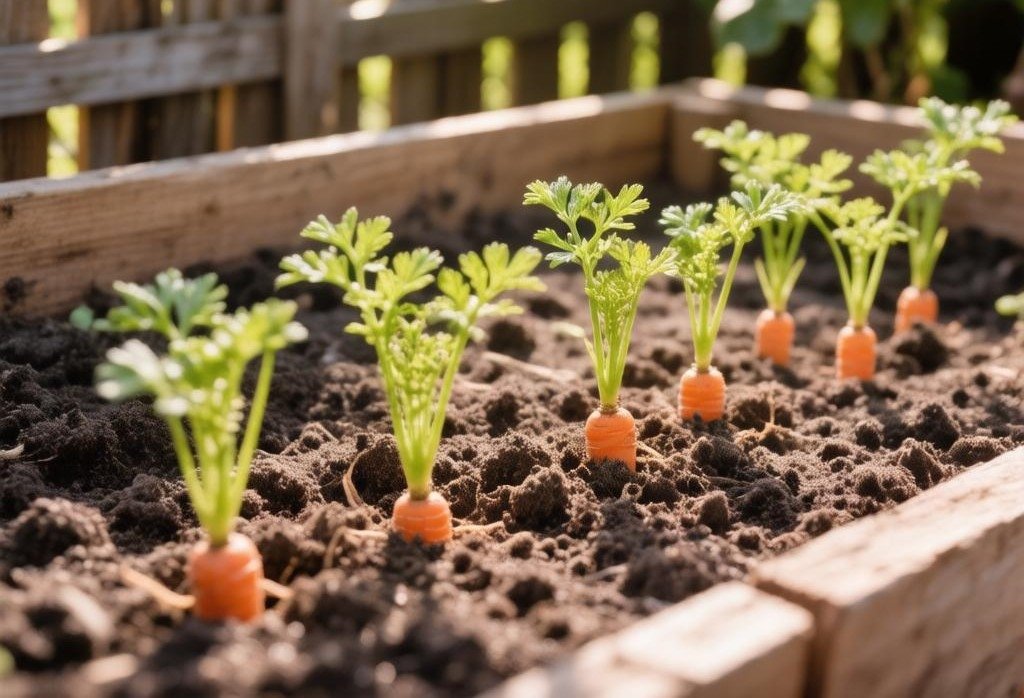
We all know how long it takes to get the first carrot sprouts. It takes 2-3 weeks to sprout, and sometimes it seems that the seeds simply fell asleep in the cold soil. There is no need to panic because of the vagaries of the weather or procrastinate. The main thing is to know a couple of simple tricks so as not to destroy fragile sprouts with unnecessary movements and reliably protect them from the main enemy. How to grow an ideal harvest without unnecessary chemicals and nerves, the author of the Zen channel “Harvest Garden and Vegetable Garden” (12+) told.
Carrots do not like heavy clay and fresh manure; this causes the root crops to grow crooked and branched. She needs loose soil, which is best prepared in the fall by adding compost. While you are waiting for shoots, do not fuss. Do not loosen or water the bed too early, so as not to accidentally pull out single shoots. Wait for them to appear en masse.
Keep the soil slightly moist until greenery appears. Water only through a fine strainer so that a strong stream does not wash out the seeds. A thin layer of mulch helps a lot: it will prevent the soil from becoming covered with a hard crust that weak shoots cannot break through. And start thinning only when the carrots have 2-3 true leaves. If you do this earlier, you will damage your neighbors, and if later, the roots will already be intertwined, and you won’t be able to pull out the excess without injury.
Young carrots need nitrogen for strong tops, but it is important not to overdo it. Excess will make the roots loose and accumulate nitrates. Spring compost that releases its nutrition slowly works best. It is better to consciously avoid aggressive nitrogen fertilizers during the season.
The main enemy of the crop is the carrot fly. She lays eggs at the base of the plants, and the larvae then gnaw the carrots from the inside, spoiling them both in the garden and during winter storage. To prevent this, follow crop rotation: do not plant carrots where parsley, celery or parsnips grew last year.
And for reliable protection, use a proven two-step method without expensive chemicals:
- Ammonia shower. Dilute 2 tablespoons of 10% ammonia in 10 liters of water. Spray the tops early in the morning or evening to avoid sunburn of the leaves. The pungent smell will instantly repel the fly, and the carrots will receive safe, light feeding through the leaves.
- Dry barrier. 2-3 days after spraying, powder the row spacing with a mixture of wood ash and tobacco dust (1 to 1). The ash will provide the plants with potassium and phosphorus, and the tobacco will create a reliable aromatic shield against insects.
This simple approach is enough for at least a month. In mid-summer, all that remains is to water the beds in the heat and occasionally give complex fertilizer to fill the root crops. As a result, you will get a predictable result: a rich harvest of smooth, dense, sweet carrots, absolutely free of larvae.