Russia's economy “fell into Zapotkin's trap.” Russian billionaires storm the forum where Putin is expected and launch a flurry of criticism

Russian financial authorities have created a “trap” for the economy with their restrictive monetary policy, pushing it into stagnation, several billionaires under sanctions and top Forbes Russia rankings said on Friday, in their most significant public criticism since raising benchmark interest rates in 2024.
Russia's economic growth is expected to slow to 0.4 percent this year from 4.9 percent in 2024. Analysts say the decline is due to high interest rates, an overvalued ruble and Western sanctions. The measures proposed by the government are not considered capable of providing a significant boost to the economy.
Most of Russia's billionaires have backed President Vladimir Putin's war against Ukraine since 2022, despite Western sanctions that have denied them access to their luxury properties and yachts in Europe and North America.
However, as the war enters its fifth year with no end in sight, and as profits fall, taxes rise, access to Western markets remains blocked, and the largest nationalization campaign since the 1990s takes place, the consensus among businessmen about the war's goals begins to crack.
Roman Trotenko, a billionaire with businesses in transportation, fertilizer and real estate, compared the central bank's monetary policy to a “Volcker shock,” referring to the aggressive rate hikes by the US Federal Reserve from 1979–1982 under Chairman Paul Volcker.
“This was a great experiment and no one has repeated it since, except us,” he told senior officials, bankers and businessmen attending a debate on the organized economic growth of Sberbank, Russia's largest private bank. The debate was organized within the International Forum in Sank Petersburg, the biggest event on economic and business topics organized annually in Russia.
What displeases the Russian billionaires
Russia's key benchmark interest rate is now 14.5%, down from a peak of 22%. But it is still considered too high for companies to invest. Moscow's Central Bank is hesitant to cut it further as inflation remains high at 5.6%, even though it has fallen from around 10%.
Trotsenko said economic history textbooks will describe the interest rate policy of the war with Ukraine as “Zabotkin's trap, which Russia fell into by mistake”.
He thus referred to Alexei Zabotkin, the first deputy governor of the central bank and one of the architects of the current monetary policy.
Zabotkin, who attended the debate, applauded Trotsenko's speech, but later told reporters that the central bank is fully aware of the difficulties facing Russian companies.
Russian President Vladimir Putin is expected to address the forum, as he has in previous years. The Kremlin said earlier on Friday that he would likely also address the subject of Volodymyr Zelensky's invitation to face-to-face peace talks.
Criticism in St. Petersburg from the richest man in Russia
Dmitri Mazepin, owner of fertilizer maker Uralchem, compared the central bank's actions to cool the economy to the efforts of hostile Western powers.
“What is the external challenge doing? Apart from the fact that, as the president said, they want to inflict a strategic defeat on us, they simply want to slow us down. What is happening domestically? What is the central bank doing when it says it wants to cool the economy?” Mazepin said.
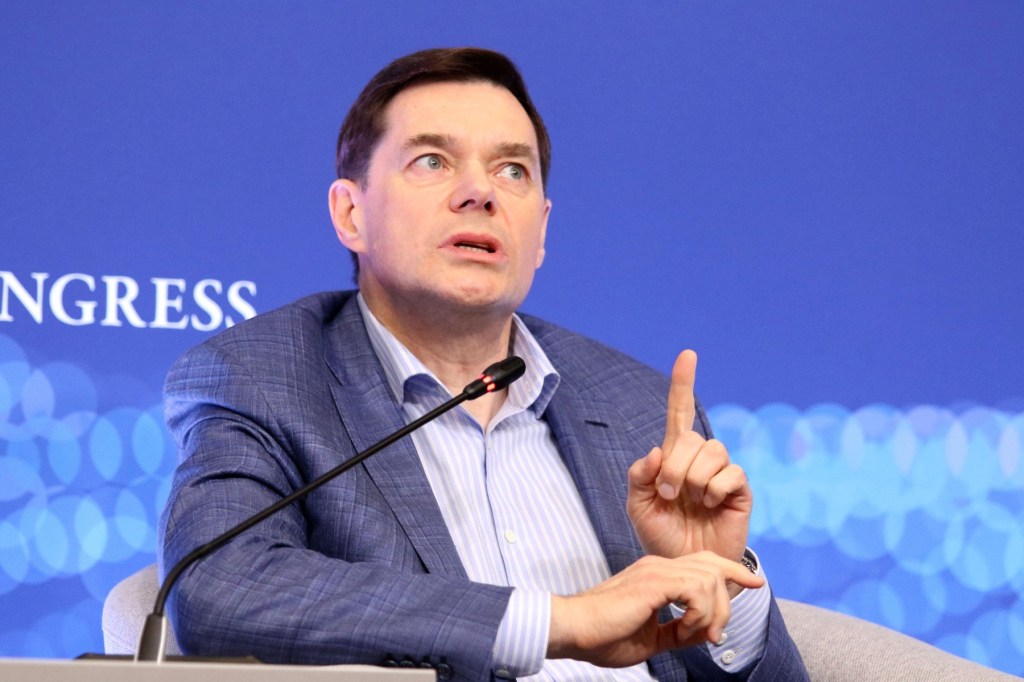
Criticism was continued by billionaire Alexei Mordasov, the richest man in Russia, according to Forbes. The owner of steel producer Severstal, said that domestic demand for steel has fallen by 30% in the past three years. He said the situation has caused his company to reduce its investment portfolio by 24%. He also complained that Severstal's cash flow had become negative.
“I am convinced that almost everyone in this room is seriously reassessing their investment agenda. It is clear that, in a context of such instability and volatility, we will face an even greater decline in investment and an even sharper decline in GDP,” he said.
Reuters recalls that Russian billionaires usually avoid making public statements about the war in Ukraine. Many of them have officially relinquished control of their companies and are challenging Western sanctions in court in an attempt to get them lifted.
German Gref, the CEO of Sberbank and the author of Putin's first economic program since the early 2000s — a program that generated spectacular growth rates for several years — told reporters after the debate that Russia's modest growth rate under current conditions was “already a miracle.”