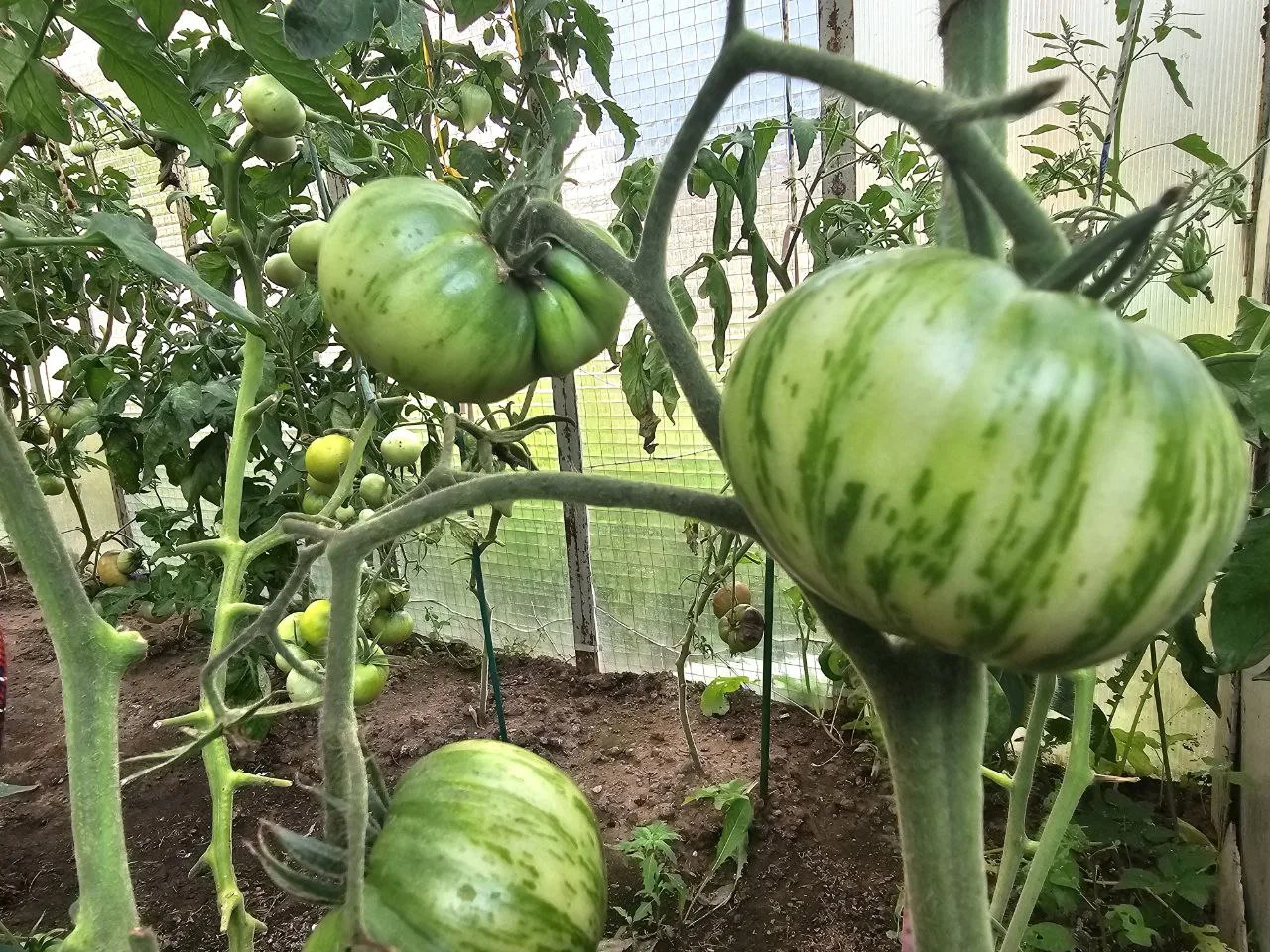
To get a rich harvest of smooth, fleshy tomatoes without signs of disease, you need to protect tomatoes from late blight from the very beginning. Dampness and cold create ideal conditions for fungus. But in a greenhouse, the harvest can be saved if you follow a few simple rules.
Draft and removal of lower leaves
Tomatoes are not as afraid of the cold as moist, stagnant air. It activates the germination of fungal spores. Therefore, from the very planting, the doors in the greenhouse must be open. Even at temperatures near zero, the vents are not closed – tomatoes need a draft.
From June the lower leaves begin to be removed. In the first approach, remove the 4 lowest leaves – those that the tomatoes grew on the windowsill. They have almost no benefit, but they can become a bridge for late blight. Phytophthora never begins with young leaves – metabolic processes take place there rapidly. And old leaves are an ideal path for infection. Leaves are trimmed so that they do not touch the ground.
Removal of stepsons and garter
Stepchildren take away the strength of the plant and thicken the plantings. If you need to grow a tomato in two stems, leave a stepson on the second stem under the first flower cluster. The lower stepson takes a long time to develop and delays fruiting. If the stepson moves away so that the stem bifurcates, they are guided by the crown: on the continuation of the stem there will be a rudiment of a flower raceme, on the stepson there will be leaves.
Garter is required. Tied tomatoes do not lie on the ground, are well ventilated and illuminated by the sun. This reduces the risk of late blight.
Prevention of late blight with folk remedies
From June they begin to spray tomatoes once a week, alternating solutions:
- milk with iodine;
- whey.
These compounds are safe for plants and people. Spray until the end of harvest.
For peppers and eggplants, the care is the same: tying to the supports, removing the stepsons until the first fork. If you treat them with whey or milk with iodine, no additional feeding is needed – the whey contains everything you need.
After setting the first fruit, you can add potassium monophosphate (potassium and phosphorus in a quickly absorbed form) under the root or along the leaf, but do not exceed the concentration so as not to burn the leaves.
Personal experience
Previously, every summer I struggled with late blight, tried a bunch of drugs – it didn’t help for long. I saw the advice about drafts and whey and decided to take a risk. I kept the greenhouse open all summer and sprayed the tomatoes once a week. The harvest was rich, the tomatoes were large, fleshy, without a single spot.