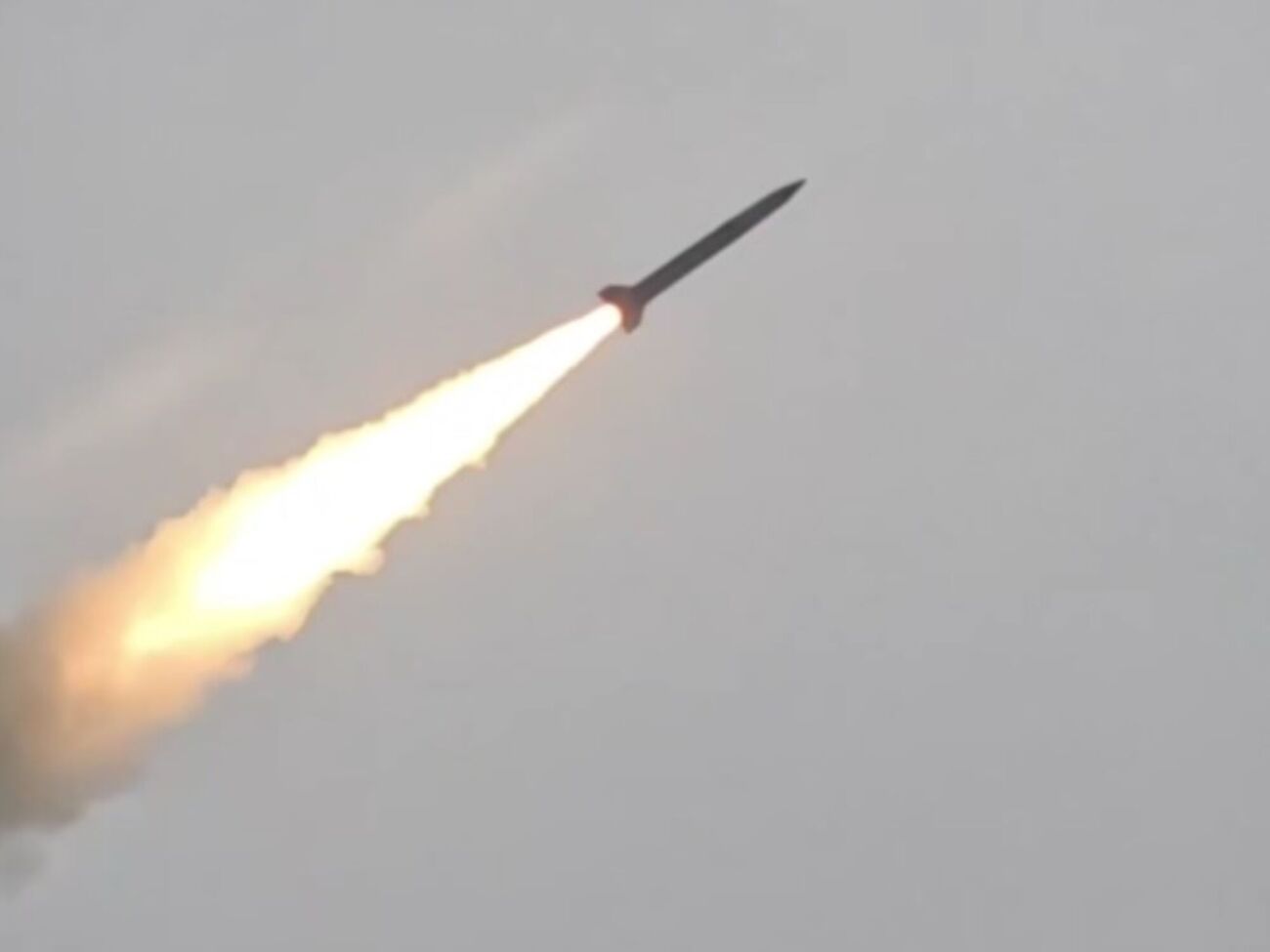
The Ukrainian defense company Fire Point has successfully tested the new FP-7 missile, which is considered as an element of the promising Freya air defense system. This was stated by the chief designer and co-founder of the company Denis Shtilerman in an interview with the editor-in-chief of the GORDON publication Alesya Batsman, which was published on June 3.
According to Shtilerman, the tests were successful, and the development itself is in the early stages of creating a full-fledged air defense system capable of intercepting ballistic targets.
“We rehearsed that, under the control of an uplink from the ground, it should go to the interception point, which is set for it by the ground radar. The tests have just been successful,” said Shtilerman.
He explained that we are talking about the formation of the Freya system, a European anti-ballistic shield with an open architecture.
According to him, the key idea of the project is that the system will not have a “kill switch,” that is, it cannot be turned off remotely by the manufacturer or supplier.
Separately, he commented on the estimated cost of interception. Currently, interceptor missiles for Patriot systems can cost several million dollars, while the goal of the project is to significantly reduce the price.
“Intercepting ballistics now, even at American prices, costs about $6 million at least. Our target goal is to reduce it to less than $1 million. We want to produce missiles very cheaply – up to $500 thousand – and intercept them with them,” Shtilerman said.
He also said that the launcher of the system could cost about $150 thousand, and in the future the system should become much cheaper and more widespread in production.
As for the timing of the appearance of the first results, the designer said that everything depends on the speed of international cooperation.
“If everything goes quickly, we will be able to make the first interceptions this year,” Stilerman said.
He also noted that global demand for air defense systems exceeds production capacity by more than 10 times, and if tested successfully, the technology could become exportable and scalable to many countries.