Through the SAFE program, Romania buys German armaments from the Rheinmetall concern for 5.7 billion euros. The real stake is the transformation from customer to producer and industrial outpost of European defense.
The contract with Rheinmetall was signed on the last day of the legal deadline set by the SAFE program
Romania concluded the largest arms contracts in its recent history, at a time when the institutions that should manage this transformation are going through one of the most fragile periods in recent years. The protests in Cugir, the dispute regarding SAFE, the file of the head of the army, the vacancies in the service area and the controversies generated by the incident in Galați are fueling distrust in the ability of the Romanian state to effectively manage the largest military modernization since joining NATO. In a regional context marked by the war in Ukraine and tensions between NATO and Russia, these institutional vulnerabilities take on additional significance.
Revival or Addiction?
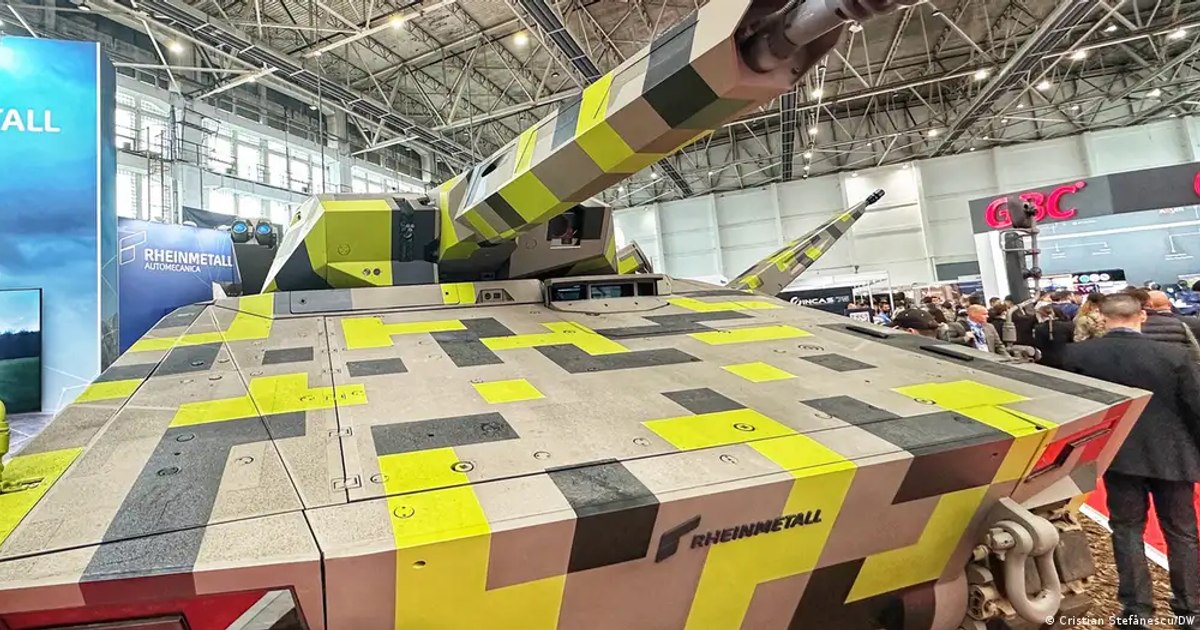
Romania signed an arms contract worth 5.7 billion euros with the German giant Rheinmetall. Almost 300 Lynx armored vehicles, anti-aircraft systems, ammunition and four military ships will be produced in a program that, according to the German company, will transfer technology and realize a large part of the added value in Romania. Deliveries would begin in 2028 and be completed by 2030.
The agreement, concluded on the last day of the legal term stipulated by the regulations of the SAFE program, is, from the perspective of the Romanian authorities, the beginning of a new stage for the national defense industry. Mihai Jurca, head of the Prime Minister's Chancellery, talks about the revitalization of the sector and the integration of the Romanian economy into European military production chains. Furthermore, the government and SAFE supporters argue that these expenditures are necessary for the security of NATO's eastern flank.
Critics of SAFE, however, argue that the states of the eastern European Union are going into debt to buy equipment developed in the West, while the local economic benefits remain uncertain.
The concern with headquarters in Düsseldorf implicitly rejects this criticism. The company says it will significantly expand its existing capabilities in Romania, transfer technology and integrate more than 200 local subcontractors into its production chain. According to the company, the project would generate several thousand jobs. For now, it is not clear which Romanian companies will participate in the program and which components will actually be produced locally.
Apart from the agreement with Rheinmetall, Romania recently signed contracts with other German, French or Italian partners for drones, anti-aircraft systems and logistics vehicles, but also with manufacturers from the USA, South Korea or Japan.
Other negotiations in the SAFE package have been re-examined due to rising costs. The failed negotiation was, according to the Minister of Defense, Radu Miruță, the project regarding the Piranha armored vehicles that were to be produced at the Bucharest Mechanical Plant together with General Dynamics European Land Systems. The official explained that the final offer would have exceeded 2.5 times the prices previously approved by Parliament. The amounts not allocated to this contract were used for the purchase of Lynx infantry vehicles, which will be produced in a proportion of 40% in Mediaș.
The new geography of European defense
Rheinmetall's decision to expand its capabilities in Romania reflects a broader shift in the geography of European security. The eastward expansion of the German group is related to costs as well as geostrategic considerations.
First of all, the Düsseldorf concern can no longer meet the demand alone in its own factories, which have physical limits. Then, what set the EU on its feet, the SAFE program, involves not only a cost distribution but also a community industrialization and a balancing between the parts of the continent. The European defense industry is interested in producing in Poland, Romania or the Baltic states to be closer to the sensitive areas of Europe. The vicinity of the Black Sea and the eastern flank are no longer just a market, but a strategic line. And the European base of the defense industry can no longer be concentrated exclusively in Germany, France or Italy.
However, Rheinmetall is coming to Romania also because there is already an industrial tradition here, with military factories, shipyards and metallurgy, with engineers and experience in military production. During the communist period, Romania produced armored vehicles, ammunition and military ships. The collapse of the industry followed after 1990, in a combination of the international conjuncture of post-Cold War détente and harmful domestic economic strategies.
Many of these capabilities remain. They are outdated, but they exist, which substantially reduces the installation costs of resourceful investors. And the war in Ukraine and the European rearmament policy, which goes beyond the current SAFE framework and is supported by a number of other European defense instruments and initiatives, creates an opportunity for industrial renaissance.
Last but not least, to ensure its own security, Western Europe has every interest in strengthening its eastern flank. After decades when the most sensitive point was the Fulda Pass (the so-called Fulda Gap), near West Germany's border with the Czech Republic and the defunct GDR, the critical line has moved to the east of Poland and Romania. Along with it, the investments in the military and industrial infrastructure of the Alliance moved,
An officer monitors the air situation on the eastern flank from aboard an AWACS aircraft
Billions in the local economic circuit
Just as Western automakers came to Central and Eastern Europe not for a single vehicle model, but to create regional industrial bases, the stake for defense concerns may be access to future European endowment programs. Beyond the immediate economic justification, Rheinmetall is also coming to Romania for the world after SAFE, which is not, for the EU, the last and only instrument for financing common security.
If the commitments and forecasts circulated by Rheinmetall prove to be correct, approximately three billion euros from the loans accessed through SAFE will circulate in the Romanian economy.
Cristian Ștefănescu -DW