The new EU system is intended to reduce the number of migrants. “The rules are intentionally vague”

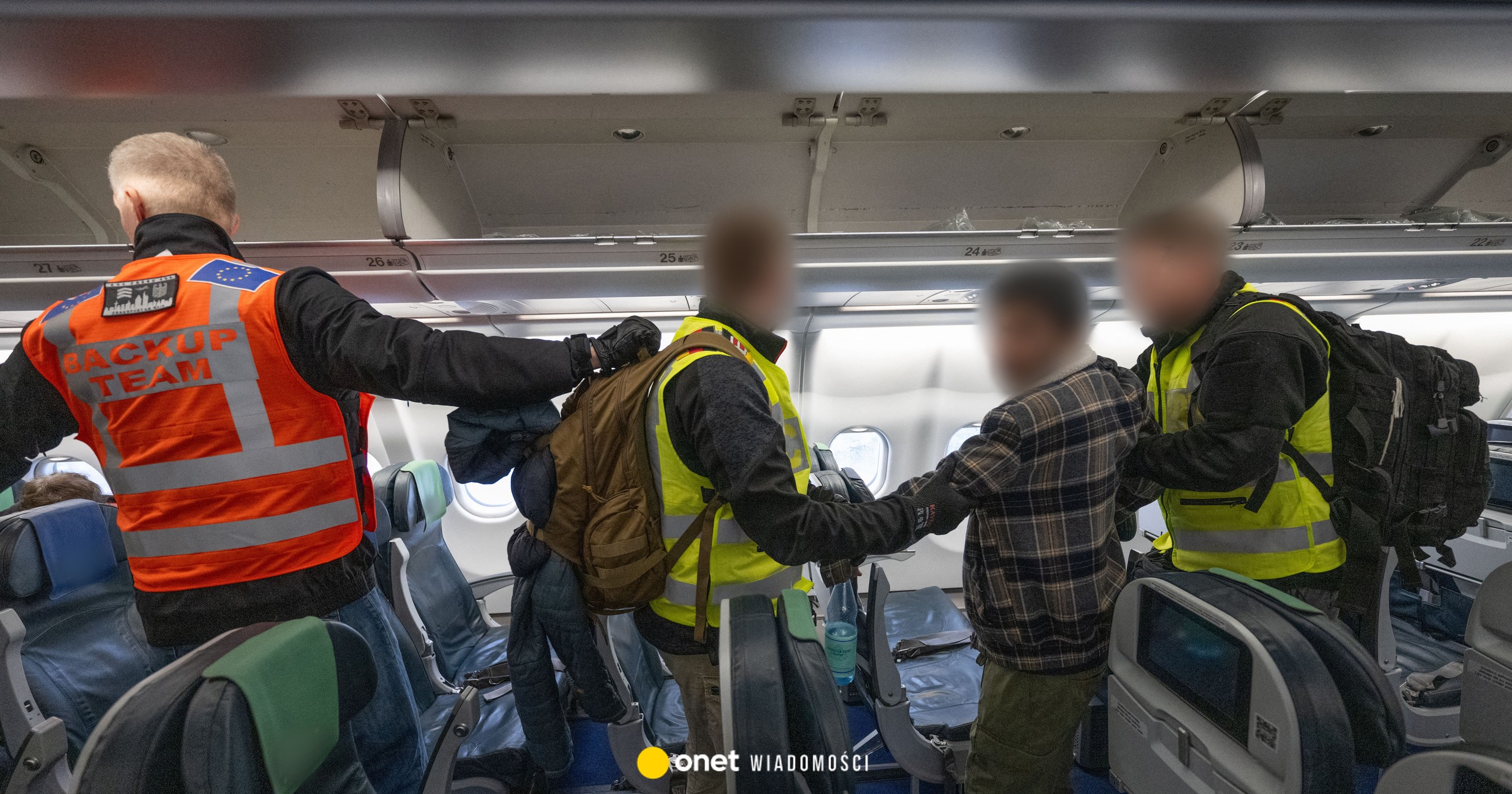
There has been a phrase circulating in German migration policy for years that has persisted among interior ministers of all parties: whoever is already in Germany usually stays here. Temporary arrangements turn into permanent residence, and deportation goes poorly.
Federal Interior Minister Alexander Dobrindt wants to change this, but even he is not making much progress on deportations. In the first quarter of 2026, Germany deported just 4,807 people – significantly fewer than a year earlier.
That's why Berlin is turning to Europe. The Common European Asylum System (GEAS) will enter into force on June 12.. The federal government has two big hopes for it. The first is that the decision on asylum is to be accelerated [i zapadać już] at the EU's external border, as part of fast border procedures, before people with little chance of being granted asylum reach Germany and possibly stay there.
In addition, Germany is also to be able to more quickly return persons covered by the Dublin Regulation and persons submitting multiple applications to countries that are competent under EU law.
For Berlin, GEAS is therefore more than just the biggest asylum reform in decades. This is an attempt to break the old pattern of German migration policy: first [migrantom] you manage to enter the country, then a long procedure begins, and at the end you often get permanent residence. In the future, Europe will select and return people more quickly [nieuprawnione do przyznania im azylu]. As far as possible, this should happen where the EU begins: in the Italian Lampedusa, in the Greek Crete, at airports or, thanks to appropriate agreements, in third countries outside the EU.
Reform begins in favorable circumstances. The number of illegal crossings of the EU border fell to just over 28,000 in the first four months of this year. 500 cases – that's about 40%. less than in the same period last year. Frontex data shows this.
The pressure on sea routes has decreased particularly significantly. On the central Mediterranean route from Libya to Italy, Frontex recorded half as many arrivals as a year earlier. The agency cites “precautionary measures” by the Libyan authorities and changed political dynamics in important countries of origin as the reasons [migrantów]such as Somalia, Pakistan and Bangladesh. On the West African route, crossings have also fallen sharply, by more than three-quarters.
Frontex now hopes that thanks to the new rules, which will come into force in June, it will be possible to take further steps towards “better and more coordinated European migration and border management”, as Frontex deputy executive director Lars Gerdes said in an interview for Welt am Sonntag. GEAS therefore takes off with the wind at its back. But that's why the system must quickly show whether it is more than just a promise on paper.
The new logic can be seen in Lampedusa. If an asylum seeker reaches this Italian island in the Mediterranean Sea, border officials will in future take fingerprints, check their identity and travel route, and conduct security checks. People from countries with a low rate of granting protection [azylu] will be accommodated near the border. Their applications will be considered in an accelerated manner. From a legal point of view, entry into the EU is not yet considered completed at this time.
The most important filter is the EU-wide recognition rate for international protection. This concerns refugee protection and subsidiary protection. If this indicator is a maximum of 20%, applications are to be considered in an accelerated manner. According to current Eurostat data, this applies, among others, to applicants from Morocco, Turkey, Pakistan and Georgia. People who conceal their identity or are considered a security threat may also be subject to border procedures. The countries of southern Europe did not want huge, permanent detention camps. Northern European countries simply wanted functioning procedures at their external borders.
The result is a compromise: the EU currently assumes about 30,000. places [dla migrantów i uchodźców mających przejść przez procedury graniczne]. How many people will actually end up there cannot be “reliably” estimated, explains the Federal Office for Migration and Refugees (BAMF) in response to an inquiry.
A room in the detention center in the so-called Dublin Center in Hamburg, Germany, May 13, 2025.CHRISTIAN CHARISIUS / DPA POOL / DPA PICTURE-ALLIANCE VIA AFP / AFP
Up to 12 weeks are allowed for the application to be considered. If rejected, there may be a border procedure to return the person [do jej ojczyzny]. Then the second part of the test will begin: will it be possible not only to quickly reject the application, but also to quickly repatriate it?
Daniel Thym, an asylum law specialist from Konstanz, believes it is “crucial” that member states consistently implement procedures at external borders. However, he is not sure about this. —The rules remain intentionally vague: on the one hand [niektórzy] people should not be allowed to enter, on the other hand, from a legal point of view, there is no question of detaining them. This is where the problem may arise – namely that these people leave the centers quickly [detencyjne] and travel further around Europe, says Thym in an interview with Welt am Sonntag.
A condition for the success of the GEAS system
That's why Berlin is already thinking about the future beyond GEAS. A “working group” of five countries led by Germany and the Netherlands promotes repatriation models outside the EU. Such “return centers” could be used to accommodate rejected asylum applicants who cannot be returned to their countries of origin, for example because they lack documents, are refused admission by their countries of origin, or are repatriated in practical impossibility. Discussions with potential third countries are ongoing. According to reports, the Netherlands has already made significant progress in negotiations with Uganda.
A breakthrough in the Dublin system would be of key importance for Germany in this context. This is “a condition for the success of GEAS”, says a spokeswoman for the Federal Ministry of the Interior. Every year, Germany treats tens of thousands of asylum seekers according to the so-called the Dublin Agreement as a matter for other EU countries – often Italy or Greece. In the first half of 2025, Berlin sent approximately 20,000 to other EU countries. applications to take over persons under the Dublin Agreement. In fact, only a few thousand people were transferred.
On paper, Dublin is an order system. In practice, it often acts as a waiting room. Late last year, Home Secretary Dobrindt announced that Italy and Greece had concluded “permanent arrangements” and would resume Dublin affairs from June. For GEAS to be effective for Germany, this promise must be kept. In return, neighboring countries expect Germany to contribute as well.
Since the Federal Republic of Germany has virtually no external borders of the EU, the German practical test starts primarily at airports. Anyone arriving at Frankfurt am Main airport from, for example, Nigeria or Pakistan, crosses the external EU border there. Applications from people from countries with a low recognition rate are then to be processed directly at the airport. From a legal point of view, these people, even though they are located on German territory, are not considered to have entered the country.
Frankfurt plays a key role in this. Of 374 places [dla przyjezdnych ubiegających się o azyl albo prawo pobytu]which Germany must provide for the border procedure, 200 are being built there. These people do not go to a regular first reception center, but to a combination of a transit area, secured accommodation and an official area – with rooms, partially barred windows and offices for the Federal Police and the Federal Office for Migration and Refugees (BAMF) right at the airport. The Hesse Ministry of the Interior informs that it is significantly increasing its current capacity of 100 seats. Also 40 places at Berlin airport are ready for use, according to the Ministry of the Interior of Brandenburg.
Other airports are not fully ready to launch the GEAS system. This is shown by a survey conducted by Welt am Sonntag. In the case of Duesseldorf, the Ministry of the Interior in North Rhine-Westphalia says “ongoing talks”. The situation is similar at the airports in Hamburg and Stuttgart. There, the Ministry of the Interior sends him to the detention center in Pforzheim. According to the Bavarian Ministry of the Interior, 27 out of 54 seats will be available at Munich airport by mid-June. A system of this scale does not work flawlessly from day one. This probably applies not only to Germany, but also to Europe's external borders.
Frontex does not expect quick successes anyway. In an internal risk analysis obtained by the Welt am Sonntag newspaper, the agency notes that Really “measurable results” of the reform can only be expected at the end of the year. The border guard is concerned about the Libya-Crete migration route, where “increasing pressure” is being reported.
Syria also remains a factor of uncertainty. This country has had a major impact on immigration to Germany over the years, and the situation there remains unstable. More than two million Syrians still live in Turkey under temporary protection. If their situation worsens, Germany could also be affected.
Thym, a specialist in asylum law, therefore believes that The “real test of endurance” will only come when many more people arrive in Europe. “Then it will be clear whether border procedures, transfers of persons under the Dublin Regulation and limiting secondary migration actually work in the conditions of the stress test,” he says.
To reduce this secondary migration, Germany also wants to ensure that fewer people go into hiding and evading the proceedings. The so-called secondary migration centers. They are intended to accommodate asylum seekers for whom there are indications that another EU country is competent. If the suspicions are confirmed, an obligation to stay in a specific place and restrictions on freedom of movement may be imposed.
The federal government is promoting this idea because it is cases like these that have been undermining the Dublin system for years. However, it would be up to the federal states to implement these centers – and the readiness to do so there is so far limited. We can already see how difficult it may be to implement all the new rules in practice.
However, expectations regarding the painstakingly negotiated new asylum system are enormous. GEAS is not only intended to speed up procedures. It is intended to prove that migration can still be controlled and limited from the position of the political center. On June 12, Federal Minister of the Interior Dobrindt will give the starting signal. Perhaps he will cut the red ribbon. He will certainly hope that with GEAS the old pattern: entry, procedure, stay will end. Whether a new order will actually emerge from this, however, will be decided not so much in Berlin as on the external borders.