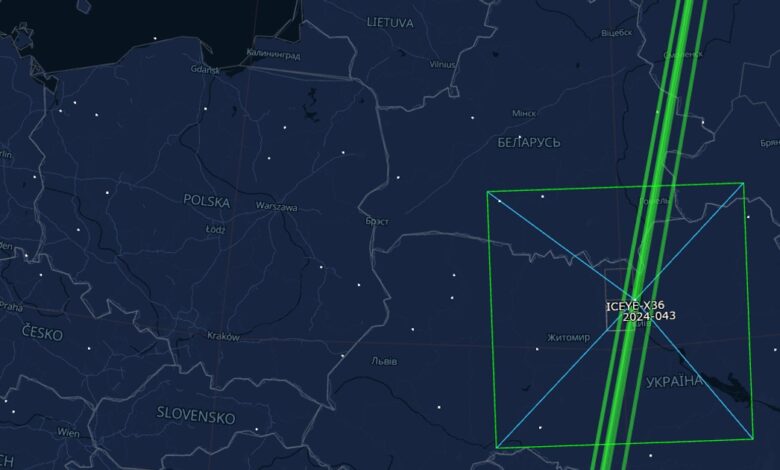
The maneuvers were identified using publicly available orbital tracking data. The orbit changes were revealed and described on Friday by Greg Gillinger, a retired U.S. Air Force space intelligence officer, in a special issue of his “Integrity Flash” newsletter, published by Integrity ISR – a private company that describes itself as providing combat-proven operational support and elite training to increase mission effectiveness in the areas of ISR (intelligence, surveillance and reconnaissance), cyberspace, space and targeting systems.
Described four Russian satellitesmarked as Space 2610-2613were launched together on April 16 in a rocket Soyuz-2.1b from the Plesetsk Cosmodrome in northern Russia. Over the last week, the satellites have slightly adjusted their inclinations — that is, the angles of inclination of the orbits relative to the equator — by 0.8 degrees.
Russia has performed a maneuver that will place 4 (5) satellites almost on the same plane as ICEYE-X36
|
saberastro.com
Even though it doesn't seem like much, it's true such orbital plane change maneuvers are tightly coordinated and consume large amounts of fuel. The required amount of velocity change needed to perform a maneuver of this scale is equivalent to the impulse required to raise the orbital altitude by more than 160 km.
Not accidental action
As a result, Russian satellites are now aligned to regularly fly near a commercial radar satellite owned by the Finnish-American company ICEYE. The lateral distances between the four Russian satellites and ICEYE-X36 are currently from about 500 meters to 22 kilometers.
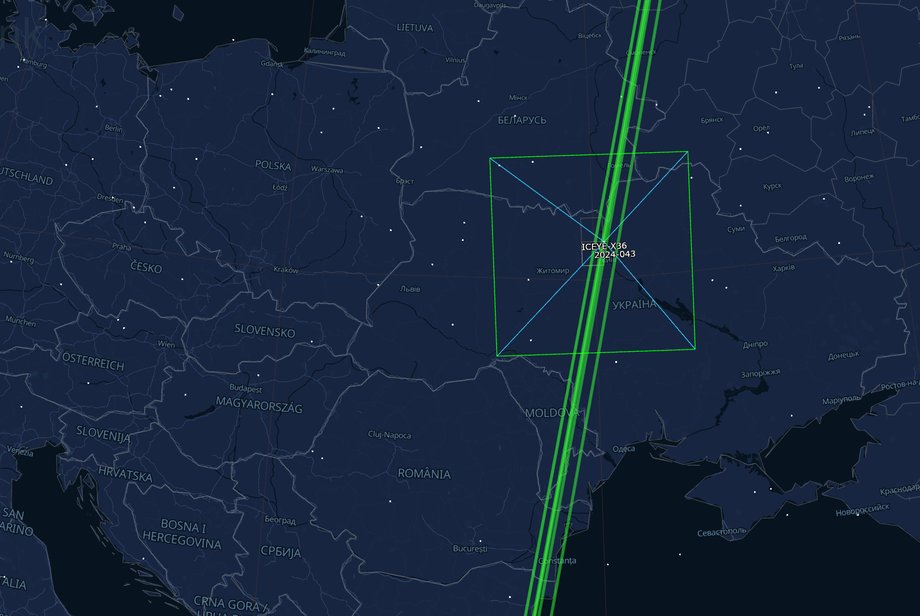
ICEYE – distances between the ICEYE-X36 satellite and Russian satellites from about 500 meters to 22 kilometers
|
satellitemap.space
All this is taking place in a polar orbit at an altitude of approximately 547 km. The satellites are now in an enabling position further approach to the ICEYE satellite by making small adjustments to the eccentricity and average heights of the orbits,” Gillinger wrote in his newsletter. The fifth satellite, Kosmos-2614 from the same launch last month also appears to be performing a similar set of maneuvers to approach ICEYE-X36.
Targeting a single satellite such as ICEYE-X36 as part of an entire constellation of similar imaging satellites would have little impact on the ability of Ukraine or other Western nations to obtain radar satellite imagery. ICEYE itself operates dozens of other radar satellites. Unlike optical spy satellites, radars can provide images both day and night, regardless of cloud cover.
ICEYE
ICEYE owns and operates the world's largest constellation of satellites equipped with synthetic aperture radars (SAR), which therefore operate independently of atmospheric conditions – unlike optical satellites. Imaging platform ICEYE-X36 is part of a fleet of satellites that they provide the U.S. military and European governments with radar images of the Earth.
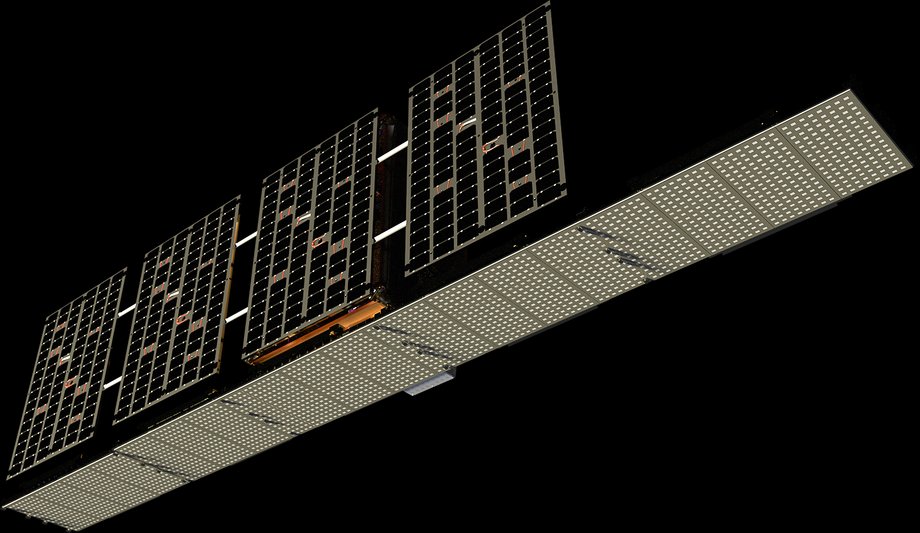
ICEYE – the appearance of the satellite
|
earth.esa.int
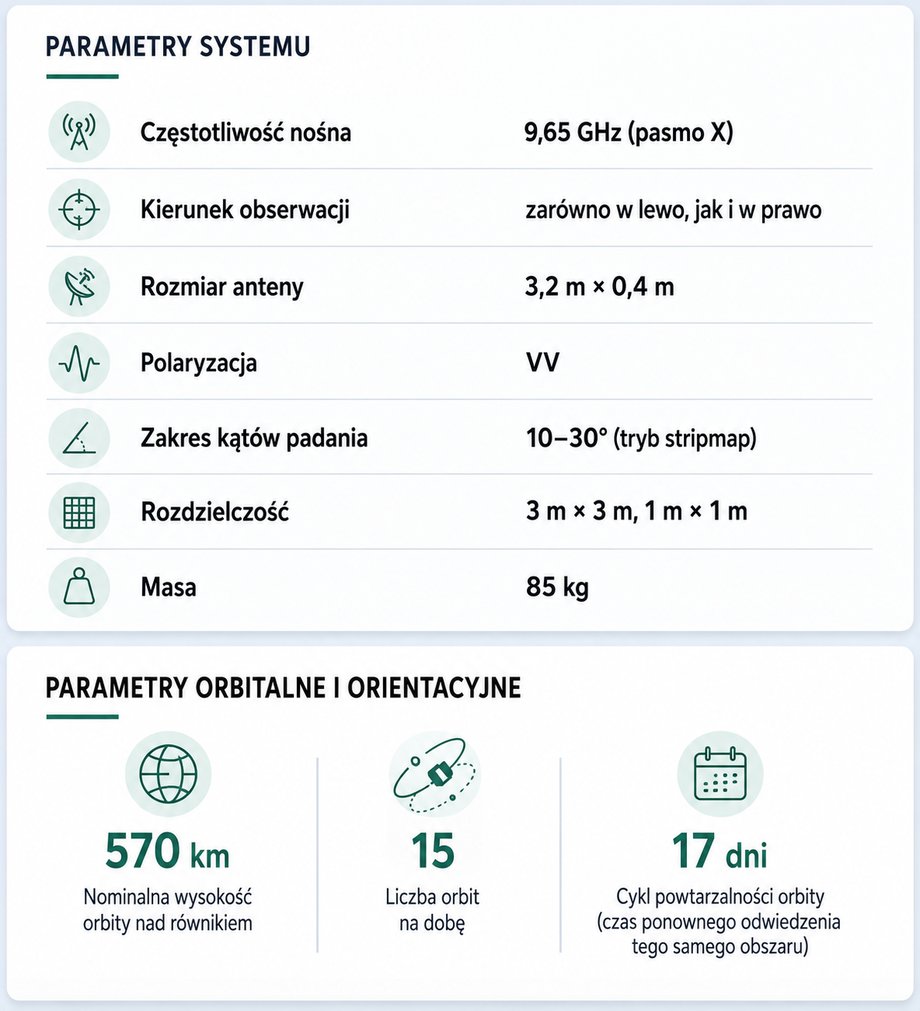
ICEYE – parameters
|
ceos.org
ICEYE it also provides imagery of the Ukrainian army fighting against Russia. Moreover, he is the co-founder and CEO of ICEYE Pole, Rafał Modrzewskiwhich last year met with Volodymyr Zelensky in Finland and Alexander Stubb, President of Finland.
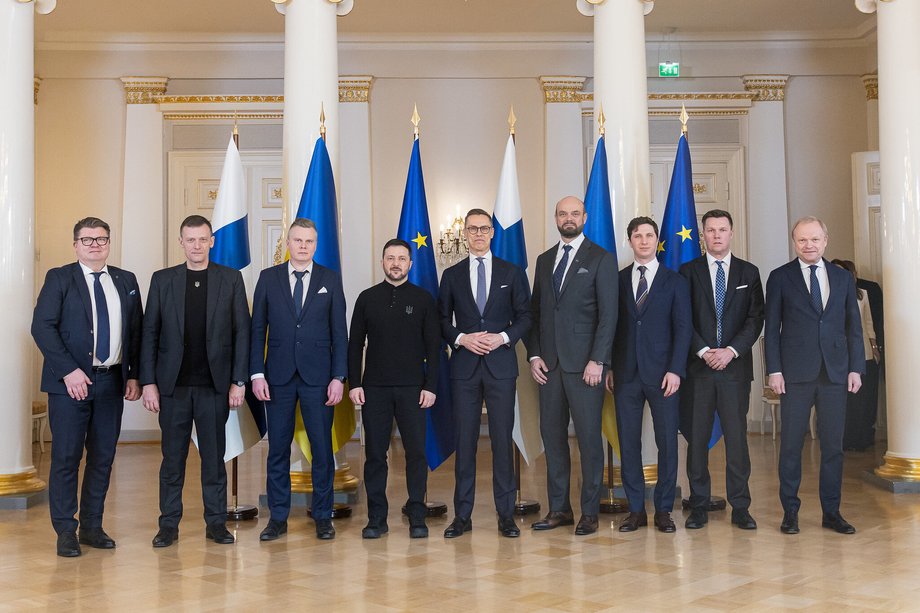
ICEYE President Rafał Modrzewski met with the President of Ukraine Volodymyr Zelensky and the President of the Republic of Finland Alexander Stubb during the official visit of the President of Ukraine to Finland
|
Matti Porre / Office of the President of Finland
In January 2026, ICEYE also announced expanding cooperation with the Ukrainian army. John Cartwright, senior vice president of data products, said that “ICEYE is proud and honored to have supported the Ukrainian defense forces since the beginning of the invasion through providing reliable intelligence.
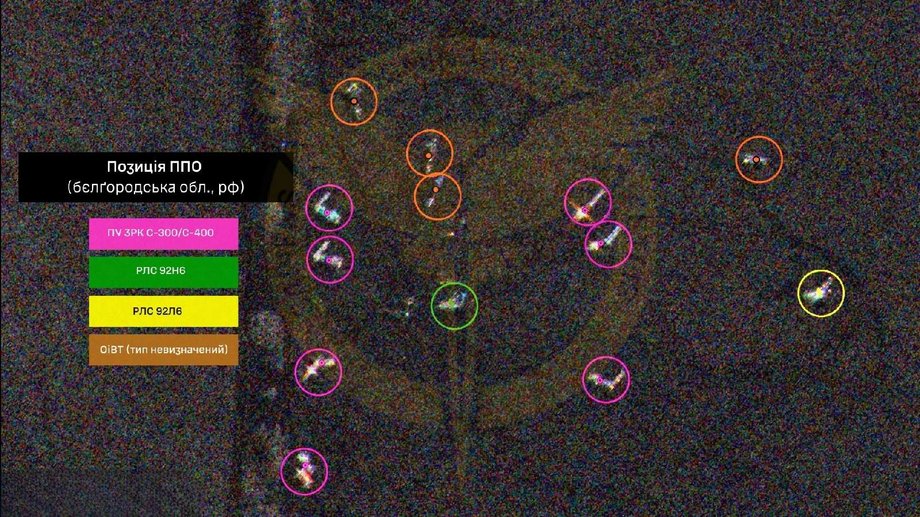
ICEYE – deployed Russian equipment seen from satellite
|
Defense Intelligence of Ukraine
He added that “this agreement strengthens assurances of access to high-resolution SAR imaging delivered from space in almost real time and helps Ukraine make decisions faster and with greater certainty. ICEYE stands firmly on Ukraine's side towards hostilities and remains deeply committed to strengthening Europe's security more broadly by providing our allies with the best operational intelligence exactly when they need it most.”
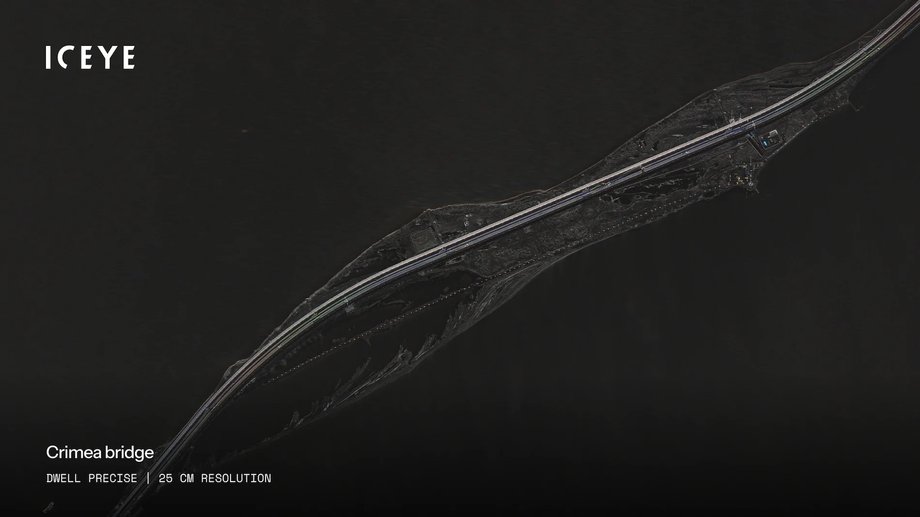
Radar image of a bridge in Crimea taken by the ICEYE satellite
|
ICEYE
The newest ICEYE satellites are capable of performing images with even greater precision, with a resolution of 16 cm per pixel.
Joint orbit or show of force?
Little is known about the capabilities of these particular Kosmos series satellites. Perhaps — as one retired U.S. military space specialist recently told Ars Technica — this is another example of Russia “swinging a blunt sabre.” The Russian military has been eager to test the reactions of US and European forces for years, for example by regularly sending ships close to American and European maritime space or violating air space.
Now the activities seem to be moving to space as well. Russian military satellites have already conducted similar operationsmoving to coplanar orbits, that allowed Russia to approach potential striking distance to the American Keyhole class satellites, the most advanced spy satellites belonging to the American National Reconnaissance Office (NRO). US officials believe that at least some of these Russian satellites are part of the anti-satellite weapons program.
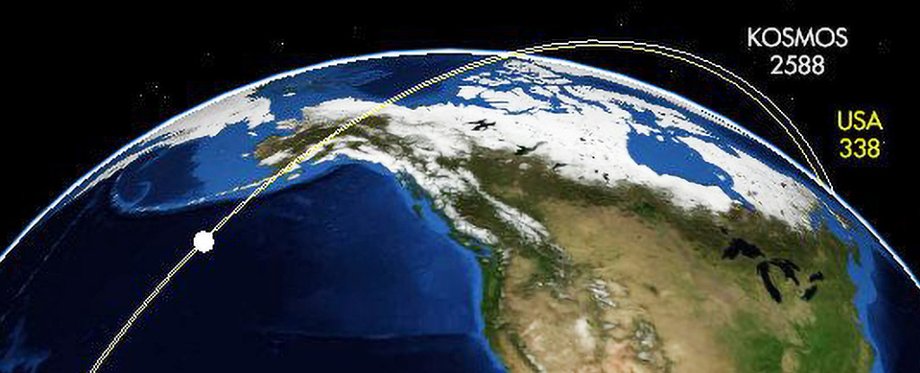
Kosmos 2588 and USA-338 orbit
|
@Marco_Langbroek / X (Twitter)
- Read more: Russian matryoshka satellites – anti-satellite satellites to destroy US spy satellites
The latest maneuvers of Kosmos-2610 and other satellites towards the European ICEYE-X36 seem to be an attempt to repeat actions that previously allowed Russia to approach the potential striking distance of American satellites.
Gillinger wrote that such maneuvers to adjust the orbital plane to ICEYE-X36 seem downright intentional. Russia's intentions or the capabilities of these specific satellites are not known, however the transition to a coplanar orbit is of concern. Orbital plane adjustment this is the first stage and the most expensive in terms of fuel consumption, performing proximity operations (RPO; Rendezvous Proximity Operations) that would likely be necessary to Russian satellites could have interacted with ICEYE-X36 either kinetically or non-kinetically. The total fuel capacity of these satellites is also unknown, however fuel consumption during these maneuvers shows that they are capable of high-energy orbital maneuvers. That kind of ability are not typical for satellites carrying out standard missions Earth observation, signal interception and communications.
The latest maneuvers of Kosmos-2610 and other satellites look like an attempt to repeat actions that previously allowed Russia to come within potential striking distance of Western satellites.
As Ars Technica reports, recently, another Russian military satellite reached geostationary orbitover 35 thousand km above the equator. Circumstantial evidence indicates that it may also be part of the Russian anti-satellite system. In response, the United States Space Force sent its own inspection satellite in geostationary orbit to take a closer look at the object.
.