
1 June 16:50
Krasnoyarsk scientists have found that “dormant” zooplankton eggs in bottom silt help salt lakes restore biodiversity after unfavorable conditions. This was reported at the Krasnoyarsk Scientific Center of the SB RAS.
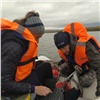
Experts studied four lakes in southern Siberia with different salinity levels. In the laboratory, scientists “awakened” dormant eggs from the bottom silt and checked what types of zooplankton could appear when the salt content in the water changed.
The study showed that eggs from the same lake at different salinities can hatch into different communities of crustaceans and rotifers. This means that some species can remain in the mud for a long time and wait for more suitable conditions. In one of the lakes, scientists discovered species that had already disappeared from the active phase, but were preserved in the form of resting eggs. At the same time, the largest stock of species was found in the smallest lake, where the least amount of zooplankton was recorded under natural conditions.
Experts note that such reservoirs are often not considered important natural sites, although they can store a significant reserve of biodiversity. Another finding was that neighboring lakes can exchange species. Of the 27 recorded zooplankton species, more than half were found in all studied water bodies. However, each lake still retained its own set of species.
Scientists say it's not just salinity that affects zooplankton diversity. The size of the lake, the presence of fish and other features of the ecosystem matter.
“To preserve biodiversity in the context of global salinization of fresh waters, it is important to understand that bottom sediments are a real genetic bank. Resting eggs allow species to wait out an unfavorable period. Our research has shown that, even if the lake seems depleted today, its silt preserves species that disappeared from the active phase, perhaps decades ago,” noted Tatyana Lopatina, Candidate of Biological Sciences, researcher at the Institute of Biophysics SB RAS.
The Krasnoyarsk Scientific Center added that salinization of water bodies is becoming one of the threats to aquatic ecosystems. It can occur due to mining, agriculture and the use of road chemicals in winter.
Related links:
- Rospotrebnadzor has developed a test to detect a new type of Ebola
- Scientists have found out whether fir trees in Krasnoyarsk Pillars will be able to recover