Revelations about the Kremlin leader's secret family. Who are the Western teachers hired for Putin's children

While he constantly attacks the West and talks about the “decline of European values”, Kremlin leader Vladimir Putin seems to have different standards when it comes to his own children. An investigation carried out by the “System” project, of the “Nastoașcee Vremea” and “Radio Svoboda” publications, shows that the sons that Putin would have with former gymnast Alina Kabaeva have been educated for many years by Western nannies and teachers, brought in specifically to teach them impeccable English and German.
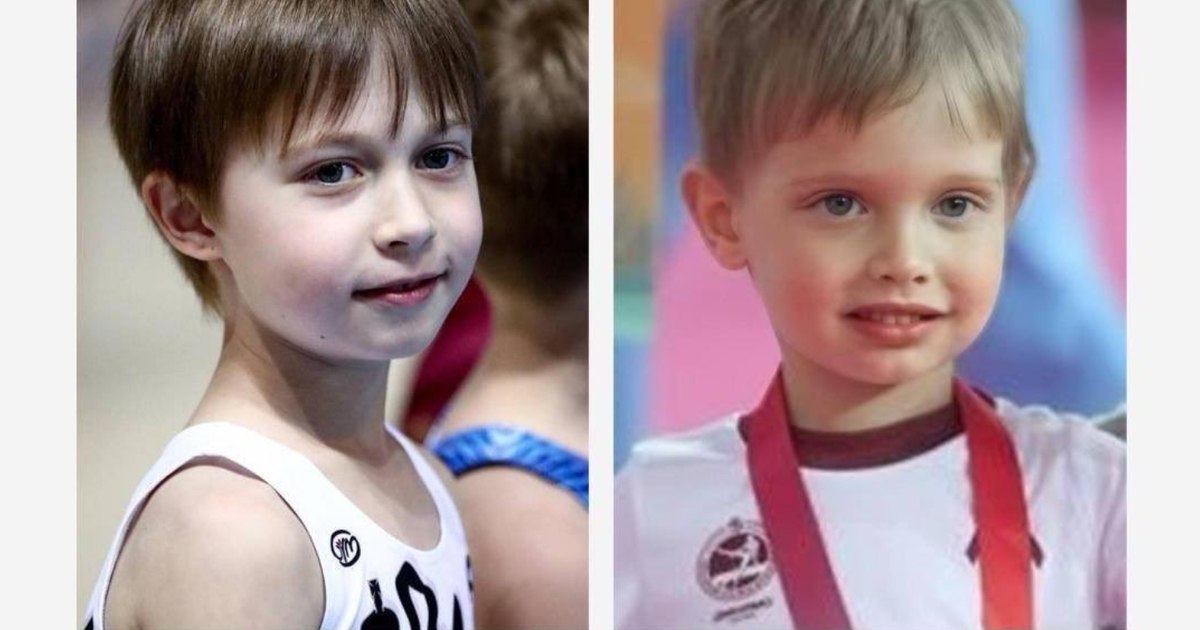
The two children who are said to be Putin's secret sons
The journalists claim to have obtained access to internal documents, contracts and electronic correspondence indicating that, in the last eight years, at least 20 foreign governesses and guardians, including citizens of NATO member states, have worked in the presidential family. The costs for this exclusive system of education would amount to hundreds of thousands of dollars annually.
According to the investigation, the documents come from a source familiar with the organization of personnel in the entourage of the most protected family in Russia. Some of the information was confirmed directly by the people involved in the correspondence.
Only one Russian teacher
One of the cases presented is that of a 34-year-old Austrian, Emma D., who came to Russia in the summer of 2019 to teach German to a four-year-old boy. Although the material conditions were excellent, the total isolation quickly created problems for him. The woman later said she was told she was “not suitable” for the job and returned to Austria shortly after.
In messages exchanged with reporters, Emma confirmed that the job offer was shrouded in an unusual degree of secrecy. She said she was never told the real names of the family members she was to work for.
The data analyzed by the journalists covers the period 2017–2026 and mainly includes emails sent to Olesea Fedina and Ekaterina Golovaciova, Alina Kabaeva's cousins. According to the investigation, the two coordinated the recruitment of foreign teachers for Putin's children. Fedina conveyed the family's educational requirements, and Golovaciova managed the financial and logistical side.
The parents' names never appeared explicitly in the documents. Instead, they were referred to generically as “family” or “parents”. However, among the people involved in the organization were also employees of the Russian Foreign Intelligence Service.
The foreign teachers would have been wanted since 2017, when the eldest son, Ivan, had not even turned two years old. The child's schedule already included English, German and music lessons. Later, similar guardians were hired for younger brother Vladimir, born in 2019.
Between 2017 and 2025, the children's education would be taken care of by citizens of the UK, Germany, Austria, Ireland, South Africa and New Zealand. Typically, four to six people worked simultaneously or in rotation with each child. Their mission was to create a “European language environment” and make learning a permanent game. Interestingly, only one Russian teacher appears in the consulted documents: Polina T., responsible for Ivan's music lessons.
Stiff atmosphere in the residences where the children lived
The contracts also imposed strict rules. Tutors were prohibited from discussing political, religious or ideological topics, and especially topics related to sexuality or the LGBT community. Any such conversation had to be approved in advance by the employer.
Europe, abandoned in the arms of Putin? The prognosis of a former head of Romanian espionage after the US turned its back on the EU
The investigation also describes the rigid atmosphere inside the residences where the children lived. One of the governesses, Jane M., 58, came from a wealthy Irish-Canadian family and was used to a close relationship between employers and staff. After being recruited in 2022, however, she discovered a system dominated by control and strict rules.
The teachers were required to undergo annual medical check-ups at a St. Petersburg clinic associated with Putin's inner circle. Sick leave was limited to just six days every six months, and absences could quickly lead to dismissal.
The staff was carefully supervised, even with regard to the daily details. In an internal exchange of messages from 2019, the administrators of the home discussed the fact that some nannies walked around the home barefoot, considering the gesture “unsanitary”. In another episode, an internal review was launched to determine whether a governess had given the child hygiene procedures carefully enough.
Several nannies also complained about having to write detailed daily reports about every hour spent with the children, including photos and detailed descriptions of activities.
The living conditions were also not as luxurious as one might think. Teachers lived in hotel rooms or apartments where they could share space with other employees. Movements outside the residential complex were strictly controlled, and going out into the city without approval was practically impossible. During the pandemic, the restrictions became even more severe.
For some teachers, the isolation became difficult to bear
In 2023, a British English teacher asked for two months of unpaid leave, citing “exhaustion caused by life in quarantine”.
The investigation also shows that the salaries offered to tutors were considerably above the European average. In 2019, a teacher could receive around €1,400 for a 40-hour work week, with later contracts showing around £1,500 for a 60-hour week.
In parallel, all employees also signed an official contract with a Russian company affiliated to the “Sogaz” medical center, where they were registered as “main translators”. This document ensured their legal right to work in Russia, but the officially declared salary was several times lower than the real income.
According to the analyzed documents, some of the payments were also made in cash, in dollars, euros or rubles.
At the beginning of 2026, at least three foreign nannies would have worked in the Putin family: one from Bosnia and Herzegovina, one from Germany and one from South Africa. In January alone, they would have received a total of around 3.5 million rubles, without any other bonuses or additional payments.
One of the former governesses who answered journalists' questions stated that she worked for almost three months for the Russian family without ever finding out the true identity of her employers. Although she described the experience as “generally positive”, the woman admitted that the relationship style imposed by the family seemed cold and unusual to her.