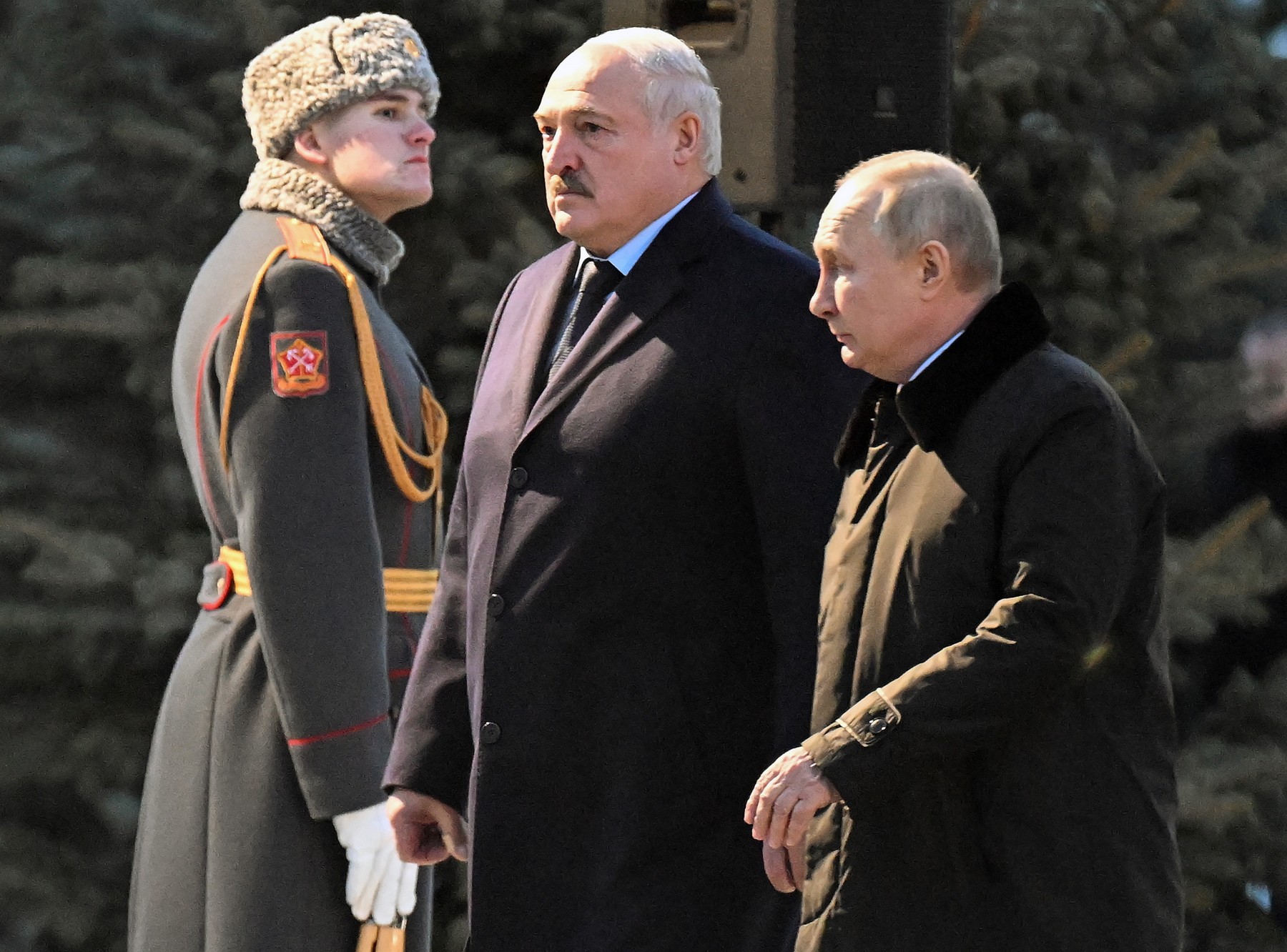
Lukashenko excludes Giorgia Meloni from a possible dialogue with Moscow. The remark of the Belarusian leader causes controversy

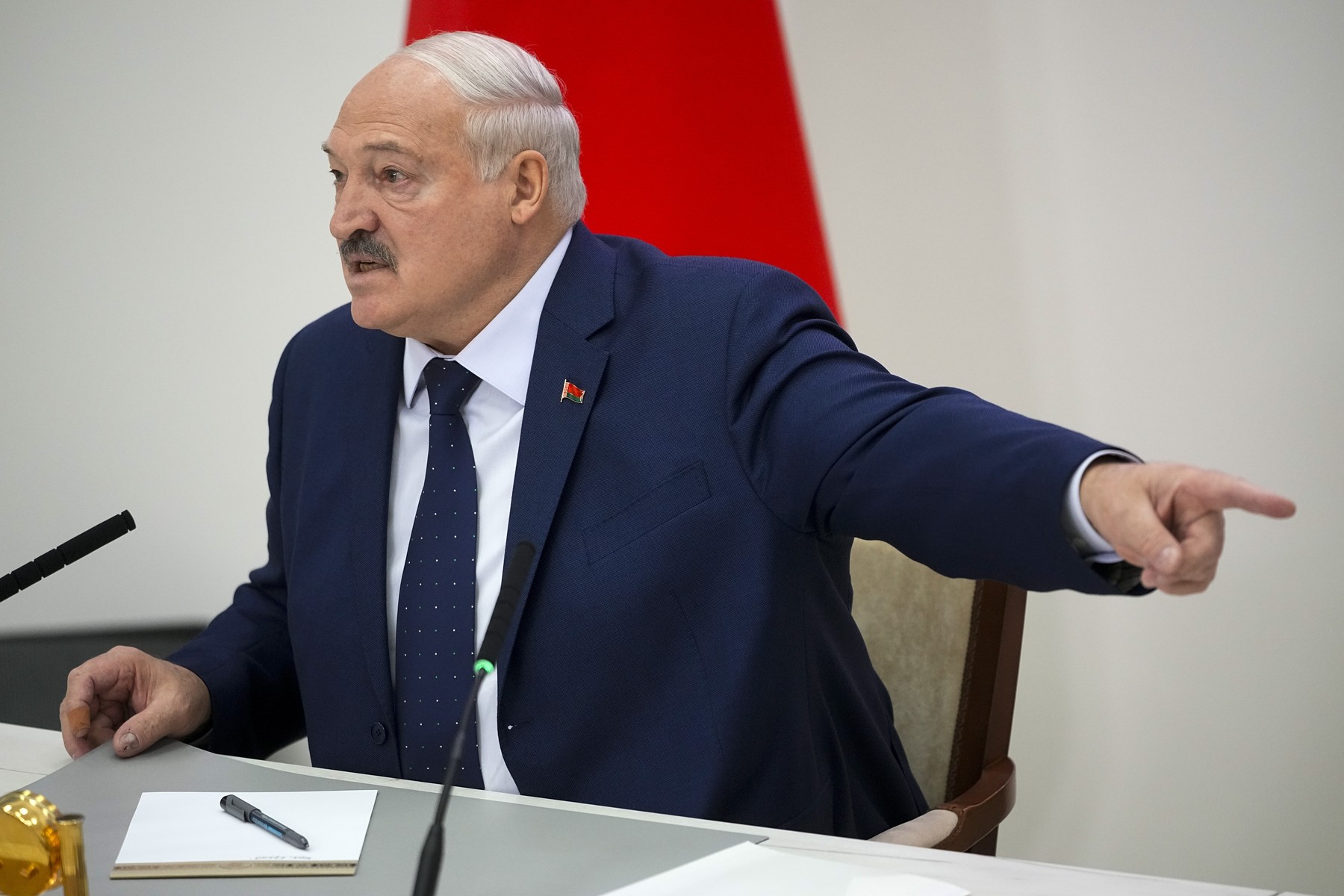
Belarusian President Aleksandr Lukashenko announces that he has agreed to soon receive a representative of French President Emmanuel Macron in Minsk, “at the request” of the French head of state, with whom he spoke on the phone last Sunday, reports Euronewsaccording to News.ro.
Lukashenko, quoted by the Belarusian government news agency Belta, then scolded Macron on the phone, asking him what to talk about with the tenant of the Élysée Palace, after he visited Yerevan, but he does not go to Moscow or Minsk.
“Mr. President, can you receive him, so my adviser and talk to him so that he can come and explain all these things to me?”, Lukashenko said that Macron told him, statements that are not quoted by any other publication apart from Belta, notes Euronews.
The Belarusian president apparently accepted this proposal.
“I told him: don't worry, if you are afraid to come to Minsk, send someone you trust,” Lukashenko concluded.
The French president urged his Belarusian counterpart not to let his country be “trained” in the Ukraine War, TV5Monde Info wrote.
According to the entourage of the French head of state, “he asked Aleksandr Lukashenko to make the necessary gestures to improve the relations between Belarus and Europe”.
La Dépêche cited the Quai d'Orsay website, on which the French Government announced that “France does not recognize the legitimacy of Aleksandr Lukashenko. Therefore, our ambassador was forced to leave Belarusian territory on October 17.”
“You want to put such a burden on a woman's shoulders?”
It seems that in the same conversation, Lukashenko rejected Giorgia Meloni as a European interlocutor with Moscow.
He designated, on the contrary, the French president as the most capable to take over the management of European diplomacy in this file.
Also according to the Belta agency, Lukashenko invited Macron to mediate the dialogue with Moscow based on his strong political experience.
“You are an aksakal, a dean,” he allegedly told him, pointing out that the other main European leaders, from German Chancellor Friedrich Merz to British Prime Minister Keir Starmer, are politically “younger”.
But especially his statements about the head of the Italian Government are causing a scandal, according to Euronews.
“In Italy there is a woman prime minister. Do you want to put such a burden on the shoulders of a woman?”, Liukasenko allegedly told him, dismissing the idea that a woman can play the role of the main European interlocutor with the Kremlin.
Belta publishes these statements in the context in which the idea of appointing a special emissary tasked to represent the European Union (EU) in future negotiations with Moscow returns.
This scenario relaunched speculations, precisely because of Lukashenko's statements, about personalities with a lot of international experience.
The problem of the European special envoy
The statements of the Belarusian president come as Europe vigorously resumes the hypothesis of appointing a special emissary tasked with coordinating relations with Russia and defending a common EU position in future negotiations on the Ukraine War.
This proposal was also supported, in recent months, by Giorgia Meloni, who said on several occasions that it is necessary to avoid isolated diplomatic initiatives and entrust the dialogue with Moscow to a personality capable of speaking on behalf of the entire EU.
The head of the Government in Rome declared in favor of the appointment of a special European emissary precisely with the aim of avoiding a fragmented approach between various EU member states.
Emmanuel Macron defended, for his part, on several occasions, the need to reopen a communication channel with the Kremlin, provided that it is part of a strategy shared at the European level.
Merkel runway
Lukashenko's statements about the need to entrust the dialogue to a man fueled speculation about possible names.
In recent weeks, in the political circles and in the European press, rumors and hypotheses have circulated about the former German Chancellor Angela Merkel, among the personalities most likely to mediate, thanks to her experience in relations with Vladimir Putin.
In parallel, other names appeared, including that of former Italian Prime Minister Mario Draghi.
Currently there is no official EU decision and no official candidacy.
Paradoxically, the name Merkel illustrates how anachronistic Lukashenko's reasoning is.
The former German chancellor remains one of the most experienced and influential European figures in the Russian case, despite Lukashenko's rejection of the idea of a woman.
Apart from the challenge to female leadership, Lukashenko's message seems to have a clear objective, namely to push Macron to play a central role in building a direct channel of communication between the EU, Minsk and the Kremlin.
“You are the main figure and driving force of Europe today,” Lukashenko reportedly told Macron, whom he urged to come to Minsk and go to Moscow to address the issue “through dialogue.”