The Trump administration increases the pressure for a peace agreement between Russia and Ukraine. Marco Rubio's warning

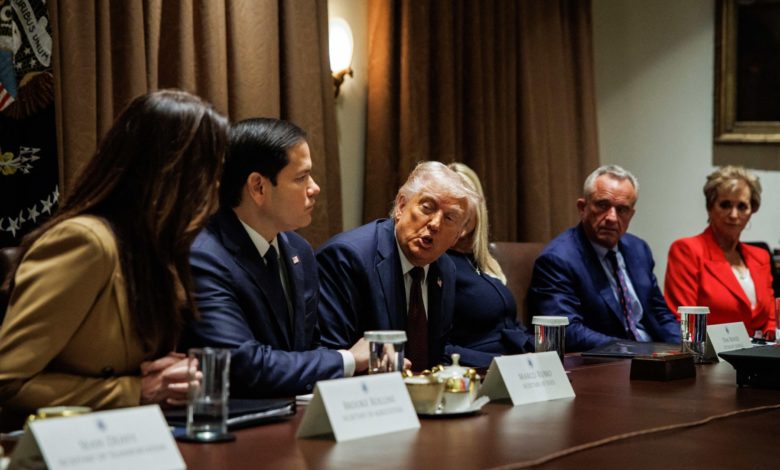
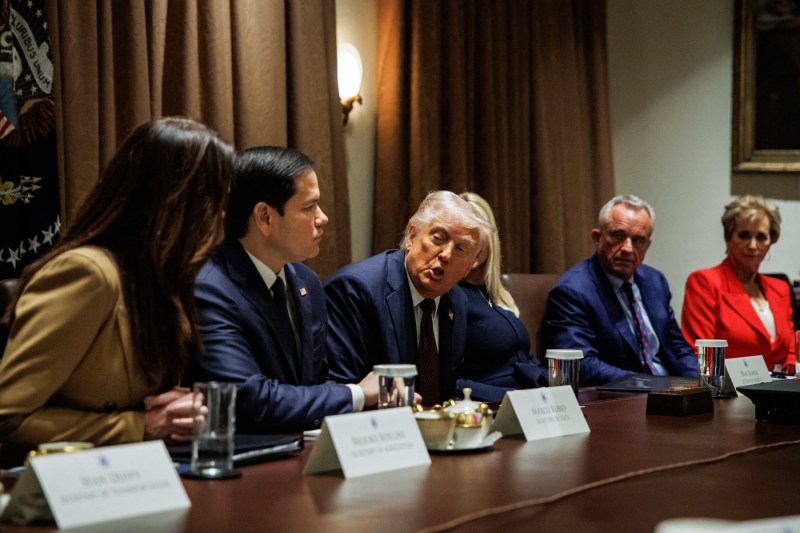
Donald Trump and members of his administration, photographed during a stress -open cabinet session, photo: Abaca Press / Alamy / Profimedia Images
High officials of the Trump administration asked Russia and Ukraine on Sunday to advance in negotiations for a peace agreement, after meeting between Donald Trump and Ukrainian President Volodimir Zelenski, held on Saturday, writes Reuters.
“It has to happen soon,” said US Secretary of State Marco Rubio for NBC, at the show “Meet the Press”. “We cannot continue to allocate time and resources to this effort if it does not lead to a result.”
Rubio said the United States will decide the next week if they will continue to mediate negotiations “or if it is time to focus on other topics”.
Trump and Zelenski, who were in Rome for Pope Francis's funerals, met on Saturday in a Vatican basilica to try to relaunch the shabby efforts to end the war against Ukraine. It was their first meeting from tense discussions in the Oval Office, in Washington, February, at a time considered critical for peace negotiations.
In a post on Social Truth, Trump later criticized Vladimir Putin for recent attacks on Ukraine, saying that “there is no justification for Putin to launch missiles on civilian areas, cities and localities, in recent days.”
Meanwhile, the Russian Foreign Minister Sergei Lavrov said in an interview broadcast by CBS News that Russia will continue to hit objectives used by the Ukrainian army. Asked about a recent attack on the Kiev soldier with civil victims, Lavrov claimed that “the targeted target was not completely civil.”
President Zelenski said that Russia has held almost 70 attacks on Sunday and warned that “World pressure on Russia to end this war is still insufficient.”
Divergence between American and European proposals
Ukrainian and European officials rejected last week some of the United States proposals on the end of Russia triggered in Ukraine, coming up with counter -proposals such as territories and sanctions.
The main divergences between the two proposals aimed at the order in which the territorial issues, the lifting of the sanctions imposed on Russia, the security guarantees and the dimension of the Ukrainian army were addressed.
The US proposals provided for the US recognition of Russia's control over Crimea – the Ukrainian peninsula annexed by Moscow in 2014, as well as the recognition of Russian control over other parts of Ukraine.
In contrast, the European and Ukrainian proposal postponed the detailed discussions about the territories until after a fire termination agreement.
The German Defense Minister Boris Pistorius said on Sunday that Ukraine should not accept the last proposal of US President Donald Trump on the transfer of territories in exchange for an armistice with Russia, because it would be similar to a “capitulation”.
Despite the vision differences, Trump's national security counselor said on Sunday that the meeting with Zelenski has shown its determination to reach an agreement.
“This meeting will remain in the history books for President Trump, as a president of peace,” Mike Waltz national security counselor told the “Sunday Morning Futures” show at Fox News.
Waltz said that Trump “expressed frustration” to the leaders of both countries, but remains determined to help negotiate an agreement. He also stated that the United States and Ukraine will eventually reach an agreement on rare minerals and that discussions have continued during the weekend.
Democrats in the US Congress have criticized Trump's approach to conflict, and the leader of the Senate Democratic minority, Chuck Schumer, said on Sunday that he is worried that Trump will “give in to Putin.”
“To abandon Ukraine, after all the sacrifices made, after so many losses of human lives and after mobilizing the whole West against Putin, it would be a moral tragedy,” Schumer told the “State of the Union” at CNN.
Schumer warned that a position on the side of Russia in the conflict could break up alliances with Europe and encourage dictators from all over the world.