Previous plans assumed that WIBOR will be replaced by the new POLSTR reference index next year. However, as a result of changes in the benchmark reform, it was decided to introducing a long, ten-year transition period. Thanks to this, people repaying WIBOR-based mortgage loans can rest assured – their contracts will remain unchanged until the end of 2036.
The new schedule stipulates that from the end of 2026, banks will no longer offer loans based on WIBOR. Instead, the offer will include products based on POLSTR or POLSTR composite indices, as well as fixed-interest loans. In practice, this means that WIBOR will be gradually phased out, and most of the current contracts will expire naturally in the coming years.
Read more: WIBOR will live longer. There is an end date for the publication of a key indicator for borrowers
Why will WIBOR be phased out for 10 years?
One of the main reasons for such a long transition period is the desire to avoid mass conversion of existing loan agreements and State Treasury bonds from WIBOR to POLSTR. According to the president of the Polish Bank Association, Tadeusz Białek, the research and detailed surveys showed that 10 years is enough time for most contracts and financial instruments based on WIBOR to expire naturally. Białek emphasized that the average repayment period of a mortgage loan is about nine years, which means that most of such liabilities will be repaid before the end of the transition period.
The introduction of a transitional period is also intended avoidance of legal and political risk related to the need to determine the correction spread when converting WIBOR to POLSTR. Such an operation could lead to court disputes and claims against the State Treasury, especially since derivatives with an estimated value of up to PLN 10 trillion are based on WIBOR.
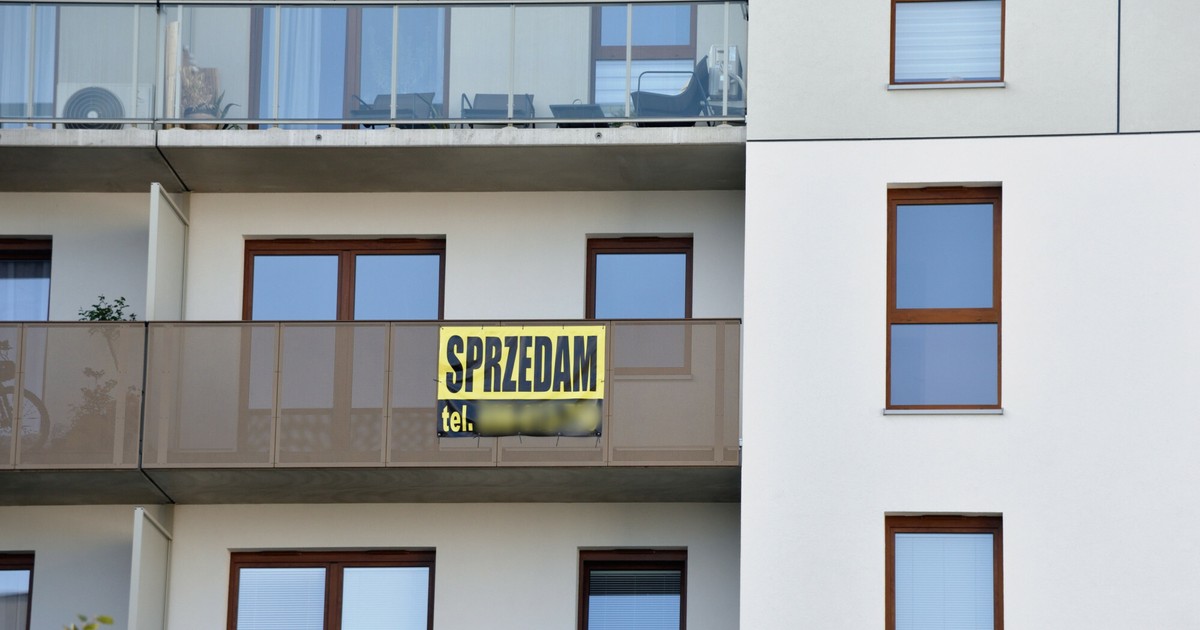
See also: Luxury versus reality. The Warsaw apartment market under the microscope of experts
Emergency clauses and mess in loan agreements
Another challenge is the so-called fallback clausei.e. fallback clauses in loan agreements that specify what happens when a benchmark is no longer published. Before the EU BMR regulation entered into force in 2018, banks were not obliged to introduce such provisions. After this date this obligation already existed, but many contracts still do not include it. In recent years, banks have tried to make up for the arrears by sending annexes to their clients, but this was not always met with interest. As a result, considerable chaos arose replacing WIBOR with POLSTR could deepen it even further.
POLSTR — a new indicator on the market
POLSTR, a new reference indicator, is slowly coming into use, although it is only for now niche solution. It is worth noting that WIBOR is currently included in the BMR regulation as a key indicator, while POLSTR does not have such a status yet. The Court of Justice of the European Union recently ruled that WIBOR cannot be questioned, which further strengthens its legal position.
From October this year, GPW Benchmark will stop publishing WIBOR and WIBID overnight (ON), and from December 22 also WIBOR for one year (1Y). Only monthly (1M), three-month (3M) and six-month (6M) rates will remain in circulation, which will remain in circulation until the end of 2036. Tadeusz Białek noted that the main loan agreements were based on these tenors, therefore they can be implemented without changes until the publication of WIBOR.
What about contracts that will last until 2037?
The question arises what will happen to loan agreements that will not expire by the end of 2036 and will still be based on WIBOR. For now there is no clear answer to this. The president of the Polish Bank Association suggested that emergency clauses would then apply, and banks still have time to introduce them in consultation with their clients.
New loans only for POLSTR or fixed rate
From the beginning of next year, banks will only offer loans based on POLSTR or POLSTR composite indiceswhich are calculated as the arithmetic average of one-day POLSTR transactions from a given period. The offer will also include fixed-rate loans, which are already available in some banks, both in the mortgage and consumer segments. It is also possible that banks will use the NBP main rate in long-term loan agreements, although it is not a reference indicator within the meaning of the BMR regulation.
Is it worth rushing to get a WIBOR loan?
People considering taking out a mortgage loan face a dilemma: should they opt for a loan based on WIBOR before the end of the year or wait for an offer based on POLSTR? Historically, POLSTR was slightly lower than WIBOR, but its rates reflect the cost of money in the past, not market expectations for the future. In the face of rising inflation, interest rates may increase, which is worth taking into account when making decisions. One thing is certain – People interested in a WIBOR loan have less and less time for it.