Hungary wants Romania in the Visegrad Group. Warning from Switzerland: “Do not use this format for influence”

Hungary is ready to accept Romania in the Visegrad Group, 35 years after the establishment of this format. Political scientist Marius Ghincea, researcher at ETH University in Switzerland, explains for “Adevărul” what the benefits would be for Romania.
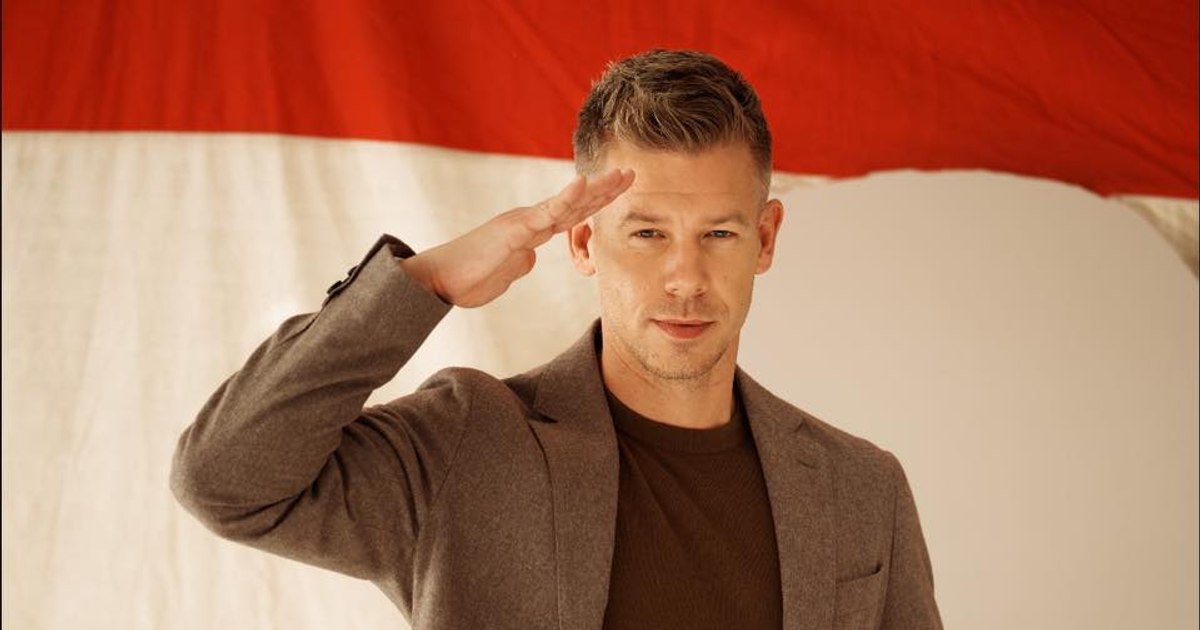
Peter Magyar invited Romania to join him in V4 PHOTO: Facebook
35 years after the founding of the Visegrad Group, known as the V4, Romania could become a member, at least in the expanded format. The idea belongs to the new Hungarian Prime Minister Péter Magyar, who initially talked about expanding the group, but without Romania. The V4 includes Hungary, Poland, the Czech Republic and Slovakia.
In the 90s, Romania tried to obtain the acceptance of the four central-eastern European states and to be admitted in this format, but it ran into the opposition of either Hungary or the other states.
Now, however, Péter Magyar has a completely different opinion, which he made public at the end of last week, during a visit to Warsaw. The leader of the Budapest Government said, in a joint press conference with Polish Prime Minister Donald Tusk, that he would be willing to expand the Visegrad Group, and Romania could be part of it.
He also explained that, in his view, such an extended format could include the Nordic countries, but also states such as Austria, Croatia, Slovenia and Romania. The new format would also be open to some of the states in the Western Balkans, which are not part of the European Union.
The role of the Visegrad Group
Initially, in 1991, the Visegrad Group was established in order for Hungary, Poland and the former Czechoslovakia to gain more relevance and to be able to coordinate their policies in order to succeed in integrating as easily as possible into the European Union. The format also survived the split of Czechoslovakia into two states, and the Czech Republic and Slovakia chose to continue in the V4. After the four states, Hungary, Poland, the Czech Republic and Slovakia, managed to integrate into NATO, and then into the European Union, the V4 continued to exist. From that moment, the purpose of this format was to support the interests of these countries in a European Union in which France and Germany were permanently in the foreground and managed to impose their point of view as a rule.
Political scientist Marius Ghincea is a researcher at ETH Zurich University, in Switzerland. Expert in security policies, Marius Ghincea explains, in an analysis for “Adevărul”, why the Hungarian Prime Minister's invitation is welcome for Romania, even after all this time.
What benefits it can bring us
“Romania's entry into an expanded format of the Visegrad Group could be an option for this country to increase its relevance and presence in coordination and collaboration mechanisms at the regional level. Romania, moreover, had an important concern that appeared immediately after the election of Péter Magyar, when he stated that he wanted to revitalize regional cooperation through Visegrad 4 and with countries in the region, but without mentioning Romania among them“, says Marius Ghincea.
However, a complex analysis by the authorities would be needed, to understand more precisely to what extent it would serve Romania's interests, but also if the presence of Bucharest in the extended sphere of V4 would not overlap with other similar projects. However, in principle it is a project that will ensure that Romania will not be marginalized in any way by other states in the center and east of the continent.
“There was, therefore, a fear that Romania could have been marginalized in this new Hungarian initiative of Péter Magyar. And the inclusion of Romania in the enlarged Visegrad Group solves this fear related to a potential marginalization of Romania. And from an economic and political point of view, it is in Romania's interest to better integrate and activate more formats of regional cooperation. So, per se, at the macro level there are no significant problems that I, at least, can perceive related to this proposal that Péter Magyar makes related to the participation of Romania in an extended Visegrad format. But an analysis must be made related to the level of complementarity or competition between the different formats in which Romania is already a part. Because we do not want to be in several regional formats that are at odds with each other in terms of the objectives and missions that they pursue“, explains Marius Ghincea.
The weapons we give billions to, but they pose a risk to the lives of soldiers at war. NATO General: “There are cheaper and safer solutions”
How relevant is V4 after almost 4 decades
He also explains the reasons why this project has been maintained and remains relevant three and a half decades after it was initiated.
“Traditionally, the Visegrad 4 format has focused on Central European countries — Hungary, Slovakia, the Czech Republic, Poland — which have a long historical partnership since the early 1990s; at first for mutual assurance during EU integration and accession, and later for coordination within the European Union. Romania was quite skeptical that it could have a relevant role in such a format, but given the significant regional changes, both geopolitical and and economic and political, it is important that Romania becomes relevant by participating in multiple relevant formats, both on the military, economic, political and sociocultural dimensions”, he says.
The analysis that should be done by Romanian diplomacy should start from the idea that there are already similar formats of which Romania is already a part, Marius Ghincea believes. At the same time, he also says, Romania must also ensure that it will not be a mere pawn on a chessboard like that of the V4, and other states would take advantage of this.
“From this point of view, what Mr. Magyar proposes is more of interest for the economic and political dimensions, where Romania needs to increase regional cooperation. But, at the same time, it must be ensured that it does not contradict other formats, such as the Three Seas Initiative or other coordination mechanisms in which Romania already has a privileged or important role. And, at the same time, let's make sure that Hungary does not use these formats to increase Hungarian influence in regions such as the Western Balkans, in damage to Romania”claims Marius Ghincea.
There is also the perception, among some foreign policy analysts, that the Visegrad Group would be not only anachronistic, but also less functional, given that two of the four states – Slovakia and the Czech Republic – are led by Eurosceptic politicians. However, Marius Ghincea does not agree with this point of view. He believes that the failure of Viktor Orbán, who held power for a long time in Hungary and blocked the V4, could relaunch this format.
How Viktor Orbán's V4 survived
“The Visegrad format has been almost dysfunctional in recent years because of Viktor Orbán in particular, but also Robert Fico. After Viktor Orbán's departure from power, we can expect a rehabilitation, a revival of the Visegrad format, especially since Robert Fico, in Slovakia, has also changed his direction and has a much more moderate position, both towards Ukraine and the European Union, because he does not want to be cornered. While Andrej Babiš, in Prague, had a rather pragmatic position and, even if he has a rather Eurosceptic speech from the political and economic point of view, he was never as radical as Viktor Orbán or, more recently, Robert Fico. So, from this point of view, there is a good chance that the Visegrad 4 format will come back to the fore, and this initiative of Péter Magyar may be one of the main factors that will lead to the increase, again, of the relevance of the Visegrad 4 format, even in an extended form“, points out the expert.
Trump strengthens Poland. Is Romania next? A former head of military intelligence decrypts the American strategy in the East
However, there is also a “but”, in the case of Romania, as Marius Ghincea remarks.
“Again, we have to think about how our regional interests affect us and specify from the beginning what our preferences are and what we actually want in the region. Because any analysis related to the relevance or value of our membership in an extended format of the Visegrad group or any other regional format depends on our preferences and objectives. And our problem, often in Romania, is that we didn't know very well what we want. And when you don't know what you want, it's very difficult to decide if something is relevant, or important, or threatening”Marius Ghincea believes.