“Make Putin the obstacle” – the advice of a veteran American diplomat to Zelenskiy before the meeting with Trump


As Ukrainian President Volodymyr Zelensky prepares for a key meeting with US President Donald Trump in Florida on Sunday, a senior former US diplomat outlines the strategic lines Kiev should follow in Washington-backed peace talks.
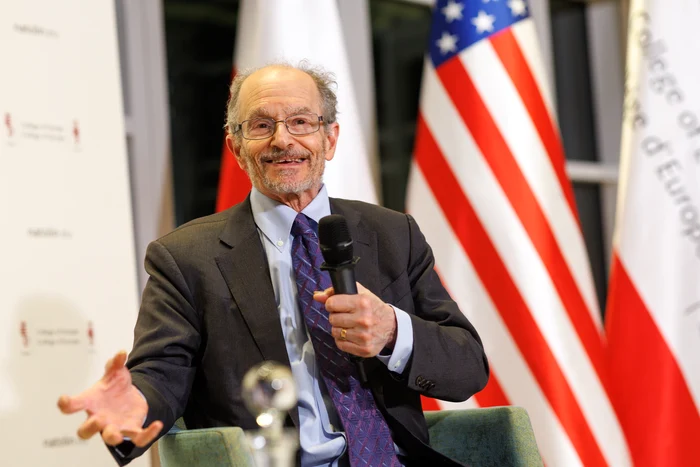
Daniel Fried, former high-ranking US diplomat
Daniel Fried, a former US assistant secretary of state and an expert on Russian relations with a career spanning seven US administrations, said in an interview with the Kyiv Post that Zelenskiy should portray Russia as the main obstacle to peace, not Ukraine.
“Zelenski's tactical goal should be to position himself as a supporter of the 20-point peace plan, presenting Vladimir Putin as an obstacle, while at the same time trying to improve that plan,” Fried said.
According to the American diplomat, the central elements of the plan relate to the ceasefire line and security guarantees for Ukraine. He supported Kiev's position to reject any change in the front line in favor of Russia.
“Zelensky is right to oppose moving the cease-fire line so that Russia receives territories it did not win on the battlefield”Fried said.
Reservations to a demilitarized zone
Daniel Fried also warned of the risks of creating a classic demilitarized zone, citing Russia's history of breaking international commitments.
“A demilitarized zone is problematic because Russia would not honor its obligations. It could only work if there was a third force and no Russian military presence. Extending Russian control would be a bad idea,” he said, adding that Donald Trump's earlier position – that the front line should remain where it is – was correct.
Europe's role and American support
Fried recommended that Zelenskiy push for the deployment of European forces on the ground, backed by US aviation and intelligence capabilities, even if Moscow opposes it.
“Russia will try to block any security arrangement that includes European troops. Zelenskiy should convince Trump that it would be a win for the US to have the Europeans on the front line, supported by US aviation and intelligence,” the former diplomat said.
The 20-point peace plan, developed by Kiev and Washington over the past months, includes possible territorial compromises and long-term security guarantees. However, major questions remain unresolved, particularly regarding the regions of eastern Ukraine that are partially or fully under Russian occupation.
International pressure and European unity
The US-facilitated talks come amid intense diplomatic activity in Europe and North America. NATO allies are trying to maintain a common position ahead of the meeting between Zelenskiy and Trump.
German Chancellor Friedrich Merz said that Europe remains “firmly with Ukraine” in a message published on the X platform after a telephone conversation with the Ukrainian president. He stressed the importance of a coordinated European approach, in close collaboration with the United States.
Zelenskiy confirmed that he had informed Merz about the discussions held with the American emissaries, noting that the negotiation format in Berlin had already proven effective.
The Berlin summit, held in mid-December, was the first major meeting between the US, Ukraine and key European states in an EU member state since Trump's peace initiative was relaunched in November.
And Canadian Prime Minister Mark Carney spoke with Zelenskiy on Friday, reaffirming Canada's support and the need to keep up pressure on Russia to negotiate.
At the same time, Moscow continues to adopt a tough tone. Russian Deputy Foreign Minister Sergei Ryabkov accused Ukraine of trying to “sabotage” the talks, a sign of the Kremlin's reluctance to make concessions.
A decisive moment for Kyiv
For Volodymyr Zelensky, the meeting in Florida represents more than a diplomatic gesture. According to Daniel Fried, it is an opportunity to turn Western support into concrete security guarantees and send a clear signal to Moscow that changing the rules by force will have political and strategic costs.
“Zelensky must demonstrate that the United States has something to gain from a firm position in support of a better dealFried said.
The stakes are high: how the Ukrainian leader will position himself in these negotiations could define Ukraine's strategy for years to come and influence the cohesion of Western support.
According to the American diplomat, Kiev's strategy should be clear and consistent: Russia should be perceived as the main obstacle, not the object of compromise. Each concession must be presented not as a concession, but as a calculated step towards lasting peace.
In a high-stakes diplomatic context, every statement will be scrutinized – not just in Washington and Berlin, but also in Moscow.