“The new levy enables the redistribution of part of the above-average profits of oil sector enterprises – which would not be achieved under normal market conditions – by using them, among others, to finance protective measures that currently burden the state budget,” explains the Council of Ministers.
POPiHN criticizes the idea of a new tax on excess profits
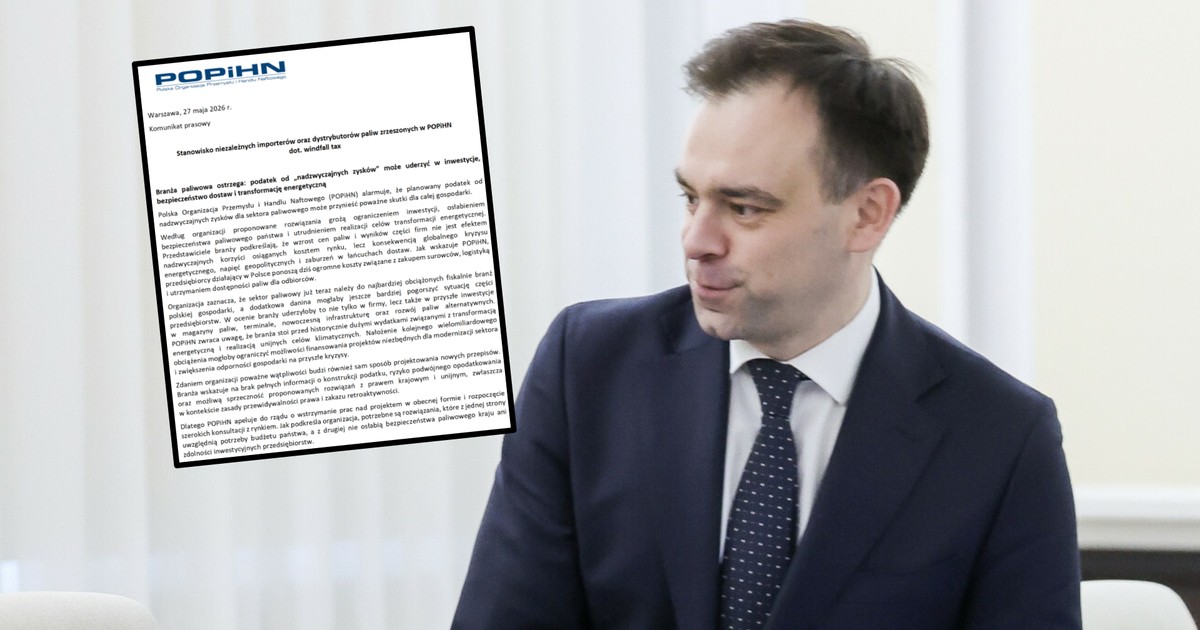
It is known that the new tax will be the biggest burden for Orlen, which may pay several billion zlotys in this respect. What about smaller players on the market? On Wednesday, we learned the official position of independent fuel importers and distributors associated with POPiHN (Polish Organization of Petroleum Industry and Trade).
In short, it can be pointed out that the fuel industry warns that the tax on “extraordinary profits” may hit investments, security of supply and energy transformation.
See also: New data on excise duty. The government estimated PLN 5 billion [TYLKO U NAS]
“The Polish Organization of Petroleum Industry and Trade (POPiHN) warns that the planned tax on extraordinary profits for the fuel sector may have serious consequences for the entire economy,” we read in the introduction.
According to the organization, the proposed solutions threaten “limiting investments, weakening the state's fuel security and hindering the implementation of energy transformation goals”. Industry representatives emphasize that the increase in fuel prices and the results of some companies is not the result of extraordinary benefits achieved at the expense of the market, but a consequence of the global energy crisis, geopolitical tensions and disruptions in supply chains.
As POPiHN points out, entrepreneurs operating in Poland today incur huge costs related to the purchase of raw materials, logistics and maintaining the availability of fuels for customers.
“The fuel sector is already one of the most fiscally burdened sectors of the Polish economy, and an additional levy could further worsen the situation of some enterprises. – we read.
According to the industry, this would affect not only companies, but also future investments in fuel storage facilities, terminals, modern infrastructure and the development of alternative fuels. POPiHN points out that the industry is facing historically high expenses related to the energy transformation and the implementation of EU climate goals.
“Imposing another multi-billion dollar burden could limit the possibilities of financing projects necessary to modernize the sector and increase the economy's resilience to future crises,” he notes.
New tax. POPiHN appeals to the government
According to the organization, the way in which the new regulations are designed also raises serious doubts. The industry points out the lack of complete information on the tax structure, the risk of double taxation and the possible contradiction of the proposed solutions with national and EU law.especially in the context of the principle of legal predictability and the prohibition of retroactivity.
“POPiHN appeals to the government to suspend work on the project in its current form and start broad consultations with the market. – we read in the statement.
As the organization emphasizes, solutions are needed that will, on the one hand, take into account the needs of the state budget and, on the other hand, will not weaken the country's fuel security or the investment capacity of enterprises.