As American kamikaze drones guided by Elon Musk's Starlink network began to wreak increasing havoc in the war against Iran, SpaceX officials came to a conclusion: The Pentagon should pay more for access to their satellite Internet network, Reuters reports.
Within weeks of the start of the US-Israeli bombing campaign on February 28, SpaceX executives met with Pentagon officials. Company executives told military officials that the military was paying about $5,000 for the connection per terminal, but was actually using a higher level of service.
Two sources familiar with the situation and internal Pentagon documents obtained by Reuters say the “fair price” assessed by SpaceX executives was about $25,000 per terminal, five times that.
The disagreements centered mainly on the use of Starlink on LUCAS suicide drones – a cheap US model comparable to Iran's Shahed drones, which can fly over a target area before crashing to explode on impact.
Growing tensions between the Pentagon and SpaceX
But this is just one example of growing tensions between the Pentagon and SpaceX over the Elon Musk-led aerospace company's pricing for Starlink, its constellation of satellites that can provide broadband internet. The situation was confirmed to Reuters by five separate sources and internal army documents.
The Pentagon, which is trying to help Iranian citizens circumvent government-imposed communications blackouts, has also been at odds with SpaceX over pricing for a plan to provide direct-to-cell Starlink connections to the Iranian population, similar to 5G services, two of the sources said.
The ongoing disputes, first revealed by Reuters on Tuesday, show how the Pentagon's growing reliance on SpaceX gives Musk considerable influence over a critical pillar of US national security.
Reuters notes that these tensions have erupted as SpaceX tries to raise revenue ahead of the company's IPO, which could be among the largest in history and requires regulatory approval.
SpaceX sells specialized terminals to the US military
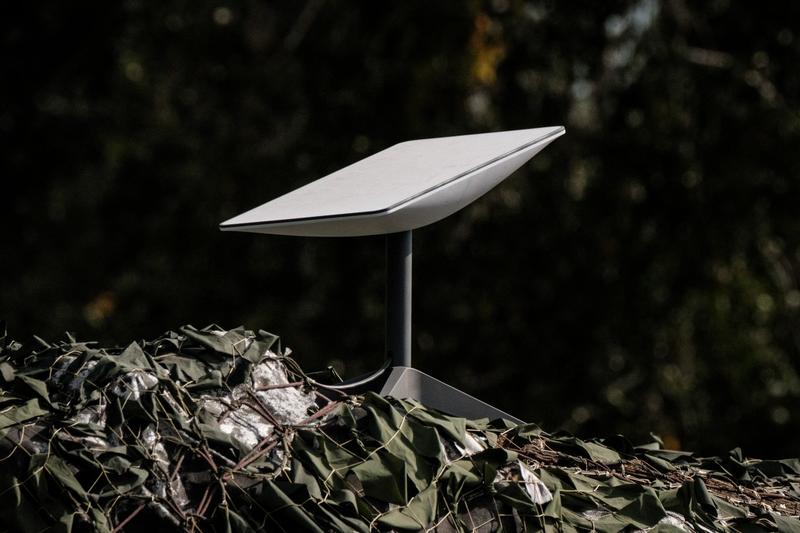
Unlike commercial Starlink terminals available in stores, SpaceX is selling a military version called Starshield to the Pentagon under a 2023 agreement. Starshield terminals can connect to both Starlink's commercial satellites and a separate, more secure constellation.
SpaceX argued that the LUCAS drones were operating under conditions that were closer to its aviation category subscription, not a cheaper service for ground transmissions or mobility. Pentagon officials argued that the $25,000 price tag — a monthly fee for each terminal — was designed for aircraft, not kamikaze drones that used the Starlink connection for only a few minutes or hours, according to one of the Reuters sources.
The Pentagon, which was ramping up strikes on Iran at the time of the meeting with SpaceX executives, eventually agreed to pay the increased price demanded by the company.
SpaceX did not respond to a request for comment from Reuters, while the Pentagon declined to comment on information obtained by the international news agency about the price increase by SpaceX.
But a Pentagon official said in a statement provided to Reuters that the office responsible for acquiring the terminals, the Commercial Satellite Communications Office, is working to identify other companies that can provide such services.
Why Musk's company is negotiating hard with the US military
But no other company offers a comparable alternative to Starlink, which has become an increasingly essential tool in modern warfare, as the 2022 Russian invasion of Ukraine showed.
The Starlink satellite network provides global coverage, enabling battlefield communications and precision guidance even in remote areas. The constellation of about 10,000 satellites represents more than 60 percent of the satellites in orbit — far outstripping constellations built by other companies, including OneWeb and Amazon Leo.
The risks of relying on Starlink first became apparent during the war in Ukraine, when Musk ordered Starlink service to be halted in parts of the country in 2022 as Ukrainian forces advanced on Russian positions, disrupting a key counteroffensive, according to earlier Reuters reports.
More recently, US Navy tests were disrupted last summer after a global Starlink outage cut the connection of unmanned military craft, leaving them adrift in the ocean.
“SpaceX Has US Government Trapped”
Clayton Swope, a researcher at the Center for Strategic and International Studies, a think tank focused on national security, told Reuters that, unlike traditional defense contractors, SpaceX has more leverage over the Pentagon.
That's because SpaceX also has an important commercial market for Starlink, in addition to its rocket launch and artificial intelligence businesses.
SpaceX gets about 20 percent of its revenue from the U.S. government, according to a filing with the Securities and Exchange Commission in Washington.
“SpaceX definitely has the US government in a trap,” says Swope.
Musk's company's asking prices are causing concern at the Pentagon
The Starlink network has proven crucial in other operations. After Iran cracked down on protests in January, killing thousands, the Trump administration smuggled in more than 6,000 Starlink terminals to provide Internet access to citizens, according to information previously published by The Wall Street Journal.
But as the war that began in late February intensified, Iranian authorities seized terminals and deployed jamming devices in major cities to disrupt connections, according to a source familiar with the matter.
Within a week of the standoff, Pentagon officials began discussions with SpaceX about implementing a direct-to-phone service that could bypass those disruptions. The capability, similar to a 5G connection, would allow users to connect without ground terminals.
SpaceX, which generated $11.4 billion in Starlink revenue in 2025, proposed charging up to $500 million to launch that capability, plus an additional $100 million monthly operating fee, according to internal Pentagon documents.
The situation has raised concerns among defense officials because of the price.
Reuters notes that it could not determine whether the Pentagon and SpaceX had finally come to an agreement on the matter.