Magyar hurriedly cleans up after Orban. The European Union sets requirements

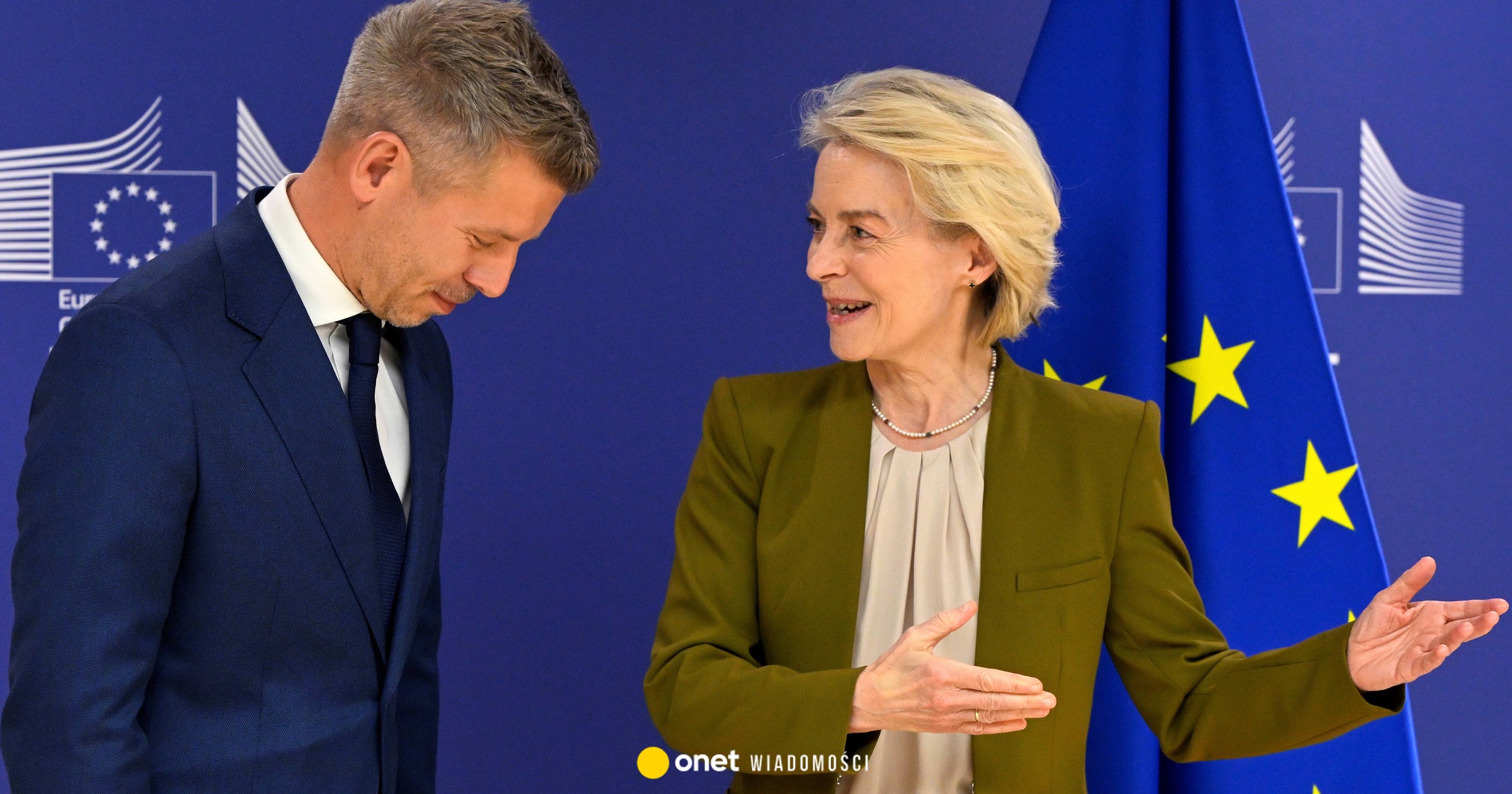
Peter Magyar's assumption of the position of prime minister after 16 years of Viktor Orban's rule is not only the beginning of fundamental internal changes, but also a difficult diplomatic test. The main goal of the new administration is rebuilding trust between Budapest and the European institutions — this is a key condition for unlocking tens of billions of euros of frozen EU funds.
The new government, based on the constitutional majority of the Tisza party in parliament, declares its readiness to meet all EU demands. However, the first days already show that this process is extremely complicated.
Later this week, Peter Magyar will go to Brussels, where he plans to sign agreement with the President of the European Commission, Ursula von der Leyen. The newly appointed Minister of Foreign Affairs Anita Orban (she is not related to the former prime minister) confirmed during the GLOBSEC security conference in Prague that talks at the expert level have been going on for several days and are extremely intense.
The focus is primarily on access to funds from the post-pandemic Recovery and Resilience Plan with a total value of EUR 10.4 billion (approx. PLN 44 billion). However, the total amount of funds frozen or reviewed is much larger and also includes cohesion funds and defense loans.
Magyar's ambitious plans. Tens of billions of euros are at stake
The first serious test of the new government is the emerging dispute over almost EUR 4 billion (approx. PLN 17 billion) from this package. The funds from the Reconstruction Plan are divided into non-repayable grants worth EUR 6.5 billion (approx. EUR 2.75 billion) and preferential loans worth EUR 3.9 billion (approx. PLN 16.5 billion).
The European Commission strongly advises Budapest to apply only for the grant part for now and give up the loans. Brussels argues that there is no time to implement the broad reforms to which these loans are linked, also pointing to the difficult situation of Hungary's public finances. Currently, the country's public debt is 75%. GDP, and the budget deficit for 2026 is estimated at an alarming 7%.
Kinga Kollarova, MEP from the Tisza party, has already expressed optimism about the release of all frozen funds. The Prime Minister emphasizes that Hungary urgently needs this money for the development of key infrastructureincluding suburban trains, extensive railway modernization and modernization of the energy network.
However, the Magyar administration must formally submit a request for funds by August 31 this year, while the Commission has until the end of December to make the payments. One way to extend the deadlines beyond 2026 is to transfer some of the funds to the national development bank or to create a special financial instrument, which, however, requires the approval of Brussels.
The unblocking of funds itself is strictly dependent on meeting the so-called 27 super milestones — a detailed set of Commission requirements regarding the transparency of public procurement, the guarantee of judicial independence, the protection of academic freedom and the uncompromising fight against corruption.
According to analyzes by non-governmental organizations under the previous government 17 of these conditions were fully met and nine were at least partially met. The Magyar government, conscious of its constitutional power, immediately embarked on radical legislative changes, many of which are met with violent reactions on the domestic political scene.
The most spectacular decision is the first constitutional amendment of the new government, which eliminates the controversial system of foundations managing public assets. The previous Fidesz government transferred gigantic state assets, including 21 universities and the elite Maciej Korwin College (MCC), to the management of special foundations. The new law defines these assets as national assets and returns them to full state control.
This step is a direct response to European demands for academic freedom. Representatives of interested institutions, e.g. Balazs Orban, MCC council, they strongly criticize it as unacceptable nationalizationwhich threatens private property rights.
In addition to internal reforms, Hungarian foreign policy is also changing significantly. For example, a revision of the application for EUR 16 billion (approx. PLN 68 billion) from the European SAFE defense program is being considered. Magyar argues that the previous government's original plan was misguided and would have led to society being indebted to the benefit of related companies.
What can the European Union do?
To fully understand the current situation, it is crucial to understand the mechanisms of European sanctions and how the EU withdraws and restores funds. The European Union is based on common values such as human dignity, freedom, democracy and the rule of law. If a Member State systematically violates these values, Brussels has two main pressure tools at its disposal.
Ursula von der Leyen and Viktor Orban in the European Parliament. Strasbourg, October 9, 2024EPA/CHRISTOPHE PETIT TESSON / POOL / PAP
The first, older mechanism is procedure under Art. 7 of the Treaty on European Union. This political instrument consists of a preventive phase, where the EU Council determines the risk of violating values by a four-fifths majority, and a sanctioning phase. The problem with this mechanism is that unanimity of the remaining member states is required to impose sanctions – e.g. suspension of voting rights. Reaching such a consensus has been virtually impossible for years, which made Art. 7 ineffective.
Due to the ineffectiveness of Art. 7, in 2020, the European Union introduced the so-called conditionality mechanism, directly linking the use of funds with compliance with the rule of law. Under this mechanism, if systemic violations of the rule of law, e.g. by a corrupt judiciary or non-transparent tenders, threaten the Union's financial interests, financing may be suspended.
The key change is that unanimity is no longer required to freeze funds, but a qualified majority of ministers in the EU Council is sufficient. It was the launch of this mechanism that led to the freezing of billions of euros for Hungary – the European Parliament announced last fall that the total amount of blocked funds from various funds reaches up to EUR 18 billion (PLN 76 billion).
The process of unlocking these funds to the national budget is not automatic at all and does not depend solely on political changes. It is a procedure with a strictly defined structure. The European Commission starts by pointing out specific legislative and institutional changes the country needs to make. The Member State then not only enacts the required reforms, but must immediately implement them in practice.
The third step is a detailed assessment by the Commission, which checks whether the new regulations actually eliminate the questioned problems. Only after issuing a positive opinion, the Commission proposes to unblock the funds, which still need to be approved by the EU Council in the final stage.
The European Commission is currently under enormous pressure from institutions, including the European Parliament and the Court of Justice, so as not to repeat past mistakes and not to release funds prematurely.
Despite a clear pro-European course and Peter Magyar's efforts for a constructive dialogue, Brussels remains vigilant. Gaining access to European billions will therefore probably be the biggest challenge of his career for the new Hungarian prime minister.