How we 'upgrade' our brains in the age of AI. The forgotten skills that help us cope with a rapidly changing world

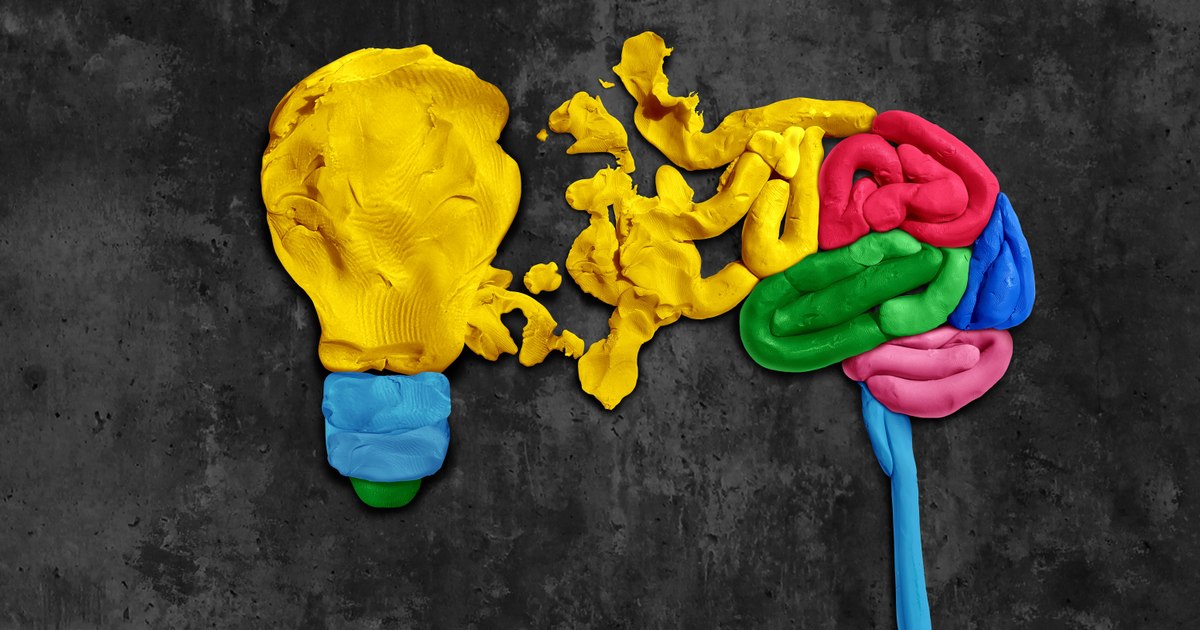
In the era of AI and, in general, rapid changes in technology and society as a whole, skills overlooked by scientists are becoming essential to better adapt and live a flourishing life in line with the potential of each of us, says neuroscientist Hannah Critchlow, from the University of Cambridge, quoted by BBC Future.
Neuroscience unlocks the secrets of the human brain PHOTO shutterstock
In her new book, The Brain in the 21st Century, she offers a guide to the skills needed to upgrade our brains to keep pace with a rapidly evolving, potentially overwhelming world.
“Basically, I wrote it for myself so that I can make better decisions and improve my own life, especially as I move through middle age,” says Critchlow.
“But also for my parents, so they can maintain a healthy brain into old age, and for my son, who is now 10. What can I do to help his brain develop?“, she points out.
At first glance, it seems an almost impossible task: our brains have essentially the same structure as our Stone Age ancestors. Then, archeological analyzes revealed that it may have actually shrunk significantly over the last 10,000 years.
But, according to the neuroscientist, people have the necessary cognitive resources to face the challenges of a world that is changing at an unprecedented rate. In this regard, a central skill is mental flexibility, essentially the ability to tolerate uncertainty, and the good news is that it can be trained.
How neuroscience research helps us look at intelligence from a different perspective
The researcher started the book three years ago, before the explosion of artificial intelligence – but even then, it was developing rapidly and it was clear that it would take over a large part of life – socially and individually.
Then, as now, this development was viewed with equal measure of fear and excitement.
But reflecting on how artificial intelligence came about, it's clear that it was based on what we learned about our brains from neuroscientists. So why not ask the question the other way around: what would it be like to use this knowledge to harness our natural ability to adapt to its fullest potential?
The most valuable skills for the century in which we live
The researcher says she focused on those skills often ignored by scientists – namely those that underlie our ability to connect with each other, imagine a new world, innovate, solve problems and think long-term.
Essentially, says the researcher, in a time of unprecedented social and technological change, our ability to tolerate change, uncertainty and ambiguity must be examined.
This has several facets, namely:
Soft skills: Emotional intelligence and empathy
Scores on these can be the most important predictors for satisfaction with our lives, quality of relationships and even academic success.
Although they have a genetic component, between 10% and 45%, emotional intelligence and empathy are skills that can be trained. According to Jamil Zaki, a psychologist at Stanford University, one can start with an exercise in self-compassion, for example by asking the question: why am I feeling this emotion and what can help me overcome the discomfort it causes?
Then, from self-compassion to empathy the transition happens naturally, says the researcher.
The intelligence of the body
This is based on energy resources – the good fuel for the brain, but also the microbiome that supports gut health.
A study by Hilke Plassmann of Insead in Fontainebleau, France, and her colleagues, of 100 healthy volunteers who took pre- and probiotics, came to a surprising conclusion: after 7 weeks, they were found to have a more varied gut microbiome compared to those who took a placebo, but also higher levels of altruism – translated into a willingness to give more of their own earnings in the name of equality.
Although the mechanism is not fully understood, it is known that nerve cells in the gut have a connection with the brain: for example, signals are sent from the vagus nerve to the insula, the region of the brain responsible for gathering information from the external environment and making decisions.
Exceptional book written by a psychiatrist from Cluj: “Genius. From neuroplasticity to reality”
What happens, neuroscientists hypothesize, is that the bacteria in the gut produce those neurotransmitters capable of altering the neural connections associated with behavior, including social behavior.
creativity
According to Critchlow, the difference in creativity between a Wolfgang Amadeus Mozart and the average person is more one of degree: it is based on innate talent, but it is no less a skill.
In this regard, daydreaming or letting your mind wander is a natural state of mind that can be harnessed. In fact, 20% of a day's time is occupied with this activity without a definite goal or object – the mind simply wanders without fixing on anything specific. They are the ideal conditions to allow new ideas to emerge. A simple walk in nature can help – it increases the activity of so-called alpha waves, associated with a calm state of mind and creative thinking.
This probably explains why Archimedes had his eureka moment while taking a bath and his body was relaxed.
Sleep is also beneficial and, in particular, the moments that precede it, when fragmentary and even strange thoughts appear – this state increases the activity of brain waves associated with creativity, because the mind enters an intermediate state between wakefulness and dream, conducive to new associations of ideas.
Physical exercises
It not only helps the body to be toned, but also the brain, as this way new neurons and nerve connections are born – basically means that help the mind to strengthen and produce new ideas and incorporate new information – keeping it sharp and flexible.
Bioenergetics Secrets: Fuel for Mind and Brain
Mitochondria, the tiny powerhouses in our cells, need to work efficiently to produce the fuel our body and mind need.
The brain consumes huge amounts of energy and needs good fuel for the kind of mental gymnastics required to adapt fluently to an ever-changing environment – which can be overwhelming because of the information overload that is flooding in at any given moment.
What happens to your mind and body if you meditate 5 minutes a day. Why you should start today
According to the researcher, this fuel can be produced in several interconnected ways.
She says she exercises because it helps multiply mitochondria so the body has enough powerhouses to function optimally.
Also, getting enough sleep is vital to eliminate toxic waste from energy production.
Likewise, healthy foods – less processed and high in sugar – have their role: they provide mitochondria with the right fuel for the energy that both mind and body need.
The tension at the heart of our being
It is somewhat paradoxical that the human brain sometimes has difficulty withstanding and struggles so much to manage uncertainty and the ambiguity that accompanies it.
On the other hand, as a species, humans have always been driven to innovate and develop, to explore and keep their curiosity alive.
In conclusion, we are constantly caught in a vortex: we create change, but we also fear it. It's an important tension, but one that defines the psychological skill of the future: tolerance of uncertainty.