
When is it time to end a relationship? “Some accept painful compromises, using the relationship as a band-aid”

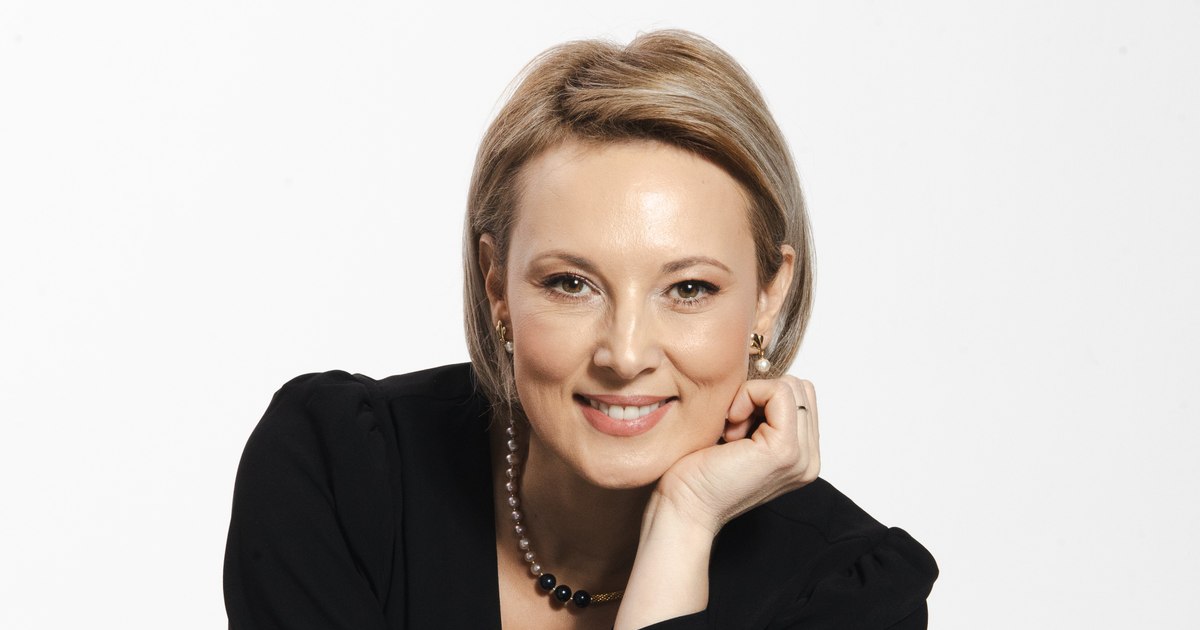
Many people stay in relationships that hurt them out of fear of loneliness, habit, or hope that things will change. Raluca Anton, doctor in psychology and psychotherapist, explains for “The Truth” how we know when a relationship is emotionally draining, why we end up repeating behaviors that make us suffer, and where we should draw the line for good, even if we love.
Raluca Anton Photo source: Personal archive
Why are relationships so important in our lives? Do they define us more than we think?
Raluca Anton: Relationships are the bed in which the self is formed. Our identity is built in relation to others and the way we live our existence, during our growth, in interaction with the people around us. Thus, relationships become mirrors of how we look at ourselves, but above all they represent the space where we learn two of the essential needs of any human being: safety and belonging. Moreover, the relationships within which we develop influence the way we manage our own emotions, that is, the way we regulate ourselves emotionally. In short, relationships shape the way we see ourselves, the way we see others, and the world in general. This is the basic idea from which I started when I wrote the most recently published book “Map of Your Relationships”.
How much does our childhood influence the way we relate to the partners we choose?
Childhood is the first relational laboratory where we learn a lot of what we know about love, conflict, safety, closeness. And this leads us, very often, in adulthood, to choose the familiar learned then and less the emotional and relational health. In fact, many times we don't even know what a healthy relationship would look like for us because we didn't experience it growing up. And then what happens in the way we interact in adulthood is very much based on known relational dynamics, and so we even end up recreating known dynamics from the past. In the relational spaces of childhood, and I do not mean only those with the family of origin (parents, grandparents, brothers, sisters, extended family), but also with friends, colleagues, the community, teachers, we learn extremely many things about how “should” to live our lives. What happens in adulthood is that those patterns from the past no longer fit the present moment, or sometimes even sabotage us. This is the main reason why, in our relationship work, we insist on becoming aware of our relationship patterns to know what we want, what we want to let go of, and how we can transform what is inside us into something that is better for us now.
How come we end up repeating the same mistakes in relationships, even though we miss them?
As I said earlier, people repeat what is familiar to them, not necessarily what is healthy for them. Why? Because our minds seek predictability and control, but the benchmarks for these are formed in childhood. Thus, predictability often equals something I know, even if the familiar causes me pain, and control lies in something I've already experienced because anything new comes with a lack of control to begin with. Past relational patterns are automatic and because of this they become predictable and give us an illusion of control. In short, known pain may seem safer than the unknown, and awareness is not enough without new relational experiences.
How do we know we're in a relationship that isn't doing us any good?
What does this relationship do for you? Anxiety, exhaustion, constant insecurity? How much does it counterbalance connection, safety, well-being, listening, caring? Do you feel like you have emotional freedom? That is, can you feel what you need to feel and be received with all that exists emotionally within you? Do you have space to express your vulnerabilities? Is the relationship consuming more than it supports? I think all of these can be questions that can help us become aware of what works for us and what doesn't in a relationship. And at the same time, I believe that a relationship like the one I “chosen now” can represent the space for growth and transformation.
Why do people choose to stay in relationships that hurt them?
Mainly because each of us hopes that things can change. And because that need for belonging supersedes many of the other needs that we can give up at various times in our lives. Then, various confusions often arise when it comes to what love means, what care means for the other person and for the relationship, and what sacrifice means. In our culture, although much less than in the past, there is also an excessive fear of social judgment and blame, which can be felt as a failure in life. And then, each of us had an image of how we would live our lives and relationships, and many of us remain attached to that image, that projection, and imagine that it will happen in a certain future.
How to ask relatives for money back without ruining the relationship. The 3 saving messages proposed by psychologists to get rid of embarrassment
How powerful is the fear of loneliness in relationship decisions?
Loneliness is perceived as a deep emotional threat. One of the essential needs of the human being is not to be alone in suffering or to have someone by her side when she suffers. Thus, the fear of not mattering to anyone hurts enormously. Then, people may enter or stay in relationships out of fear and thus accept painful compromises, using the relationship as a dressing for the emptiness inside. Of course, we in psychology say that emotional maturity also means the ability to be alone, but no human being is made to be alone forever.
What does a healthy and balanced relationship look like, concretely?
It would be so difficult for me to answer in a few words a question that research has been trying to answer for over 50 years. I'll list a few things that have been proven so far: a healthy relationship is generally one where both people feel emotionally secure. Specifically, this can boil down to mutual respect, focusing on developing a friendship relationship, the ability to repair after conflict, building a space where vulnerability occurs and where there is room for difference and individuality. A healthy relationship is one in which there is a balance between autonomy and closeness. Many of these are the foundations of a healthy relationship not only as a couple, but also in other types of relationships that we develop throughout our lives.
What are the most common mistakes we make as a couple?
The first I would say is the belief that love is enough. Then, avoiding difficult conversations because we don't know what to do with them and are rather reactive. Gottman highlights the four horsemen of the apocalypse that I frequently see in the couples I work with: criticism, defensiveness, contempt, withdrawal. Further, I believe that few of us have the ability to emotionally regulate ourselves before we react, and we often rely on assumptions instead of activating curiosity about ourselves and others. In our times, with so many entertainment options, unfortunately I see more and more couples who do not have rituals of connecting and reconnecting, who neglect their relationship over time, and when they reach an impasse, they prefer to blame rather than take responsibility for their contribution.
What's that one major relationship mistake we should never get over?
Love does not justify abuse (in whatever form it may take).
How do we know when it's time to leave a relationship?
First of all, when leaving a relationship (and I'm talking about the average relationship here, not the extreme ones) it would be helpful to make sure that both I and the other person really did everything we knew to work on improving the relationship. Of course, when suffering becomes constant and dominant, when attempts at repair are one-sided, when the relationship affects mental health and personal identity, when self-respect is lost, when there is chronic emotional unavailability, when there is a lack of security and realistic hope for change, it is natural to ask the question: “Who am I becoming in this relationship?”. However, from my professional experience and from everything I've studied so far, many of the challenges we have in our starting relationship will also be encountered in future relationships. Because many of our own decisions are based on our mental maps that are pre-installed.
“If he's jealous, does that mean he loves me?” The toxic couple myth debunked by psychotherapists
Is there a point where it's no longer worth trying to fix things?
The relationship cannot be repaired by one man. Chronic abuse and contempt destroys the relationship. Refusal of real change, too. And maybe sometimes separation is the healthy form of protection because one or neither partner can commit to the repair process that requires consistency and mutual commitment. However, I am a psychotherapist who believes strongly in the relationships I work with and those who get to do this work of transformation and growth. And sometimes a couple needs only one person to believe in their potential, and that completely changes the data of the problem we're working with.
What can someone do, concretely, who wants to improve their married life?
First of all, a very good knowledge of one's own person. Then, sincere curiosity towards your partner. When we engage in conversation with this curiosity activated, the dialogue may go much more smoothly. Then it is necessary to know and express our needs – we cannot endlessly expect the other to guess what we need to be well. Don't forget the small and constant rituals of connection and, very importantly, appreciate each other daily. And when a conflict arises, fixing it as quickly as possible is the best way we can invest in our relationship. And, finally, both have the availability to grow both individually and together.


