
The PNRR failure trap. Dragoș Cabat: “Instead of free European money, we will use borrowed money”

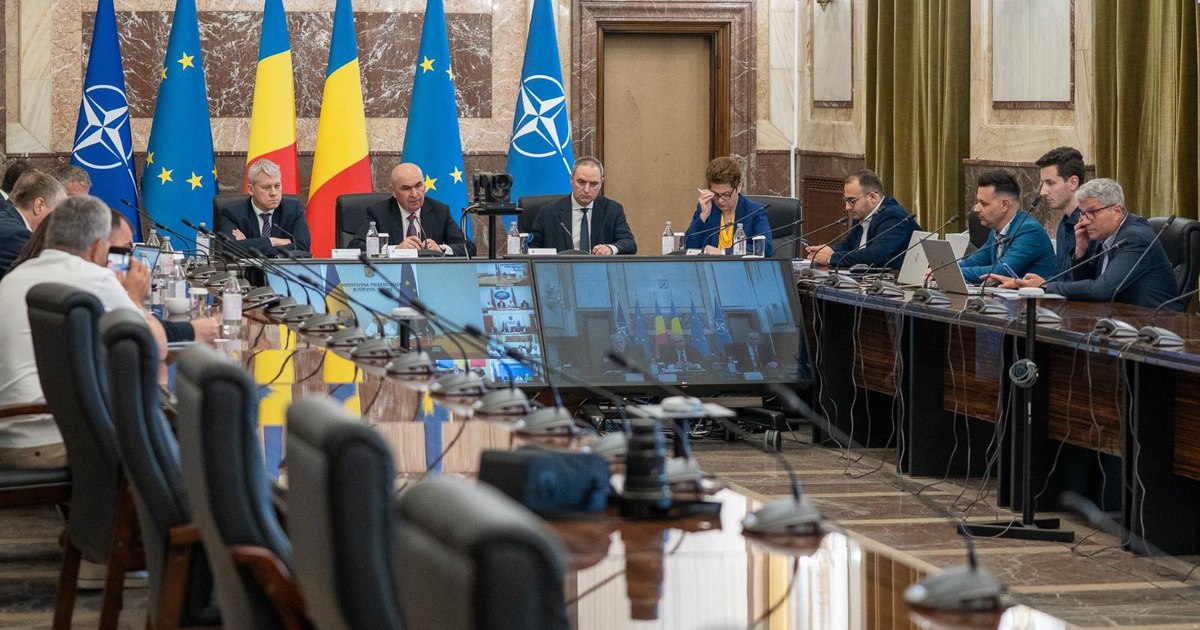
The government is analyzing the possibility that part of the projects financed by the PNRR will be supported by loans, given that many of them are already underway. Ilie Bolojan is holding talks with prefects and mayors to assess the real state of investments and available financing solutions, including for local and infrastructure projects that risked losing non-reimbursable European funds, because they did not meet the deadline.
Ilie Bolojan meeting with prefects at the Government Photo: Gov.ro
“Adevărul” spoke with the economic analyst Dragoş Cabat, about the consequences of delays in the completion of projects started through the National Recovery and Resilience Plan (PNRR). He says that in the second half of the year, Romania will feel the impact of the fact that the 2026 budget was adopted with the idea that our country will attract funds from the EU for this program.
“The impact is that instead of using non-repayable European money, we will be using borrowed money, which has to be paid back. Borrowing means both repaying the principal and paying the interest. Hence the impact on the budget deficit and public debt in the long term.”says the specialist.
Small projects big challenges for local administration
There is the possibility that some infrastructure projects or local projects will be postponed or frozen until there are funds to complete them. If for hospitals or road infrastructure projects, it is understandable that their scale created difficulties for the Romanian state, in terms of investments in local infrastructure, the projects would not have been difficult to complete.
“Normally, any investment started should be completed, if it is abandoned, it degrades and generates further losses. For this reason, projects already underway should be completed in one form or another, not stopped or postponed. For projects that have not yet been started, it can be discussed to abandon them.
All these investments were provided for in the budget and were a source of income for the budget. Now suddenly they become a source of expenditure or are no longer a source of income, because no more investments are made, salaries are no longer paid, there are no more budget revenues, economic growth is lower.
Including the stability of the foreign exchange market, but the most important was the money coming into the economy, it had a multiplier effect in the economy. The most important were those that came as grants”, shows the expert.
Moldova highway project PNRR, Photo: Facebook Ilie Bolojan
“No one answers, that's how it is in the state”
On the digitization component, there are numerous institutions and agencies that have already started projects, hired specialists for European funds and granted salary increases for the activity carried out within these programs. All these expenses will be covered by the state, from the salaries of the specialists who worked for the submission of some projects to the employees who received an additional increase for the work submitted to the project. In some projects it was very clearly stipulated that the state will not cover the losses if the beneficiary does not comply with the conditions of the program.
The government has simplified the procedure for obtaining a fire safety permit
“There should also be responsibility on the part of those who did not make sure that the projects can be completed within the established terms. After all, these are contractual obligations, but as the companies are with the state, no one answers, that's how it is with the state. If something happens, everyone says, that's nice, if it doesn't happen, it's the state's fault. The state will not visibly cover, but the companies, the respective institutions have incurred the expense, and in the end their budget will be in the red. That hole it must be covered from somewhere, and it will also be covered from the state budget.
This is a story that those who run the state companies will not bring the money from home. Many were not making a profit anyway. They will say that the loss now is even greater because they made some investments.”
When will we have an overview of the losses?
At this moment, there are two possibilities for the projects in the PNRR, which will not meet the deadlines by which they had to be completed, for one part the EU will extend the deadlines, but there is no guarantee at this moment, and a centralization of these amounts should come from the Ministry of European Funds. The other option involves the assumption of the costs by the Romanian state.
“It will be an approximate amount, because state-owned companies are used to not giving exact figures or even shamelessly lying. And then there will not be an exact amount, but an approximate percentage, 20-30%. Of course, the errors begin to multiply.”
What will be the impact felt in the second half of the year?
The specialist says that after the deadline, August 2026, Romania will enter the adaptation to the new economic reality, the one in which important amounts provided in the budget will have to be taken out of the calculation. The impact will be seen in the economy, the deficit, the exchange rate and other important indicators.
“Many of the problems that the current Bolojan government tried to reduce to good parameters will explode almost as loudly as before this Government came. We will get to the situation before and we will see who will want to take over this situation. In the second half of the year we will start to see what we really did and what we did not do.” say Dragos Cabat.
Prime Minister Ilie Bolojan warned that Romania risks losing approximately 7.5 billion euros from the PNRR due to the political deadlock and the failure to implement the assumed reforms. In order to unlock these funds and avoid the loss of money, the Parliament must urgently adopt a legislative package consisting of nine key laws, aimed at the corporate governance of state-owned companies, the reform of special pensions and payroll in the public sector, as well as strengthening the independence of the judiciary and the fight against corruption. The government is trying to accelerate the adoption of the necessary measures by the end of June.


