The lipstick and mascara assassin who became the Nazis' nightmare. Only 22 years old, he had hair like fire and extraordinary courage

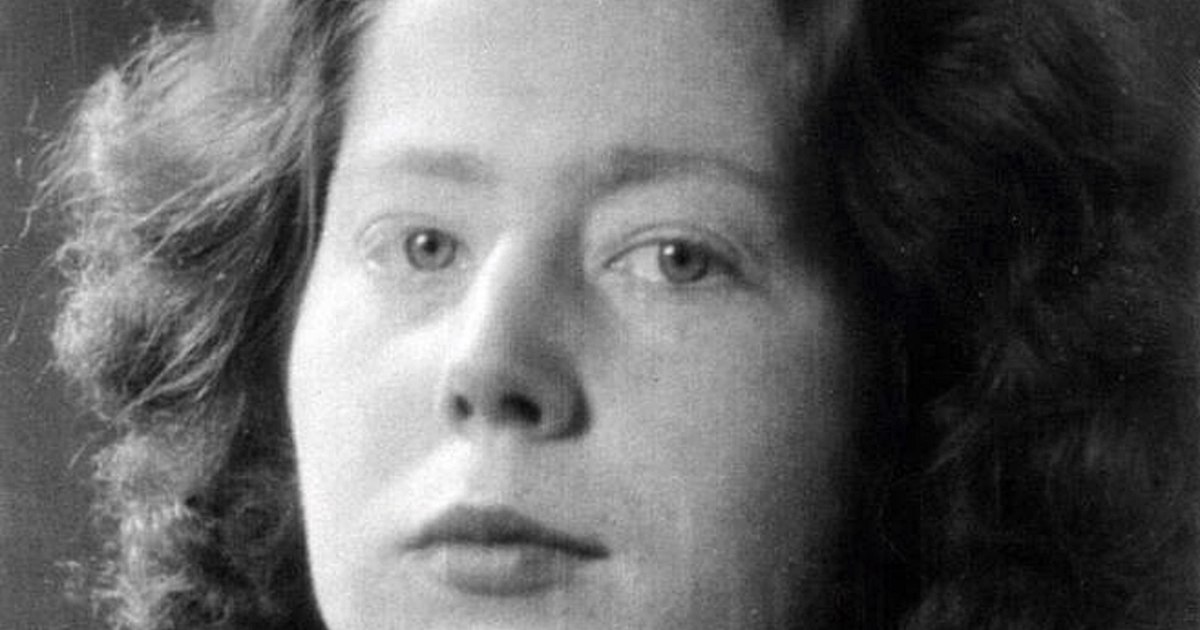
A young Dutch law student became one of the most effective and feared assassins of World War II. A member of the Dutch Resistance, she carried out her missions elegantly dressed and with remarkable composure. For the Nazis, it quickly became a real nightmare.
Johanna Scaft PHOTO wikipedia
World War II was one of the most violent conflicts in human history. Through blitzkrieg tactics, Nazi Germany was able to quickly cripple the defensive systems of many European states and control much of the continent. Central and Western Europe were almost entirely occupied.
In the conquered territories, part of the population collaborated with the Nazi authorities, either for privileges or for fear of reprisals. But there were also people who refused to accept occupation, extremism and terror. They organized resistance movements involved in sabotage, falsification of documents, armed attacks and assassinations.
Among the most feared members of the Resistance was, surprisingly, a young woman of only 22 years. She was a redheaded Dutch woman who killed Nazis and their collaborators without hesitation. Elegant, always careful about her appearance and often with lipstick on her lips, she became a symbol of the clandestine struggle against the Nazi occupation. Her name was Jannetje Johanna Schaft, but she went down in history as “Hannie,” the “red-haired girl,” at the top of the Nazis' wanted list.
A country that was not saved even by neutrality
The story of Hannie Schaft begins with the occupation of the Netherlands by Nazi Germany. After the invasion of Poland in September 1939, the Netherlands had proclaimed its neutrality, just as it had during the First World War. For Adolf Hitler, however, this was of no importance. Nazi Germany invaded the Netherlands on May 10, 1940. After five days of heavy fighting and one day after the bombing of Rotterdam, the Dutch army surrendered on May 15, 1940. The government and royal family left the country and took refuge in London. The Netherlands thus came under Nazi occupation, German administration being established.
A part of the population collaborated with the Nazi authorities or accepted the occupation without resistance. However, there were also people who did not tolerate the regime's extremism and crimes, especially the persecution of Jews. They organized a resistance movement known as the Raad van Verzet (“Council of Resistance”), which also had ties to the Dutch Communist Party.
Members of the resistance engaged in sabotage, assassinations and the procurement of false documents to save Jews threatened with deportation to concentration camps. However, their activity was extremely difficult, especially in the conditions where an important part of the Dutch law enforcement agencies collaborated with the Nazis.
Hannie, the girl with the red hair
During the Nazi occupation, specifically in 1943, Dutch students were forced to sign a declaration of loyalty to the Nazi regime. Almost 80% of them refused and were expelled. Among them was Hannie Schaft, a 22-year-old with red hair who would soon become a real nightmare for the German occupation army.
Hannie Schaft was born on September 16, 1920, in Haarlem, in the north of Holland. Her father, Pieter Schaft, was a teacher and had socialist sympathies, and her mother's name was Aafje Talea Schaft. Hannie remained the only child in the family after his older sister Anna died of diphtheria in 1927.
Since childhood, Hannie could not stand injustice, discrimination and extremism. In the family he often discussed politics and moral issues, especially with his father. Intelligent, fond of reading and with very good academic results, after finishing high school she was admitted to the Faculty of Law of the University of Amsterdam.
After the outbreak of war, Hannie Schaft became involved as a volunteer with the Red Cross, where she prepared first aid kits and bandages for soldiers and refugees. In 1943, when she was a fourth-year student, she was asked to sign the declaration of loyalty to the occupation authorities. Because of his convictions and his close friendship with two Jewish students, Sonja Frenk and Philine Polak, Hannie categorically refused any collaboration with the Nazis. She was expelled, along with most of the students who had refused to sign.
It became a nightmare for the Nazis
The Nazis' racial policies and brutality against opponents of the regime prompted Hannie to take action. She was an idealistic young woman and believed that the world could become better only through involvement and courage. At first he focused on saving the Jewish friends and families he knew. In the summer of 1943 she returned home to Haarlem with her two Jewish friends, Sonja Frenk and Philine Polak. He hid them in the family home and procured them false IDs.
During this period he came into contact with Raad van Verzet, the Dutch resistance movement, and immediately decided to join it. At first it was used as a messenger and distributor of clandestine materials. As an intellectual and discreet young woman, she did not seem the right type for dangerous operations. Initially, it dealt with procuring or stealing identity documents for Jews.
The unbelievable story of the real Miss Dior: she fought against the Nazis and survived the concentration camps
That's how he met the sisters Truus and Freddie Oversteegen, two other young women involved in the resistance. The three became very close, and after the war the sisters would recount numerous episodes of Hannie's work.
But the former law student wanted more than the role of courier. He wanted to participate directly in armed operations. He began explosives training and shooting practice, quickly proving a remarkable talent. He soon became one of the Resistance's most effective assassins. She acted alone or with a partner and targeted Nazi officers, occupation officials and Dutch collaborators with the regime, particularly police officers involved in arresting Jews and enforcing terror measures.
The killer with lipstick, heels and a team of “Amazons”
Hannie teamed up with two other young women in the Resistance, Truus and Freddie Oversteegen, who were 17 and 15 respectively in 1943. Together they formed a trio feared by the Nazi authorities. They were extremely effective at sabotage, and Hannie had become one of the Resistance's most dangerous assassins.
The young woman was known for the way she presented herself before missions: she dressed elegantly, wore a discreet make-up with lipstick and mascara, and carefully styled her bright red hair. “I will die clean and beautiful,” Hannie often said.
Using his elegant appearance and the fact that he did not arouse suspicion, he approached his targets without difficulty. The victims, often surprised to see a young and attractive woman, did not suspect anything. Within seconds, Hannie would draw his gun and engage his target, then quickly disappear.
He participated in numerous acts of sabotage and assassinations against German soldiers, Dutch Nazis, collaborators and informers. He became fluent in German and often approached occupation soldiers to obtain useful information for the Resistance.
On March 1, 1945, together with Truus Oversteegen, he killed police officer Willem Zirkzee near Krelagehuis on Leidsevaart in Haarlem. Two weeks later, on March 15, the two seriously wounded Ko Langendijk, a barber from IJmuiden who was working with Nazi intelligence. These were just some of the operations in which he participated.
But Hannie also had firm principles. At one point, the Resistance asked him to participate in the kidnapping of the children of a Nazi official, who were to be executed if their father did not cooperate. The young woman categorically refused. He said that such a gesture would not be different from the barbarism practiced by the Nazis.
In a short time, Hannie Schaft became one of the most wanted men by the Gestapo in Holland. After she was spotted at the scene of a murder, investigators picked up on an obvious detail: her red hair. Thus she entered the “most wanted” list of the Nazis under the name “the girl with the red hair”.
“I shoot better than you”
Hannie Schaft's streak of murders and spectacular work was interrupted by a tragic episode and a fatal mistake. On June 21, 1944, Schaft and Jan Bonekamp, a fellow Resistance member, went on a mission to Zaandam. Their target was Willem Ragut, a Dutch policeman collaborating with the Nazis.
Hannie attacked first. With her famous pistol, she approached Ragut on a bicycle and shot him in the back, in the middle of the street. Allied bombers were flying over the city at the time, and passers-by initially thought the policeman had been hit by an airstrike. Taking advantage of the confusion, Hannie quickly retreated.
Portrait of a political killer. Who is Tyler Robinson, the suspect in the murder of Charlie Kirk
But Jan Bonekamp made a serious mistake. He approached the fallen policeman to fire another bullet, without sufficient caution. Although wounded, Ragut managed to draw his gun and shoot Bonekamp in the abdomen. Seriously injured, he tried to run away, but collapsed on the street and was taken to the hospital.
There, during interrogations, he disclosed the name and address of Hannie Schaft. Bonekamp died shortly after, but Hannie had already been warned and managed to escape before the Nazis got to her. After this episode, she was forced to go even deeper underground.
However, Hannie's parents were arrested and sent to a concentration camp near Den Bosch. After this episode, the young woman withdrew for about nine months from the work of the Resistance and remained in hiding. Meanwhile, her parents were released.
Hannie then went underground again, this time with her hair dyed black and wearing prescription glasses to avoid recognition. She continued to participate in assassinations and acts of sabotage against German officials and Dutch collaborators until March 21, 1945, when she was arrested at a military checkpoint in Haarlem.
At the time of his arrest he was distributing the illegal communist newspaper “De Waarheid” (“The Truth”), used as a cover. In reality, he was carrying secret documents for the Resistance. She was imprisoned in Amsterdam, where she was beaten, tortured and interrogated.
She was eventually identified by the roots of her red hair and also recognized by a former colleague, Anna Wijnhoff. Hannie took responsibility for the assassinations and acts of sabotage, but refused to betray his comrades. She was sentenced to death and executed on April 17, 1945, near Bloemendaal, by Dutch Nazi collaborators Mattheus Schmitz and Maarten Kuiper.
According to witnesses, Schmitz fired first at close range, but only wounded her superficially. Hannie, who was only 24 at the time, reportedly told them: “I shoot better than you.” Enraged, Kuiper approached and shot her in the head.
After the war, on 27 November 1945, Hannie Schaft was reburied with a state funeral at the Dutch Honorary Cemetery in Bloemendaal. The ceremony was attended by members of the Dutch government and royal family, including Queen Wilhelmina, who called Hannie Schaft “the symbol of the Resistance”.