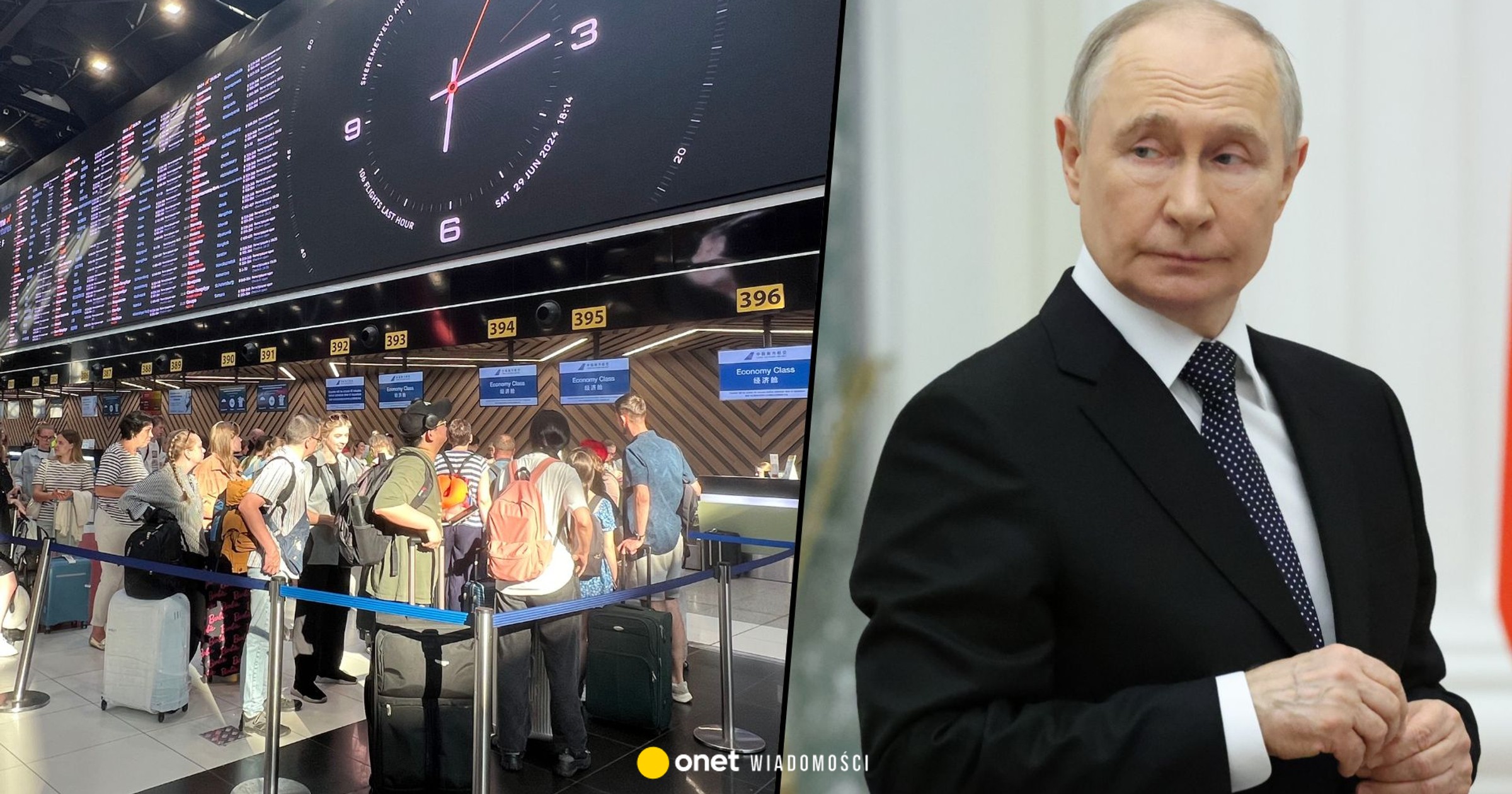
Russians are increasingly looking for information on how to leave Russia. As reported by Wiorstka, the number of searches in Google for “how to leave Russia” and simply “leave Russia” is approaching the indicators from 2023 for the first time. At the same time, in Yandex (Russia's largest internet search engine) the increase in the number of queries regarding emigration is slow. By January 2026, rates had reached almost 60,000, still well below the early 2023 peaks.
The increasing interest in emigration is also evidenced by posts published by Russians on social media. For example, the Chibikov family from Samara talked about their upcoming move on Instagram. Andrei, 44, Maria, 41, and their 3-year-old son Ilya are moving to Armenia.
— We're leaving town, and not for two weeks. On July 10, we pack up our entire life, put our son in the car seat and leave for Armenia. 2 thousand km, mountains, passes, traffic jams at the border. My friends shake their heads in disbelief and ask why. And we simply understood that if we don't do it now, we will never do it again, they said in a recording published online.
As Maria says, her main task now is to pack their entire life into boxes, and Andrei's – to prepare for the move and collect money for it.
There are also reports on social media about how Russians are trying to earn money to emigrate. In the comments under such posts, people support each other in such decisions. “He who is the last to leave should turn off the light”, “when I leave this country, I will be the happiest man on earth”, “it's good for you young people, you can leave” – these are just some of the comments appearing on the Russian Internet.
Who wants to emigrate?
Aleksandra Nazarova, editor-in-chief of the Relocats project, believes that a new wave of emigration from Russia has begun. Since February, her organization began to receive more inquiries from Russians (about the possibility of leaving the country), and traffic on the website increased by 30%.
— We receive 50 requests for advice every day. Perhaps it is related to general fatigue, or perhaps to an increase in the number of drone attacks or internet outages. It started sometime in January or February, says the expert.
At the same time, he emphasizes that this is not such a massive wave of emigration as the one in 2022, but more and more people are considering moving as one of the options. Moreover, as he points out, the willingness to leave has increased, but fewer people are taking specific actions.
— Young people aged 15 to 25 often write to us. These are schoolchildren and students who do not want to live in modern Russia, they do not like it, they feel uncomfortable, they are afraid. These are especially young people who are afraid that they will be sent to the army, forced to sign a contract, or lose their deferment, the expert describes. He adds that only 60 percent young people have the support of their parents.
The article continues below the video
The second category of people who ask for help are families with children who “worry about their children, are fed up with everything and don't like anything.”
— When asked about the reasons for emigration, they most often say that they are tired of everything, everything has accumulated. They write to us that they no longer see the light at the end of the tunnel, they can't wait for it to get easier, because it won't get easier, it's hard for them, they feel bad. People's lives are also difficult due to interruptions in Internet access. As if they were fed up with it all. They are simply not ready to endure it anymore and want to leave, Nazarowa notes.
However, lawyer and founder of the Arka project Anastazja Burakova says not to compare the current situation with the waves of emigration from 2022, immediately after the start of the war or after the announcement of mobilization. According to her, interest in emigration is simply growing for various reasons.
— One of the reasons is the lack of professional development opportunities and the decline in income levels, especially among young people, he says.
People under 25 have not yet started their professional careers. After the COVID-19 pandemic, war broke out, there are currently internet blockades, and many professions depend on access to the Internet, so people have no opportunity to develop and take up normal work in Russia, he explains.
He notes that currently more people write to the bot on the Arka project website, and more people visit the website. Moreover, last month the most read material on the website was an article about 10 things you should prepare when planning a trip from Russia.
Where to go?
Russians thinking about emigration try to move to countries where it is easy to obtain legal status and which can be entered without any major problems, notes Burakova. Not everyone thinks about the European Union – relocation there is a long bureaucratic process even for highly qualified specialists.
— We see an increase in interest in Latin America. People perceive this continent as more peaceful, [położony] away from various geopolitical cataclysms. [W grę wchodzą] also countries neighboring Russia: Armenia, Georgia, Serbia – says the expert.
Nazarova believes that it is currently easiest for Russians to move to Serbia. Russian-speaking immigrants can find work there, and many Russian-speaking companies have been established there that need cleaners, tilers, various craftsmen and other representatives of manual professions.
— You can also consider countries such as Georgia because they have visa-free travel and you can stay there all year round without a visa, which is generally comfortable. When it comes to remote work, the easiest option for nomads (on a freelancer visa) is currently Spain. There are also other interesting destinations, for example Paraguay, where practically nothing is needed to obtain a residence permit other than a clean criminal record certificate. Very often we are also asked about Bulgaria, where there are visas for retirees – says the expert.
He emphasizes that the choice of country directly depends on a person's situation, what he or she is looking for and whether he or she wants to study at university. At the same time, Nazarowa emphasizes that the United States, Canada, Australia and the countries of Northern Europe are certainly not among the easy destinations for emigration.
I’m Ashley Davis as an editor, I’m committed to upholding the highest standards of integrity and accuracy in every piece we publish. My work is driven by curiosity, a passion for truth, and a belief that journalism plays a crucial role in shaping public discourse. I strive to tell stories that not only inform but also inspire action and conversation.