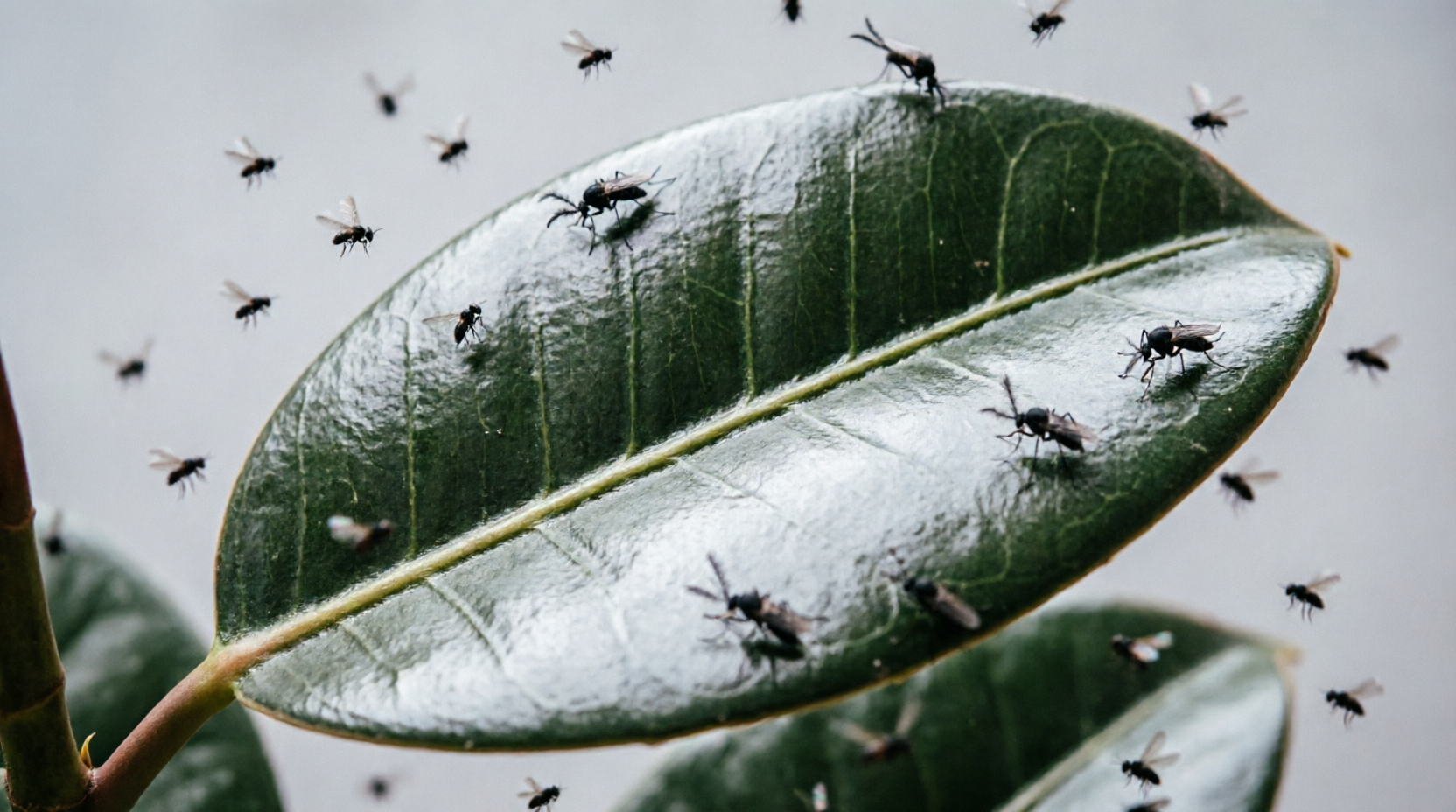
The midges themselves do not harm the plants – they only bite, curl in front of the face and climb into the tea. But their larvae infect the root system, causing the plants to wither. An adult midge (sciarid) lives no longer than a week, but during its short life it lays about 300 eggs in the soil. The larvae that hatch from them can reach 1 cm – much larger than adults.
As soon as you notice at least a couple of midges above the pot, you need to act immediately. An expert from the Zen channel “Exotica – an encyclopedia of house plants” told how to quickly get rid of uninvited guests in 3 steps.
1. Change the soil
Midges breed in waterlogged soil, so the first step is to dry the soil. When its top layer dries out, the population size will decrease noticeably.
Remove the top layer of soil – this is where the eggs and larvae are located. Add new fresh soil.
In severe cases, the soil will have to be completely changed – for example, when the soil is consistently wet and heavy, becomes a damp dense lump and becomes covered with mold. Remove rotten roots, replant the plant in new, fresh, breathable soil, and provide drainage.
2. Place yellow glue traps
This is a measure against adults. After just a couple of days, the number of adult midges will noticeably drop. Insects will instinctively be drawn to the yellow color – this is what makes the traps effective. They are sticky on both sides and are not afraid of moisture, and they can be used not only for indoor plants, but also for seedlings, as well as in the greenhouse and vegetable garden.
3. We provide normal care
Once you get rid of the midges, it is important to give your plants adequate care. From this moment on, there is no overwatering: in a humid environment the larvae feel especially at ease. Water the soil only after it dries, and only in the amount needed for a particular plant.