“The Mandalorian and Grogu”. What I liked about the new Star Wars film, which an American critic says is “good to fall asleep to”

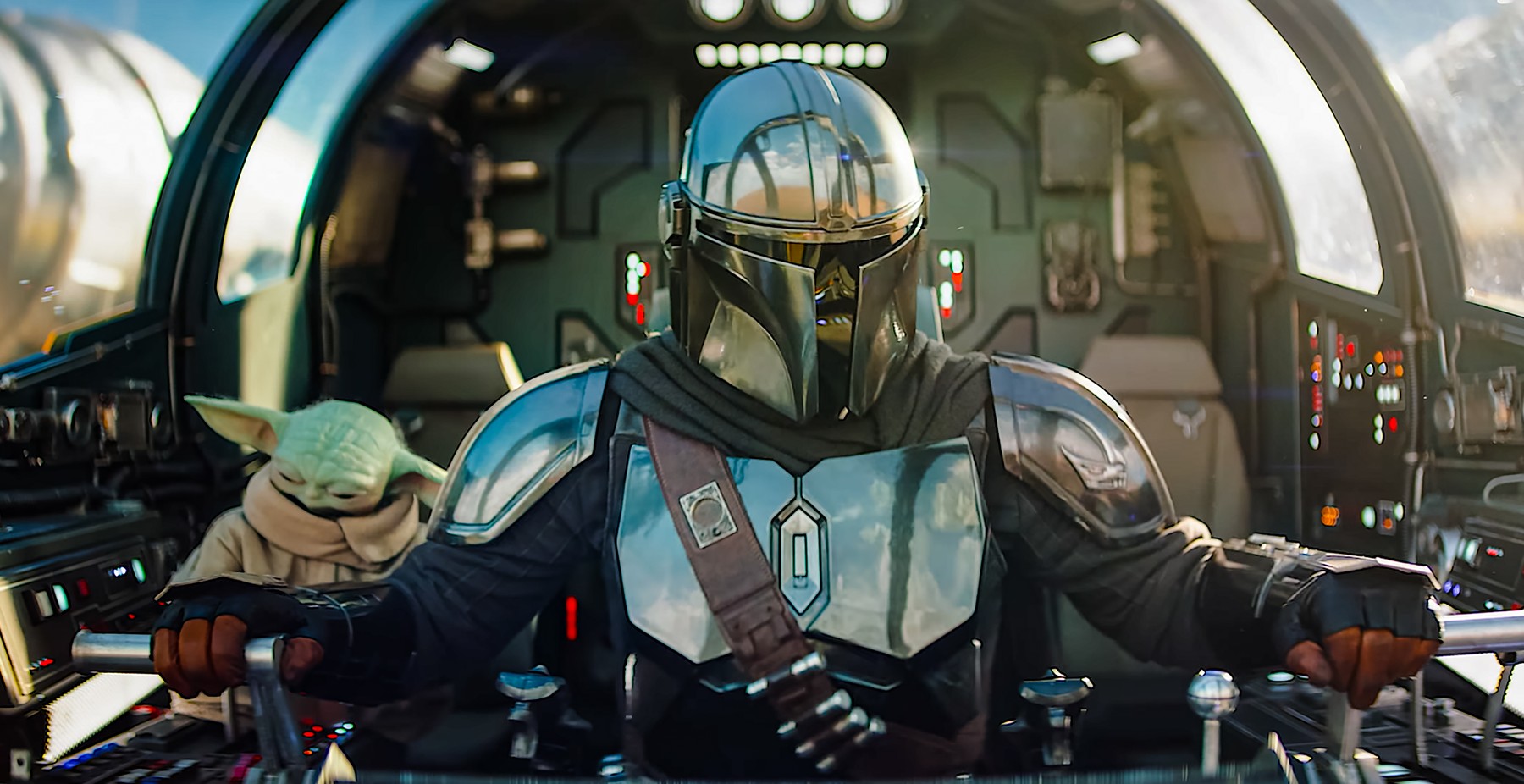
As I write these lines, I have just finished reading a scathing review published in The Atlantic about the first Star Wars film released in seven years, The Mandalorian and Grogu, which its author called a star wars movie to fall asleep to. All I can tell you is that I loved it. And as for falling asleep, I didn't fall asleep at all.
In the newest film in the franchise, director and screenwriter Jon Favreu has some big expectations to live up to, many of them of his own making. In the series “The Mandalorian” on Dinsey+, it was Favreau and Dave Filoni who gave shape and consistency to a world never shown in the original Star Wars films and to its fascinating hero: the bounty hunter Din Djarin – Mando, as the fans call him. After watching all three seasons of the series and meeting Mando in “The Book of Boba Fett” as well, the movie did not disappoint me despite some opportunities it misses.
“The Mandalorian and Grogu” (starring Pedro Pascal and Sigourney Weaver) is an immersive experience with the adorable and humorous accents of Grogu, the child of Yoda's species who has a strong connection to the Force. And since we're talking about moments of humor, we mustn't forget Grogu's friends, the Anzellans, the clever little mechanics from the Star Wars universe.
A great merit of the production is the special effects: I saw the film in 3D and I felt like in a roller coasterssometimes like in a flight simulator, sometimes in a ground mission, with the good guys. The battle scenes at height, falls from the top of snowy mountains and chases in the air are exciting, they have the merit of making you feel the risk, not the fear, and I think it would not let you scroll your phone bored even in the 2D version.
I loved seeing how the special effects were used to communicate something else as well. A simple change of scenery, the transition to a very earthy forest that surrounds you, makes you feel without a word the vulnerability of Mando, the bearer of beskar armor, the hardest alloy in the Universe, when he is mortally wounded.
The old protect the young. Then the young protect the old
Also in that forest, we could see the knowledge of the creators of the film to play with the symbols and emphasize the growth of the power of the little Grogu through an image reminiscent of Yoda.
It's a very nice point in the film, from which one of Mando's key lines starts: “The old protect the young. Then the young protect the old. That's the way.” From here on, the father-son relationship that is born between the Mandalorian and Grogu evolves into a partnership.
Din Djarin remains the father figure in the sequel, but not in the terms of the beginning of the film, when he makes sure that Grogu wears his seat belt, doesn't push the ship's buttons, and keeps his manners.
To convey emotions without showing your face
What made “The Mandalorian” special from the very first episode was the mystery surrounding the character who has his face covered almost all the time. Raised under a strict code by the Children of the Guard, who found him when he was young, Din Djarin is never allowed to show his face.
The moments when his helmet is taken away are extremely tense and demand exceptional action. It's a big challenge to play a role and you can convey emotions without any facial expression, under a heavy suit and looking at the world through a slit that doesn't let you see anything anymore, as Pedro Pascal has told on several occasions. And yet the actor manages to be believable, in the film, as he did in the series, through voice, breathing, pauses in speech, gestures and body posture.
Mando, a more complex character than he appears in the film
After the fall of the Empire, the New Republic hires Din Djarin to capture the warlords. But in one of the missions he has to do something else first: Din Djarin is sent by Colonel Ward (Sigourney Weaver) to retrieve the grandson of the Hutt leaders (Rotta the Hutt, voiced by Jeremy Allen White). Everything gets complicated, Mando has to fight a gallery of monsters and ends up facing an unexpected enemy. But the real problems arise a little later.
What the film fails to do is bring more of the complexity of Din Djarin's personality and his Mandalorian world to the screen. He's somewhat reduced to his role as bounty hunter and father figure, but that's not the whole picture. I would have liked to see more elements taken from the series from his life story, from the story of the armor and the beskar, from the history of his relationship with Grogu. The narrative threads could have gone in more directions and some cliche lines could have been avoided
But even so, the film is an experience worth living. Or for the way it brings almost all the mechanics of the StarWars universe, like a traveling, living museum that you can enter close to home. Above all, there is something in it that endures, a science of building a universe that is always there. At one point, a sympathetic and anxious character appears, a food vendor, involved in only a small part of the action. In his animated chest is the voice of Martin Scorsese.