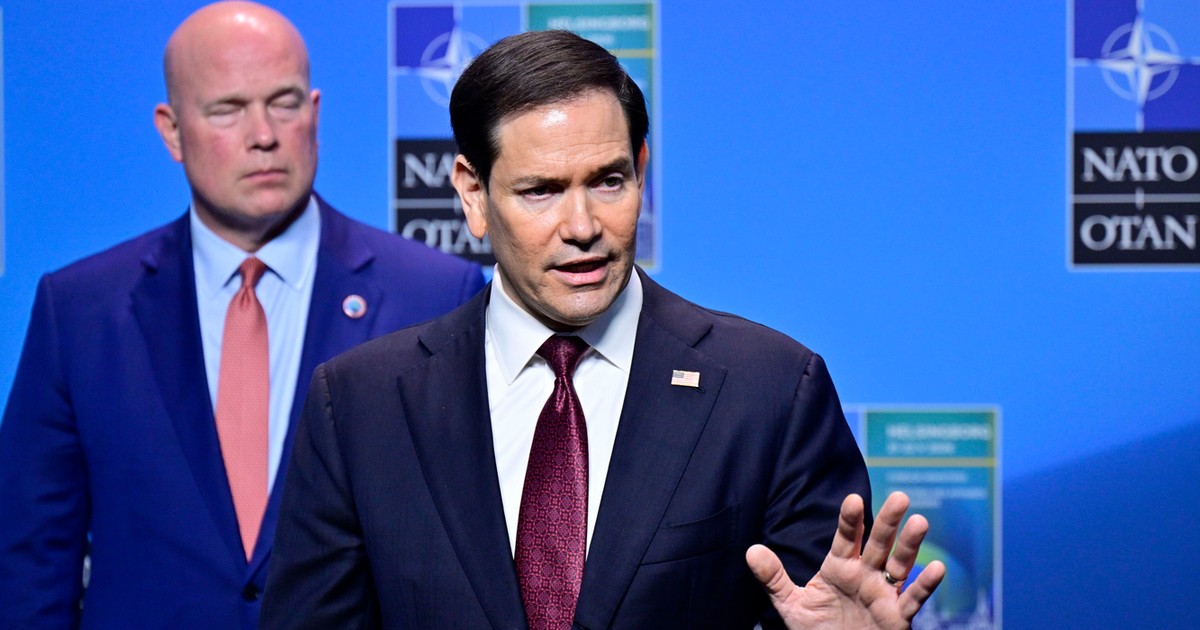
Negotiations between the US and Iran are gaining momentum, although – as Secretary of State Marco Rubio points out – there are still many unresolved issues.
— We've made some progress. I'm not going to exaggerate it, but I'm not downplaying it either. We still have a lot of work ahead of us. We're not at the finish line yet. I hope we can achieve this, he said after a meeting of NATO ministers in Helsingborg, Sweden.
Tough positions despite the diplomatic offensive
Tehran does not hide its skepticism. The spokesman for the Iranian Ministry of Foreign Affairs points out that the differences between the parties are “deep and significant.”
At the same time, diplomatic activity is accelerating: the Chief of Staff of Pakistan's Army and a Qatari delegation cooperating with the US arrived in Tehran. Qatari representatives are also conducting their own mediation talks, a Reuters source says.
Read also: The Emirates appeal to the US to negotiate with Iran. The region is afraid of a repeat of the scenario
According to Iranian media, Iran's foreign minister met with Pakistan's interior minister in Tehran. However, no details of these talks were provided.
The Strait of Hormuz and the risk of a global energy crisis
Controversies remain over Iran's enriched uranium and control of the Strait of Hormuz, a key shipping route through which one-fifth of the world's oil and liquefied gas flows. The closure of the strait since the beginning of the war has led to a global energy crisis.
Rubio reiterated that Iran's plans to charge for transit through the strait are “unacceptable.” He noted that the US has not asked NATO for help in this matter, but it is necessary to prepare a plan B if Iran does not reopen the waterway.
Read also: “They have to pay.” The Iranian ambassador makes an announcement regarding the Strait of Hormuz
Iranian Foreign Ministry spokesman Esmaeil Baghaei emphasized that diplomacy takes time and the parties have not yet reached a stage that would bring them closer to an agreement. He added that there are no talks on nuclear issues, and an agreement will not be reached if the US wants to delve into details regarding highly enriched uranium.
The US and Israel declare that their goal is to limit Iran's support for regional militias, dismantle its nuclear program, destroy its missile capabilities and facilitate political changes in Iran. However, Tehran still has a stockpile of almost ready-to-use uranium and the ability to threaten its neighbors with missiles, drones and supported militias.
Senator Roger Wicker calls for renewed attacks on Iran
Meanwhile, as PAP reports, the head of the US Senate Armed Services Committee, Roger Wicker, appealed to President Donald Trump to resume attacks on Iranian military targets. According to the senator, this is a key moment for the presidential legacy.
In Friday's statement, Wicker emphasized that President Trump should complete the actions he has started against Iran. “This is a moment that will define President Trump's legacy. His instincts tell him to finish what he started in Iran, but he is wrongly advised to pursue a deal that is not worth the paper it is written on,” the senator wrote.
Roger Wicker also warned that continuing to reach an agreement with Iran could be seen as a sign of weakness. “We have to finish what we started. It's time to act” – he concluded.
War and its impact on markets
The war, which began with US-Israeli airstrikes on February 28, led to Iranian attacks on the Persian Gulf countries where US bases are located. The conflict also increased tensions between Israel and Hezbollah in Lebanon and cost the lives of thousands of people in Iran and Lebanon.
In financial markets, uncertainty translates into increases in oil prices and fluctuations in stock indices. The major indexes rose on Friday, with the Dow Jones hitting record highs. U.S. Treasury yields fell and the dollar remained at its highest level in six weeks.
Read also: The effects of the war in the Middle East go beyond oil
US under pressure, Iran does not budge
US President Donald Trump has declared that the United States will eventually recover Iran's stockpile of highly enriched uranium, which Washington says could be used to produce nuclear weapons. Tehran, however, maintains that the program is purely peaceful.
According to two senior Iranian sources, Iran's Supreme Leader, Ayatollah Mojtaba Khamenei, has issued instructions that uranium should not be exported abroad.
Negotiations are ongoing, but the conflict is still far from being resolved. The market follows developments on an ongoing basis, and each new information translates into commodity prices and investor sentiment.