How Ukrainian experts interpret Putin's claim that “the war is coming to an end”: “He is trying to buy time”

“The only thing that shows some progress is the prisoner exchanges. Otherwise, nothing has changed in their attitude,” Ukrainian analyst Volodymyr Fesenko comments on Putin's assertion in the May 9 speech that “the war in Ukraine is coming to an end.” Two Ukrainian experts interviewed by HotNews say that Russia's goals have remained unchanged and Westerners should not fall into the trap set by Putin.
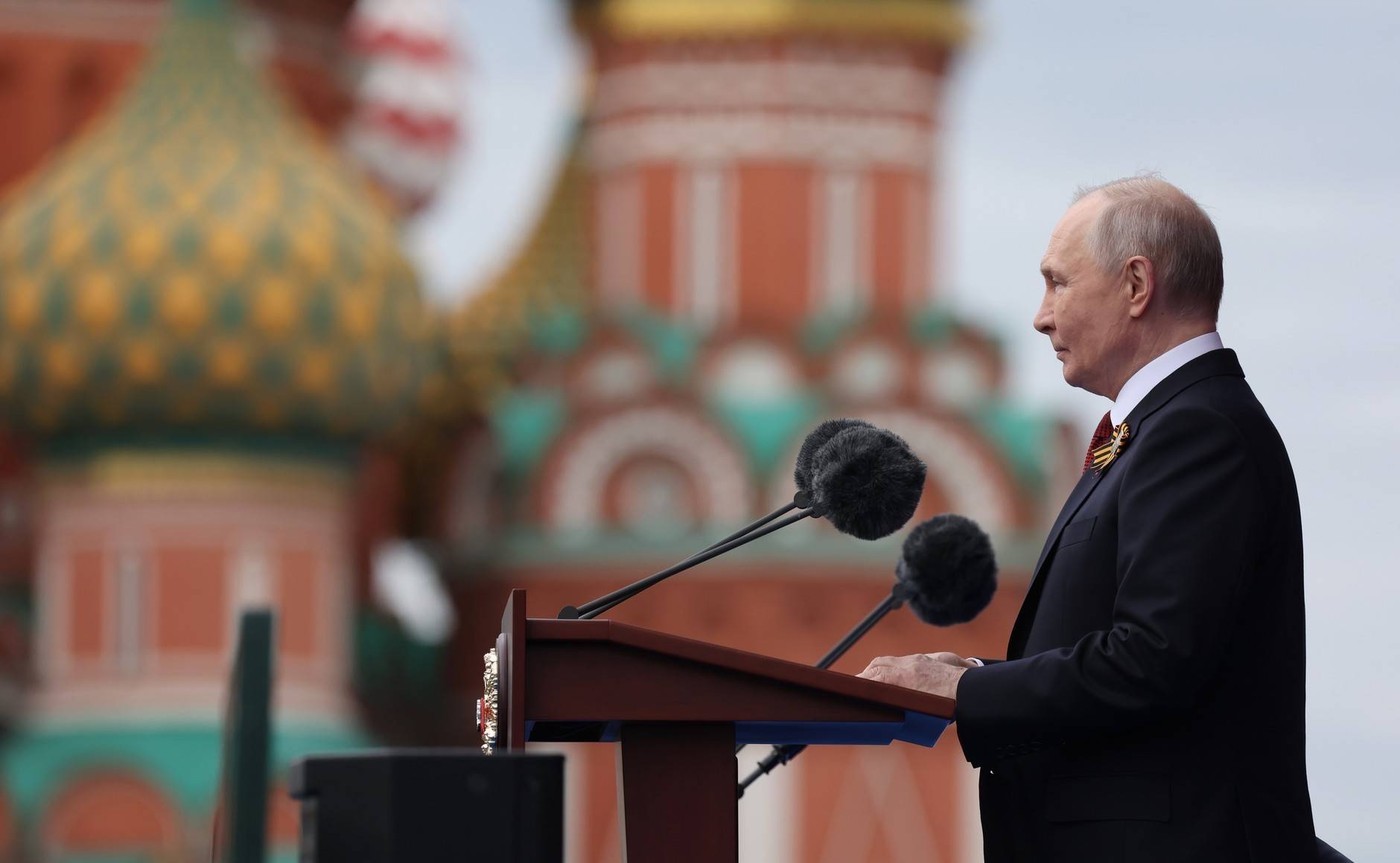
The statements made by Vladimir Putin after the May 9 military parade in Moscow, in which the Russian leader stated that the war in Ukraine “is coming to an end”, were interpreted in the public space as a possible signal that the Kremlin would prepare the ground for real peace negotiations.
Ukrainian experts contacted by Putin still say the messages sent by the Kremlin leader are part of a political strategy by which Russia is trying to buy time, influence the US administration and maintain the appearance of a diplomatic process without abandoning its original goals.
“Putin is trying to convince the US that he is ready for peace, but only on his terms”
“I do not agree with the interpretation that Russia is tired and that Putin finally recognizes the futility of this war. It seems to me that Vladimir Putin and his team are still trying to negotiate with the United States and convince Washington that Russia is ready to stop the war, but only on the terms of the Kremlin.
We saw the same thing when Putin talked about the possibility of a meeting with Zelensky. Yes, he suggested that such a meeting could take place outside Moscow, which for Russia seems like a concession. But at the same time he made it very clear that such a meeting would be possible only for signing the final version of an agreement already negotiated on Moscow's terms,” says Ukrainian political analyst Volodymyr Fesenko, СEO of the Center for Political Studies in Kyiv, Penta.”
According to the analyst, the Kremlin continues to believe that it can win the war of attrition and that the domestic situation in Ukraine will deteriorate faster than that in Russia.
“Of course, Russia is losing resources, losing military equipment, losing people. But this does not mean that Putin is ready to give in. The same Soviet logic still works in Russia: if “vodka becomes more expensive, it does not mean that the father will drink less, but that the family will eat less.”
This is exactly how war works for the Kremlin. The fact that the Russian economy is suffering does not mean that Putin is ready to compromise. He still hopes that Ukraine will reach a critical situation first. In essence, we are witnessing a psychological game of resistance: who blinks first, who gives in first under pressure”, says the expert.
“Russia continues to speak in the language of ultimatums”
Fesenko believes that Russia is not interested in a real peace agreement and that Moscow continues to speak “in the language of ultimatums”.
“The only thing that shows some progress is the prisoner exchanges. Otherwise, Russia is repeating the same conditions. Even before May 9, Russian officials were openly saying that Moscow wants to achieve the goals of the “special operation” either militarily or diplomatically. This means that the Kremlin wants to introduce into any agreement exactly the same goals for which the war started. In addition, Russia continues to talk about the withdrawal of Ukrainian troops from the territories controlled by Kiev in the Donetsk and Lugansk regions. For them, this is the acceptable minimum,” explains the Ukrainian analyst.
In his opinion, the fundamental problem for Kiev is the lack of confidence in any possible guarantees offered to Moscow.
“In Ukraine, almost no one believes that Russia's appetite will stop there. If the Russian army reaches territories it has not conquered militarily, what would prevent it from going further? The only solution would be the existence of real security guarantees from other powers. But we see that even the United States avoids talking about firm guarantees and tries to replace them with simple political assurances. Ukraine has received such assurances in the past, including through the Budapest Memorandum, and the result we see today
Putin is trying to buy time, maintain the appearance of a negotiation process and avoid further pressure from the West. But if we look at the concrete actions and conditions formulated by Moscow, we see that Russia has not given up on any of its fundamental goals,” says Fesenko.
“Putin's weakest and most empty speech”
For his part, the deputy director of the “Prism” Foreign Policy Council, Sergiy Gherasymchuk, also commented on the military parade on Victory Day organized in Moscow.
“This was Putin's weakest and most empty speech in recent years. There was no new message, no important political signal. It was just a repetition of the usual propaganda theses about the confrontation with NATO and about the historical continuity between the Second World War and the current war in Ukraine. But even in Russia people are beginning to notice that this 'conflict', as the Kremlin calls it, is already longer than the Great War for the Defense of the Fatherland,” he says Gherasymchuk.
“For the Kremlin, war has become part of domestic stability”
Ukrainian experts believe that Moscow is not yet ready for a real peace deal and that the war remains essential to the internal stability of the Putin regime.
“For the Kremlin there is a whole complex of reasons that push Russia to continue the war. What do you do with hundreds of thousands of people who have become accustomed to living from war? What do you do with Russia's militarized economy, where a significant part of the GDP is generated by the defense industry? In the event of a real armistice, the Kremlin would immediately face very serious social and economic problems,” Fesenko says.
Both Fesenko and Gherasymchuk say that Russia has not been able to achieve the military results it expected and that the pace of the Russian offensive has slowed significantly in recent months.
“Russia is failing to achieve a strategic breakthrough on the front. Even Russian propagandists are starting to talk openly about the fact that the Russian military is bogged down in war and that a way out of this situation must be found. Ukraine continues to hit the military and energy infrastructure inside Russia, and these attacks create more and more problems for the Kremlin,” says Gherasymchuk.