It shows that the fleet has evolved into something much larger – has become a flexible platform for waging hybrid warfare throughout Northern Europe.
Read also: Big change at the Fed. Donald Trump is counting on a new direction under Warsh's leadership
As the authors of the report emphasize, Moscow feels increasingly confident at sea, exploiting the gray zone between legal trade, espionage, intimidation and sabotage. Despite hundreds of imposed sanctions, Russia is successfully maintaining its war economy while exposing the weaknesses of Europe's critical infrastructure.
Thousands of ghost ships off the radar
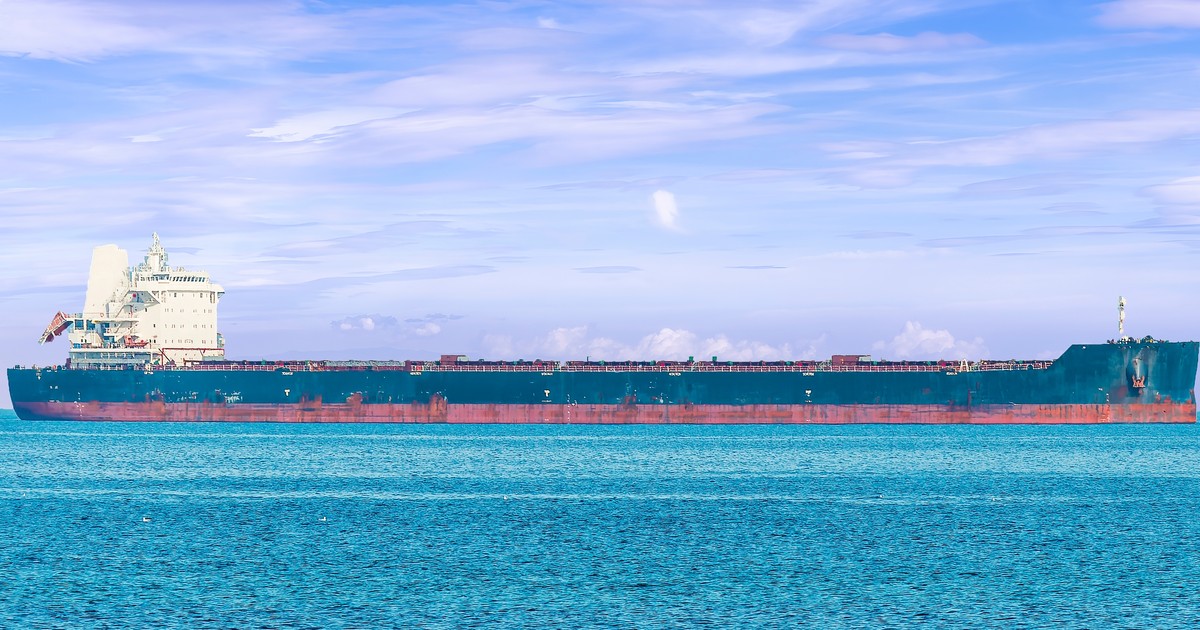
According to ACLED estimates the Russian transport network has from 1 to even 3.2 thousand. units (the Ukrainian authorities have so far identified nearly 1.4 thousand of them). This fleet is currently responsible for transporting up to 80 percent. Russian oil exports by sea. Most of the ships are worn-out tankers, hidden behind the facades of utility companies, with false registrations and constantly changing names.
This practice resembles the methods of criminal organizations. Crews are recruited via WhatsApp, communication is based on the Starlink system, and payments are made in cryptocurrencies. To avoid detection, ships regularly manipulate automatic identification systems (AIS) or disable them completely.
Although the European Union itself has sanctioned 632 ships linked to this fleet by May 2026, the community's hands are tied. Under the United Nations Convention on the Law of the Sea, European countries cannot board or seize a suspected vessel until they can prove its criminal activity or statelessness.
Read also: NBP in the center of the political game. Donald Tusk versus Adam Glapiński
The Baltic Sea in the spotlight. Mysterious cable failures
It is the Baltic Sea that has become the main training ground for the shadow fleet, due to the key Russian oil terminals in Primorsk and Ust-Luga. At the same time, the Baltic Sea is densely dotted with undersea telecommunications cables, energy connections and gas pipelines connecting the Nordic and Baltic countries.
Europe learned how dangerous these neighborhoods are on New Year's Eve 2025. Finnish special forces boarded the Fitburg cargo ship after the undersea cable between Helsinki and Tallinn was damaged. Investigators determined that the vessel sailing from St. Petersburg was dragging its anchor on the seabed and sanctioned Russian steel was discovered on board. Although intentional sabotage was not officially announced, this case perfectly demonstrated how the line between circumventing sanctions and hybrid aggression is blurred.
The maritime intelligence firm Windward noted that between February 2024 and February 2025, over 2.3 thousand ships entered the Baltic Sea. ships linked to Russia. In the same period, the number of so-called drifting (when the ship stands still or moves without a clear navigation goal) near underwater infrastructure, and the units' tracking signal “disappeared” for over 16,000 years. times. This creates a constant atmosphere of uncertainty that favors Moscow.
Read also: A game developer lost her job at Meta. She didn't expect such an effect
Europe is starting to respond with force
France is becoming more and more bold in testing its legal limits in the face of Russian provocations. The French Navy's takeover of the tanker Pushpa (also known as Kiwala or Boracay), sailing from Russia to India, made much of a splash. The vessel was detained off the coast of Denmark in September 2025, right at the time of a series of drone incidents that led to the temporary closure of several Danish airports. Although it has not been proven that the drones took off from the tanker, the action showed Paris's determination.
In turn, in February 2026, Swedish forces observed and jammed a reconnaissance drone near Malmoe that was spying on the French aircraft carrier Charles de Gaulle. The drone was linked to the Russian intelligence ship Zhigulevsk, proving once again that the line between commercial shipping and military operations has almost completely disappeared.
In response to these threats, NATO launched Operation Baltic Sentry and the UK introduced Nordic Warden surveillance measures. Since the end of 2024, there have been eight European enforcement actions against shadow fleet vessels.